India’s rice exports face price pressures as Trump threatens more tariffs

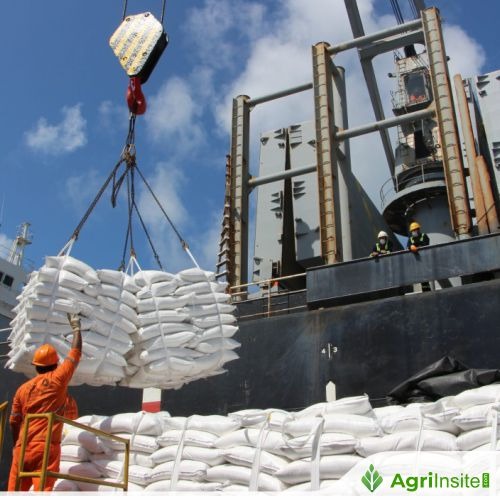
India, the world’s largest rice exporter, could face higher US tariffs on shipments after President Trump accused it of dumping rice. While exports to the US are unlikely to drop, higher tariffs may raise costs, affect global prices, and push importers to reroute shipments. Premium basmati rice remains the main export.
India, the world’s largest rice exporter, could see its shipments to the US become more expensive if President Donald Trump follows through on a threat to impose higher tariffs after accusing the country of dumping rice.
Industry executives said the move was unlikely to significantly dent export volumes, but warned of potential wider repercussions, including pressure on prices in other markets, efforts by importers to divert shipments and renewed strain in trade talks where agriculture and dairy imports risk triggering a backlash from Indian farmers.
Trump said earlier this month that more tariffs could be imposed on Indian rice after alleging that grain shipments to the US were being sold below their normal value.
At a White House round table with farming officials on December 8, Trump said: “India, tell me about India. Why is India allowed to do that? … They shouldn’t be dumping. I heard that from others. They can’t do that.”
Tariffs, he added, would “solve the problem in two minutes”.
The US has recently raised import duties on Indian basmati rice to 50 per cent, a substantial increase from the previous 10 per cent rate, making Indian rice considerably more expensive in the American market compared to competitors such as Pakistan, which faces lower tariffs.
Some reports have suggested that the total import duty on Indian rice adds up to 61 percent currently.
Industry executives said any additional tariffs were likely to be passed on to importers and consumers, lifting prices rather than curbing demand, as most Indian rice shipped to the US consisted of premium basmati varieties bought by diaspora communities.
Indian industry officials rejected the dumping claim, saying basmati was a distinct, higher-priced rice variety grown in the Indian subcontinent and exported only on firm orders from importers.
“The Indian rice that goes to the US is mainly for Asians, Middle East and Far East people. Americans are not habituated to eating basmati rice,” said Prem Garg, president of the India Rice Exporters Federation.
According to Garg, basmati rice is shipped in containerised consignments and packaged into smaller retail parcels, which rules out any possibility of dumping.
India, the world’s largest rice exporter, shipped 20.2 million metric tons of rice in the 2024-25 financial year ending in March, including 335,554 tons to the US, of which 274,213 tons were basmati rice.
Trump’s allegations of dumping come in the midst of trade talks between the two countries, where a deal has eluded negotiators as New Delhi has not budged under American pressure to open up to agriculture and dairy imports.
Washington imposed up to 50 per cent import tariffs on India earlier this year over so-called reciprocal tariffs to taxes imposed on American goods and Delhi’s purchases of Russian crude oil supplies.
The US accounts for a relatively small portion of India’s total rice exports of about 4 per cent but commands a higher place in the value chain because of the market’s preference for premium-grade basmati rice.
In contrast, Indian rice accounts for about a quarter of total US rice imports, making India the second-largest supplier after Thailand.
Garg said India was on course for strong rice exports this year after a bountiful harvest due to good monsoon rains and emerging markets such as the Philippines and Afghanistan.
India’s rice exports in government warehouses climbed nearly 12 per cent from a year earlier to a record high in early December, government data showed. State reserves of rice totalled 57.57 million tons as of December 1.
Vijay Setia, former president of All India Rice Exporters Association, said higher US tariffs on Indian shipments would be counterproductive for Washington.
“By imposing higher tariffs, they would end up burdening their own people,” he said.
Ajay Vir Jakhar, chairman of Bharat Krishak Samaj, a leading farmers’ forum, warned that shipments could become more expensive because commodity prices often reacted disproportionately to negative developments such as Trump’s tariff threat.
“There could be an impact. Other countries who are buying from you pressurise you. We have seen this happen in negotiations,” he said.
Prices of Indian rice exports have so far held up well, even as exporters tweaked dollar rates upwards to account for a recent slide in the value of the Indian rupee.
India’s 5 per cent broken parboiled variety was quoted at US$350 to US$357 per metric ton this week, up from last week’s US$348 to US$356 per ton.
Thailand’s 5 per cent broken rice was quoted at US$410 per ton in response to lower domestic demand, down from US$415 last week.
Red lines in trade
Binod Anand, member of the Indian Prime Minister’s committee on Minimum Support Prices for crops, said pressure from the US government could force individual importers to route their shipments of Indian rice through the Middle East rather than buying directly.
Trump’s allegations about Indian exports hurting American producers were without basis, however, as US farmers only produced small quantities, Anand said.
While Trump’s remarks could be a tactic to force India to open up its agriculture and dairy markets, Indian industry experts doubted that Delhi would cave under the pressure.
“They have been trying a lot,” Anand said.
Biswajit Dhar, a professor of economics at Delhi’s Council for Social Development, said the US was likely to continue pushing India to open its markets to American agriculture exports like corn and soybeans.
“Trump cannot do a deal with India without these major agricultural commodities being thrown in,” he said.
Potential backlash from farmers remained a concern, Dhar said, noting that India had not opened up its dairy market to New Zealand despite the countries signing a free-trade agreement earlier this month.
“The message is loud and clear. That when it comes to agriculture and allied sectors, India is not going to open its market,” he said.
To Read more about Rice News continue reading Agriinsite.com
Source : SCMP