Argentina smashes wheat production record

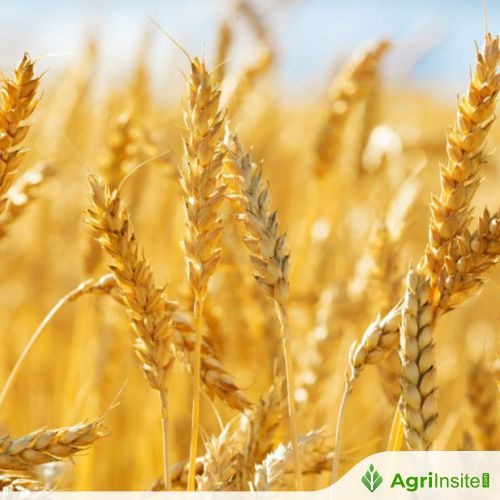
Argentina’s 2025–26 wheat harvest has hit record levels near 28 million tonnes, driven by expanded acreage, exceptional yields and favourable weather. Heavy exports are straining logistics, depressing feed wheat prices globally, while low protein levels are tightening supplies of quality milling wheat.
ARGENTINA’S 2025-26 wheat harvest has smashed the nation’s previous production record, with the country’s two leading grain exchanges raising their output forecasts multiple times over the past couple of months as the crop
overcame some late-spring weather challenges and yields continued to exceed pre-harvest forecasts.
The Rosario Grain Exchange was the first to fully recognise the magnitude of this season’s wheat crop potential, raising its production estimate to a record 27.7 million tonne (Mt) on December 11, 3.2Mt higher than its early November forecast of 24.5Mt. This is 37.8 percent more than the previous year’s harvest of 20.1Mt, and 20.4pc higher than the 2021-22 harvest record of 23Mt.
The harvested area of 7.17 million hectares surpasses the Rosario Grain Exchange’s previous record of 7.1Mha hectares and is up from 6.9Mha in 2024-25. The average yield forecast of 4.1t/ha is 35pc higher than the 3.04t/ha average achieved a year earlier.
Such a harvest outcome was improbable after the drought conditions that affected much of last season’s summer crop development. Although there were good autumn rains, and soil moisture reserves had begun to build in the months leading up to planting, the exchange started the campaign with a projected wheat crop of 20Mt.
However, as the harvest progressed, recorded yields became evident in many regions after an almost ideal growing season.
The Rosario Grain Exchange reported: “It should be noted that this has been a year where rainfall was not a limiting factor in expressing the wheat crop’s potential, with unprecedented rainfall in July and especially in August, and excellent grain-filling conditions across much of the Pampas region. This cycle is also characterised by the sector’s investment in technology, particularly in seed, disease control, fertilisation, and the necessary topdressings to address the severe nutrient leaching problems caused by rainfall.”
On December 30, the Buenos Aires Grain Exchange raised its output forecast to a record 27.8Mt, up from 27.1Mt a week earlier and 25.5Mt at the beginning of the month. This is almost 25pc higher than the Buenos Aires Grain Exchange’s previous production benchmark of 22.4Mt set in the 2021-22 season, and nearly 50pc higher than its 2024-25 harvest of 18.6Mt. At 6.7Mha, the Buenos Aires bourse is using a slightly lower harvested area than its Rosario-based counterpart, as it did last year, when it called the area 6.3Mha. That puts the final yield forecast from the BAGE at 4.15t/ha, more than 36pc higher than the 3.04t/ha average last season. However, the average yield harvest-to-date stood at 4.32t/ha in last week’s crop update from the
exchange, suggesting a further hike in the production forecast is possible as the winter-crop fieldwork winds down.
According to the BAGE, this season’s harvest progressed 8.1 percentage points in the week to December 30, leaving just 7.2pc of the 2025-26 campaign to be completed. If the favourable conditions persist, the harvest should be wrapped up by the middle of this month.
The magnitude of the wheat harvest has triggered a rush to move grain into export positions. The sheer volume is putting immense pressure on logistics, with farmers eager to clear farm-stored stocks to make space for the later-harvested grain. As a result, truck deliveries to the river shipping hub in Rosario surged to an all-time high
of almost 2.0MMT in November. That is roughly twice the volume typically seen in recent years, highlighting just how intense the grain flow has been this harvest.
With Argentina’s wheat production and exports at 24Mt and 14.5Mt respectively, upward revisions to both are expected when the United States Department of Agriculture releases the January edition of its World Agricultural Supply and Demand Estimates on January 10. The hot early-season export pace could also see the nation’s 2021-22 export record of 16Mt seriously challenged, especially if it remains competitive in the first quarter of 2026.
Unsurprisingly, the record yields have resulted in an unusually low average protein content, raising concerns around the availability of 11.5pc protein milling wheat for both the domestic and export markets. There are reports of protein levels in the 8-9pc range in parts of the Cordoba province, the nation’s third-biggest producing province behind Buenos Aires and Santa Fe.
The export flood of low-protein wheat from Argentina is likely to further dampen the price of feed wheat in international markets, a bonus for consumers of that grade, while the lack of milling wheat with protein of 11.5pc and higher from South America’s biggest wheat exporter is already reported to be boosting sales of those grades from other global suppliers.
Historically, the biggest buyer of Argentinian wheat, Brazil has reportedly already purchased from non-traditional exporters due to the dearth of quality milling wheat from Argentina this season. The country’s millers reportedly bought at least two cargoes from Russia totalling 60,000t for shipment last month.
Conversely, the cheap feed wheat has attracted Chinese interest, with a reported purchase of 65,000t last month, marking Argentina’s first commercial bulk wheat shipment to the key Asian consumer since the 1990s. China granted import authorisation for Argentinian wheat in January 2024.
The wheat shipment comes as Argentina’s government moves to lower export taxes on agricultural products, a policy shift that could reinforce the country’s ability to compete into markets such as China. The Minister of Economy, Luis Caputo, announced a new round of reductions in export duties in December, calling it another step toward easing the tax burden on the agricultural sector.
Under the changes, the export tax rates will be reduced as follows: soybeans from 26pc to 24pc; soybean byproducts from 24.5pc to 22.5pc; wheat and barley from 9.5pc to 7.5pc; corn and sorghum from 9.5pc to 8.5pc; and sunflower from 5.5pc to 4.5pc. According to Caputo, the cuts aim to improve the competitiveness of the nation’s agribusiness, which accounts for around 60pc of Argentina’s export income.
To Read more about Wheat News continue reading Agriinsite.com
Source : Grain Central