Why maize deserves centre stage in India’s agricultural roadmap

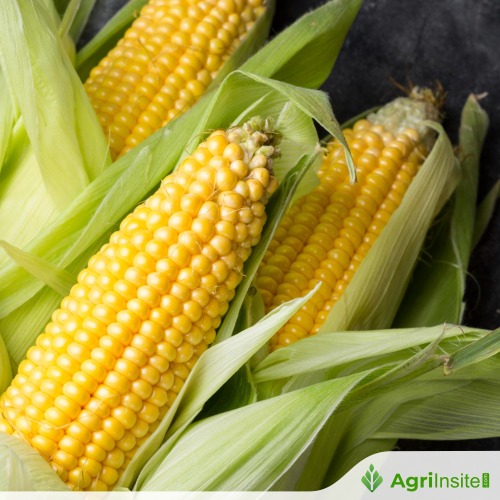
India’s food security has long relied on water-intensive rice and wheat, where productivity is nearing its limits. As demand rises and water stress deepens, maize stands out as a sustainable alternative. With lower water needs and growing use in food, feed and ethanol, maize can drive climate-smart agricultural diversification.
India, a major agricultural economy, primarily cultivates rice and wheat, both of which are water-intensive crops, to meet its foodgrain requirements. And it has nearly achieved full potential in these crops, becoming the largest rice-producing country and the second-largest wheat-producing nation in the world. With growing demand, maize, given its lower water requirement, emerges as a more sustainable alternative to rice.
For the uninitiated, India is the fourth largest country in terms of area under maize cultivation, but it is the fifth largest when it comes to overall production. Data (see chart: Maize production data) shows that the country’s maize productivity stands at 3.59 tonnes per hectare, lower than the world average of 4.9 tonnes/hectare, highlighting a huge yield gap. Despite recent yield gains, this clearly indicates a substantial potential and underscores the need for India to boost both both maize production and productivity to meet rising demand from food, poultry feed, and industrial uses, especially the fast-growing ethanol segment.
Policymakers, too, acknowledge the challenge as well as the opportunity. “About 60% of India’s maize production comes from rainfed kharif environments, where productivity remains low, indicating substantial scope for yield enhancement,” says Shivraj Singh Chouhan, Union Minister of Agriculture and Farmers’ Welfare. “Improving productivity in this ecology requires climate-resilient hybrids, better plant standability, precision mechanisation, and a strong quality seed system. Notably, 15-20% of the area is still under low-yielding composites and landraces, which need progressive replacement with hybrids,” he adds.
“In contrast, rabi maize, grown largely under irrigated conditions, achieves higher productivity (nearly 5.3 tonnes/ha). States such as West Bengal, Telangana, Andhra Pradesh, and Bihar exceed the global average, while districts like East Godavari, Dakshin Dinajpur, Guntur, and Bengaluru Urban report yields above 10 tonnes/ha, demonstrating the attainable potential under optimal management,” Chouhan says.
This, he says, makes him believe that maize’s attainable growth potential can be unlocked through improved crop management and a stronger enabling ecosystem. To realise the full potential, he calls for targeted policies aimed at increasing maize yields, including diversified seed production beyond peninsular India, stronger seed infrastructure and databases, wider use of climate-resilient hybrids, and expanded micro-irrigation in water-stressed areas.
Maize cultivation math
The cultivated area under maize in the country has expanded to 120.9 lakh ha in 2024-25 from 74.3 lakh ha in 2004-05, while production grew at a compound annual growth rate (CAGR) of 6-7% since 2014 and accelerated to around 12% in 2024-25, largely on the back of yield improvements, as per data from the ICAR-Indian Institute of Maize Research.
“While the area under kharif maize remains larger, rabi maize continues to outperform in terms of productivity. On average, maize yields have increased by over one tonne per hectare, although significant variations persist across regions and seasons,” says Mangi Lal Jat, Secretary, Department of Agricultural Research and Education (DARE) and Director General (DG), Indian Council of Agricultural Research (ICAR).
Going forward, he says, growth in maize output is expected to be driven mainly by further gains in productivity, supported by coordinated efforts among farmers, agricultural scientists, and both public and private sector stakeholders. Jat notes that public-sector agricultural research has played a commendable role in driving recent productivity gains through improved hybrids, agronomic practices, and extension support.
According to him, maize offers a more sustainable alternative to rice for ethanol production, given its substantially lower water requirement. This makes maize a more environmentally viable and farmer-friendly feedstock, especially in water-stressed regions. In this regard, he says, the government has clearly indicated its intention to scale up maize production and will provide strong policy support, infrastructure development, and facilitation to encourage greater private sector participation.
Officials say future production gains will largely come from higher yields rather than acreage expansion. The average maize productivity is projected to rise to 5.5 tonne/ha by 2030, driven by new hybrids and wider adoption of pest-resistant varieties. Rabi yields average around 6 tonne/ha, while kharif yields remain lower at about 2.5 tonne/ha due to monsoon dependence.
Hanuman Sahay Jat, Director, ICAR-Indian Institute of Maize Research (IIMR), says that while a significant increase in maize production has occurred over the past two decades, rapidly growing demand from food, feed, and expanding industrial uses continues to put pressure on supply.
“With rising requirements from the ethanol, starch, feed, and emerging bio-based industries, future projections indicate that maize production will need to reach about 72 million tonnes (MT) by 2030-31 and over 100 MT by 2047 depending on the policy and demand, underscoring the critical need for sustained productivity enhancement and technological interventions,” adds IIMR’s Jat.
Demand offers an opportunity
The government is pushing to raise maize’s share in ethanol production to reduce dependence on rice for fuel blending and potentially export surplus ethanol. Before 2023, maize was mainly used for poultry and animal feed (65%), starch (17%), and food (nearly 10%), with exports of 2-3 MT. Since 2023, its role has expanded sharply, with maize supplying nearly 50% of the feedstock for E20 blending and about 12.5 MT used for bioethanol in the ethanol supply yea ..
“Maize-based industries are growing rapidly at an annual rate of 8-12% to meet the rising demand for meat, starch and its derivatives, ethanol, and other value-added products, says IIMR’s Jat.
In addition, maize starch is expected to be used in bioplastic manufacturing, with industrial facilities being established in UP, which will further increase maize demand in the future. Further, the current E20 target will increase to E30 by 2030, and along with the addition of 5% bio-diesel blending and sustainable aviation fuel (SAF), demand for maize will rise significantly. “As the scope for acreage expansion is limited, productivity enhancement will be the key strategy to meet future demand, offering significant opportunities in maize research and development,” says IIMR’s Jat.
While direct human consumption of maize in India remains limited, with most output used for feed and industrial purposes. maize use in processed foods, currently around 5-7%, is gradually gaining traction in the food system.
“Use of maize in processed foods, particularly in the FMCG sector, is expected to grow at over 5% annually,” says IIMR’s Jat. “Overall, total maize demand is projected to rise to about 72 MT, driven mainly by ethanol production (20-25 MT), poultry feed (25-30 MT), and proportionate increases in other uses.”
Subroto Geed, President-South Asia, Corteva Agriscience, citing the NITI Aayog report, says that the average productivity of maize (3.5 tonnes per hectare) in India remains far below the global average of 6 tonnes per hectare. “This yield gap presents both a pressing challenge and a monumental opportunity for national food security, energy independence, and farmer prosperity. This shortfall, estimated at over 11.6 MT, is driven by a combination of factors like low farm productivity and climate change. The government’s push for maize-based ethanol, targeting 30% blending in the next five years, underscores its strategic importance, particularly as a water-efficient crop compared to many others,” says Geed.
How profitable is maize for farmers?
A cost-and-return analysis shows that maize is often more profitable and sustainable for farmers than rice and wheat across many agro-climatic zones, especially in eastern, central, and peninsular India, says IIMR’s Jat. In north-western India, wheat sown after maize records 12-15% higher yields than wheat after rice, while the maize, wheat system saves nearly 80% of water and energy compared with the rice-wheat system.
Officials say maize’s fit with conservation agriculture opens opportunities, such as carbon sequestration and carbon trading. They add that a stronger market ecosystem, driven by the bioethanol policy, is improving the crop’s economic viability. Improved access to quality seed, mechanisation, drying facilities, and market linkages is further lifting profitability and production resilience.
Ajay Kakra, Leader-Food and Agriculture, GIDAS, Forvis Mazars, India, says that current demand projections already exceed production, creating a sustained supply gap, and traders, too, view the government’s push positively, reflected in multi-year procurement contracts offering Rs 150-300 per quintal premiums, signalling confidence in long-term demand and strong market linkages, adds Kakra.
He says farmers are willing to adopt maize, given its attractive income potential, with net returns exceeding Rs 28,000 per acre with assured market access, but adoption remains constrained by limited seed availability, mechanisation, and technical support, particularly for small and marginal farmers who make up nearly 86% of growers.
As of January 2026, maize prices in India average Rs 2,200-Rs 2,600 per quintal (100 kg), with wide variations across states driven by quality and demand from the ethanol sector. In key mandis, prices range from Rs 1,500 to Rs 2,650 per quintal.
“Maize’s sensitivity to timely operations makes affordable mechanisation critical. International and domestic experience shows that when these constraints are addressed, smallholders adopt maize rapidly. Through targeted improvements in agronomic practices and enhanced access to inputs, India could feasibly reach 65 MT to 70 MT by 2030 without significant expansion of cultivated land,” adds Kakra.
Farmers seek reliable markets
“Rice and wheat dominate because of assured, end-to-end government procurement. In Punjab and Haryana, the government buys virtually the entire output, guaranteeing both price and offtake. With production costs around Rs 900 per quintal and procurement prices near Rs 2,200, farmers get more than double their costs. This security naturally shapes crop choices. Maize, in contrast, offers less certainty,” says Anil Ghanwat, President of Maharashtra-based Shetkari Sangathan.
Meaningful diversification, Ghanwat says, will require curbing open-ended procurement of rice and wheat. Maize can become viable only if the government boosts yield through better seeds or GM varieties. “At present, low productivity makes maize unremunerative, rendering much of the land under it economically inefficient,” he notes.
Rajani Sinha, Chief Economist, CareEdge Ratings, says, “A transition toward environmentally sustainable and less water-intensive crops is, therefore, no longer optional but essential for safeguarding India’s long-term food and environmental security.”
Reorienting India’s agricultural strategy toward such sustainable crops would reduce pressure on water resources, enhance nutritional outcomes, and strengthen resilience against climate risks, while ensuring long-term stability for farmers and rural livelihoods, according to Sinha.
While farmers are open to diversification if market access and income stability are assured, stakeholders and experts say shifting from paddy in the rice-wheat system to maize or millets will depend on reliable markets and transparent pricing. “With most maize growers being small and marginal farmers, timely and affordable mechanisation across sowing, harvesting, and post-harvest operations is critical to improve efficiency and reduce risks,” says R.G. Agarwal, Chairman Emeritus, Dhanuka Agritech.
“Experiences from countries that have successfully expanded maize cultivation suggest that deployment of precision agriculture technologies, including service-based mechanisation models, supported by strong extension services, are more effective than individual ownership. Besides, undertaking all these agricultural activities at a community scale will further economise their effective operations in the field,” says Agarwal.
Stakeholders say better irrigation, quality seed, and improved crop management can narrow the yield gap. They cite model districts in Bihar, Telangana, and Maharashtra where yields reach up to 13 tonnes per hectare, driven by superior hybrids and best practices. With nearly 60% of maize grown under rainfed conditions, boosting resilience through climate-tolerant cultivars, strong seed systems, precision mechanisation, and better plant standability are critical.
Sandeep Sabharwal, Group CEO, Sohan Lal Commodity Management (SLCM), says, “The next phase of growth will depend on stronger ecosystem enablers, digital platforms to improve farmer-to-market connectivity, incentives for value-added processing, such as starch and ethanol, and focused export promotion under the Agri Export Policy. Equally important is deeper integration of FPOs and improved logistics to connect smallholders seamlessly to markets, reduce post-harvest losses, and ensure optimal farmer realisation.
“Global experiences offer valuable lessons. China’s widespread use of custom-hiring centres has enabled nearly 70% mechanisation among small farms, delivering yield gains of over 30%. Brazil’s success with soy–maize rotations, supported by subsidised planters and extension services, demonstrates how mechanisation and crop planning can work together at scale. For India, the way forward lies in expanding KCC-linked machinery subsidies, strengthening FPO- and cluster-based hiring models, leveraging PPPs to localise mini-tractors, threshers, and drone-based services, and enhancing farmer training through platforms like ATMA,” add Sabharwal.
Challenges ahead
Key constraints include poor availability of climate-resilient hybrid seeds and low adoption of improved practices, particularly among small and marginal farmers.
“Strengthening local seed systems to ensure timely availability of climate-resilient hybrids, promoting scale-appropriate mechanisation or its uberisation, upscaling improved POP, and focused capacity building can significantly help in addressing these challenges, says IIMR’s Jat.
“To further enhance productivity, technology-driven maize farming practices used by leading global producers need to be adapted and integrated into Indian agriculture through genome editing, precision farming, mechanisation, and efficient quality seed delivery systems. However, as India’s maize production ecology differs significantly from that of the US, Ukraine, and China, it is essential to develop India-specific solutions, combining global learnings with local innovations to address region-specific challenges effectively,” he adds.
Additionally, the farm-gate prices remain weak due to poor access to modern technologies, inadequate storage, and heavy dependence on intermediaries, experts say. They call for coordinated action to boost tech adoption, strengthen infrastructure, and reform markets.
An integrated e-market platform could improve price discovery and cut out middlemen, while allowing direct industry purchases of crops like maize would ensure assured markets. Increased involvement of NAFED and NCCF in procurement and trade may contribute to price stabilisation and build a more transparent, resilient market, they suggest.
Policy interventions needed
Experts and stakeholders emphasise the necessity of targeted policy interventions to develop seed production hubs and strengthen processing, storage, and transportation infrastructure to ensure a timely and affordable supply of quality maize seeds.
“The development of hybrid seed production hubs involving cooperatives, FPOs, FPCs, and SHGs will be crucial in this regard. Regular capacity building of these organisations in hybrid seed production should be institutionalised to meet at least 50% of the seed requirement from the state itself, with active involvement of NSC, SSCs, and state agriculture departments. The establishment of a centralised seed database to monitor seed production, quality, availability, and regional gaps across states would further strengthen seed planning and timely deployment,” says IIMR’s Jat.
“Integrating seed hub development with national schemes, such as PMKSY, NFSM, RKVY, and related programmes will be essential to ensure convergence of resources and sustained impact,” he adds.
Agarwal says that quality seed is crucial for maize productivity, as over 85% of crops are seed-propagated and vulnerable to pests and soil-borne pathogens. “Establishing region-specific seed development hubs that match the agro-climatic patterns and utilisation needs of the regions will be critical. Simplifying the procedures for approval of new hybrids can also help in the faster adoption of new technologies. Moreover, a transparent framework for contract farming and industry linkages can also ensure the effective integration of farmers into organised value chains,” says Dhanuka.
Need to keep seed prices, quality under control: Shivraj Singh Chouhan
While Chouhan stresses establishing maize seed production sites beyond traditional zones for timely, quality seeds at fair prices, he emphasises the need to strengthen NSCs and SSCs to maintain seed quality and price stability. Chouhan stresses the need to develop common platforms to strengthen public-private R&D on traits like drought and pest resistance, while exploring biotech solutions that are appropriate to close yield gaps. He advocates accelerating adoption of single-cross, high-yielding, stress-tolerant hybrids, combined with precision farming using AI, IoT, and ML, to boost on-farm productivity.
The minister urges investment in value chain infrastructure and logistics, such as dryers and silos at mandis or community level, to reduce losses, ensure year-round maize supply, and stabilise prices. He also recommends exploring bioethanol exports to neighbouring countries to build farmer confidence and boost productivity and income through regulated mechanisms.
Chouhan also emphasises ensuring dynamic MSPs, better procurement systems, and risk-based marketing support, alongside developing an ecosystem linking farmers with feed, ethanol, and export markets, including grower-industry and distillery byproduct utilisation.
All stakeholders agree that robust R&D support from ICAR and state agricultural universities is crucial to develop high-yielding, stress-tolerant, region-specific maize hybrids, strengthen the seed ecosystem, and ensure the long-term sustainability of maize production in India.
To Read more about Maize News continue reading Agriinsite.com
Source : The Economic Times