ICAR–DRF collaboration to empower farmers, youth through agri-skill programs

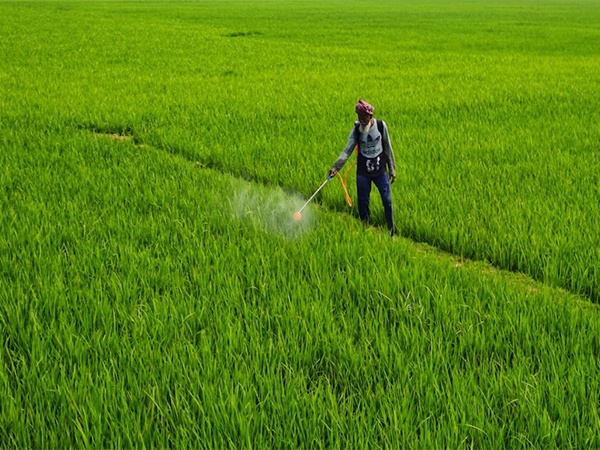
ICAR and Dr. Reddy’s Foundation have partnered to boost agricultural skills, climate-smart farming, and farmer extension across rural India. The five-year collaboration will deliver vocational training, strengthen soil health, support youth employment, and improve market linkages, aiming to enhance productivity, resilience, and incomes for small and marginal farmers nationwide.
The Indian Council of Agricultural Research (ICAR) and Dr. Reddy’s Foundation (DRF) have signed a landmark Memorandum of Understanding (MoU) at the ICAR-National Academy of Agricultural Research Management (ICAR-NAARM) in Hyderabad. The strategic collaboration aims to enhance agricultural vocational training, strengthen farmer extension services, and build capacity in modern agricultural practices across rural India.
The initiative is being undertaken under the overall guidance of Dr. M.L. Jat, Secretary, Department of Agricultural Research and Education (DARE) and Director General, ICAR. Strategic coordination and institutional convergence for the partnership are being facilitated by Dr. Anil Kumar, Assistant Director General (Coordination), ICAR.
The agreement was formalized in the presence of senior officials from both organizations at ICAR-NAARM, Rajendra Nagar, Hyderabad, marking a significant milestone in public-private partnership for agricultural development and skill enhancement. The MoU documents were formally exchanged between Mr. Suman S., Director (Rural Livelihoods), Dr. Reddy’s Foundation, and Dr. Rajbir Singh, Deputy Director General (Agricultural Extension), ICAR, in the presence of the Directors of ICAR-NAARM (Hyderabad), ICAR-ATARI (Hyderabad), ICAR-ATARI (Bengaluru), and senior technical associates from DRF.
Strategic Framework of Collaboration
Under the MoU, ICAR and DRF will collaborate across multiple areas to create sustainable impact in the agricultural sector through the development and delivery of vocational training programs in agriculture and allied sectors.
Capacity building of small and marginal farmers will be undertaken using DRF’s Lead Farmers Platform (LFP) model. Joint research initiatives on climate-smart agricultural practices and sustainable farming methods will be scaled by integrating ICAR’s technical expertise with DRF’s community-based extension model.
The collaboration will also strengthen skill development programs aligned with the National Skill Qualification Framework (NSQF) and support youth employability in agriculture and life sciences sectors.
Leveraging Complementary Strengths
ICAR brings nearly ten decades of expertise in agricultural research, extension, knowledge management, capacity building, and policy advocacy. The council will provide technical guidance, curriculum development support, and access to its extensive network of agricultural scientists and researchers nationwide.
DRF has impacted over 2 million lives through its integrated development programs, focusing particularly on youth, persons with disabilities (PwDs), and rural communities. The Foundation’s flagship MITRA program has enabled more than 80,000 farmers to adopt improved agricultural practices across multiple states, demonstrating the effectiveness of its farmer-to-farmer extension model.
Expected Outcomes
The collaboration will focus on several key intervention areas:
Vocational Skill Development:
Building on DRF’s recognition by the National Council for Vocational Education and Training (NCVET) as an Awarding Body (Standard), the partnership will develop and deliver industry-aligned agri-skill programs.
Soil Health to One Health Transition:
The partnership will promote biochar-based and soil-biologics-led solutions to improve soil health within a One Health framework, while advancing sustainable crop residue management and carbon incentivization for climate-resilient agri-food systems.
Resilience and Disaster Risk Reduction:
Farmers will be supported in adopting climate-smart and regenerative agricultural practices through technology-enabled extension services, carbon-incentivized resource-efficient methods, and locally tailored climate-risk mitigation strategies.
Agricultural Extension & Market Linkages:
The collaboration will scale up the Lead Farmers Platform to bridge last-mile extension gaps while strengthening market linkages, digital and financial literacy, and price realization for small and marginal farmers.
Alignment with National Priorities
The partnership reinforces the national vision of creating inclusive, flexible, and future-ready learning pathways for India’s agricultural workforce. It aligns with key government initiatives such as the Skill India Mission, Pradhan Mantri Kaushal Vikas Yojana (PMKVY), the National Agricultural Education Policy, the Doubling Farmers’ Income initiative, and climate-smart agriculture goals.
Alignment with the National Credit Framework (NCrF) through NCVET will enable learners to accumulate and transfer credits, supporting both professional growth and continued academic advancement.
The programs developed under the MoU will be implemented across multiple states where both organizations operate, with an initial focus on Andhra Pradesh, Telangana, Bihar, Madhya Pradesh, Himachal Pradesh, and Uttar Pradesh.
Implementation Timeline
The MoU is effective from February 16, 2026, and will initially remain valid for five years, with provisions for renewal based on mutual agreement and performance evaluation. A joint monitoring committee comprising representatives from both organizations will oversee implementation, track progress against milestones, and ensure quality standards.
The partnership will leverage ICAR research stations, Krishi Vigyan Kendras (KVKs), and DRF’s field centers to ensure effective grassroots delivery.
To Read more about Rice News continue reading Agriinsite.com
Source : Chinimandi