Two Indian exporters’ bodies seek separate Basmati rice board

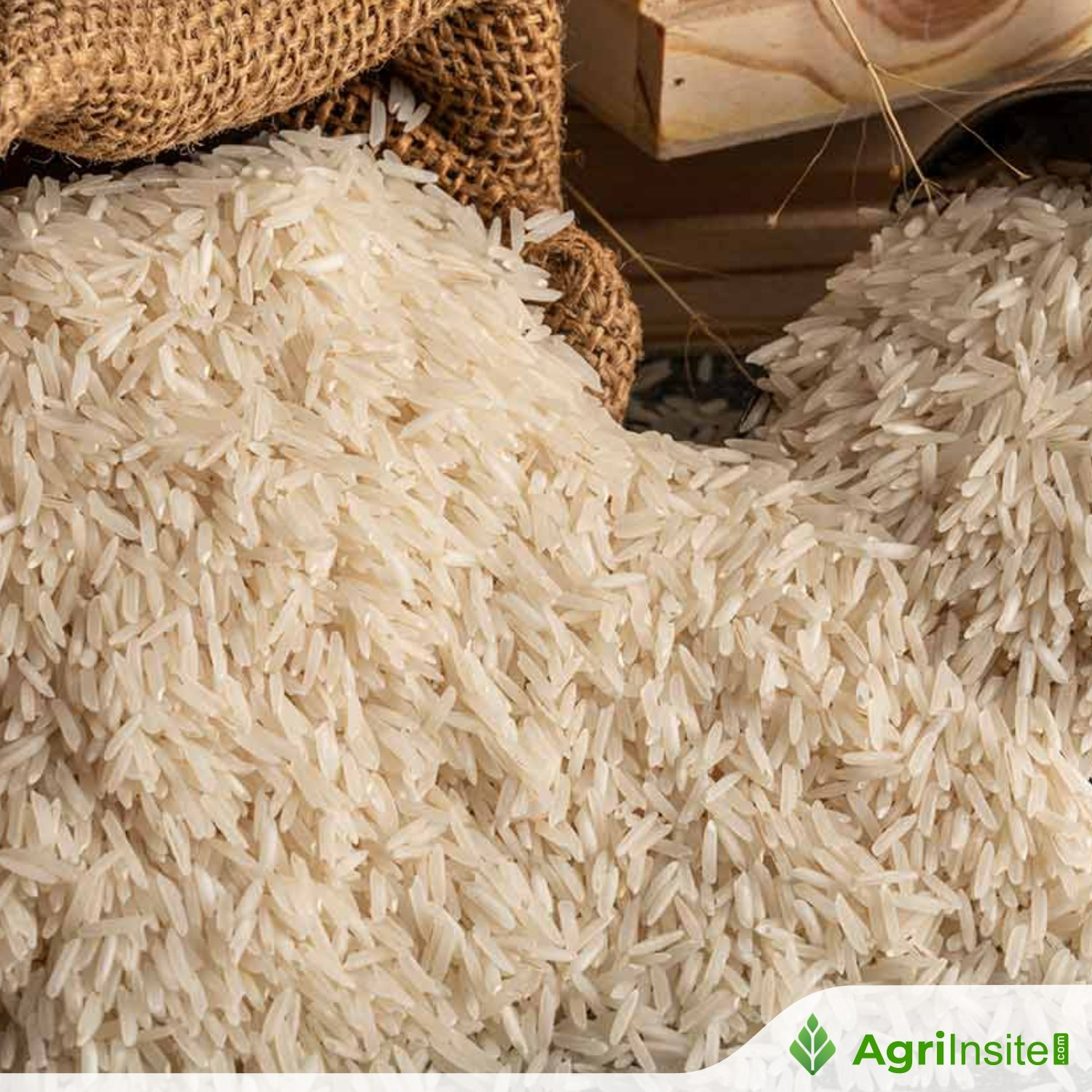
Rice exporters have urged the government to create a dedicated statutory Basmati board, removing its oversight from Agricultural and Processed Food Products Export Development Authority. They say a specialised body is needed to protect the GI tag, strengthen quality control, support farm-level research, and safeguard India’s ₹55,000-crore Basmati export industry.
Two rice exporter associations have urged Prime Minister Narendra Modi and Union Home Affairs and Cooperation Minister Amit Shah to set up a dedicated statutory Basmati rice board and separate it from the control of the Agricultural and Processed Food Products Export Development Authority (APEDA).
Both associations have sought protection of India’s geographical indication (GI) tag for Basmati and its international prestige.
In a letter to Modi, the Punjab Rice Millers Exporters Association (PRMEA) said Basmati must be separated from APEDA because it “lacks agronomy, GI regulation, research mandate, enforcement authority, and transparency mechanism”.
Shortcomings
“APEDA lacks the mandate, manpower and enforcement authority to maintain these standards at a national scale,” said PRMEA Director Ashok Sethi.
The All India Rice Exporters Association (AIREA) sought to bring Basmati rice under the Ministry of Agriculture. “… is extremely necessary to ensure its development starts at the farm level and is sustained long-term,” AIREA General Secretary Ajay Bhalotia said in a letter to Shah.
AIREA justified its demand, saying a basmati rice board would protect India’s GI identity and international prestige, promote good agricultural practices, enable low-pesticide and safe production and foster climate-resilient, sustainable farming. It would stabilise and increase farmers’ incomes, improve coordination among growers, research institutions and State governments, and strengthen the global brand image of long-grained rice.
Protecting GI tag
According to traders, the request to the Prime Minister and Minister of Cooperation to set up a separate board for Basmati is seen as an effort to wriggle out of the control of APEDA, which currently supervises Basmati exports and manages the Basmati Export Development Foundation.
Both organisations are concerned about protecting Basmati rice’s GI tag. Recently, Australia, New Zealand and Kenya refused to give GI tag for Indian Basmati rice. The European Union, on the other hand, has been dragging its feet despite India filing an application for GI Tag in July 2018.
PRMEA said APEDA has been designed as a broad export promotion body, responsible for hundreds of diverse agricultural products across multiple export markets, trade facilitation mechanisms, promotional events, infrastructure schemes and quality certification protocols.
“Because of this wide mandate, APEDA is not structurally capable of providing the single-minded focus, scientific depth, legal capability and field-level presence required for a GI-sensitive commodity such as Basmati,” said Sethi.
Technical challenges
The Punjab Rice Millers Association said that Basmati, being a sensitive GI product, can enforce seed certification systems, genetic purity protocols, a DNA profile database, and buffer zone guidelines.
“APEDA lacks the mandate, manpower and enforcement authority to maintain these standards at a national scale,” said Sethi.
AIREA said a farm-focused, scientific, and long-term approach is essential for Basmati rice. Therefore, it urged the formation of a dedicated statutory Basmati rice board, bringing the fragrant rice under the Ministry of Agriculture and effectively implementing ICAR’s research at the farm level.
PMREA said Basmati challenges are technical and regulatory, not merely export promotion. “A dedicated board – a statutory, scientific and transparent institution is needed,” said Sethi.
The PMREA Director said the Commerce Ministry should undertake, on a priority basis, to set up the Basmati board.
The export bodies’ plea is based on the fact that India exports 6 million tonnes of Basmati rice annually, valued at ₹55,000 crore to over 100 countries.
To Read more about Rice News continue reading Agriinsite.com
Source : The Hindu Business line