Punjab’s granaries brimming, no space to store freshly milled rice

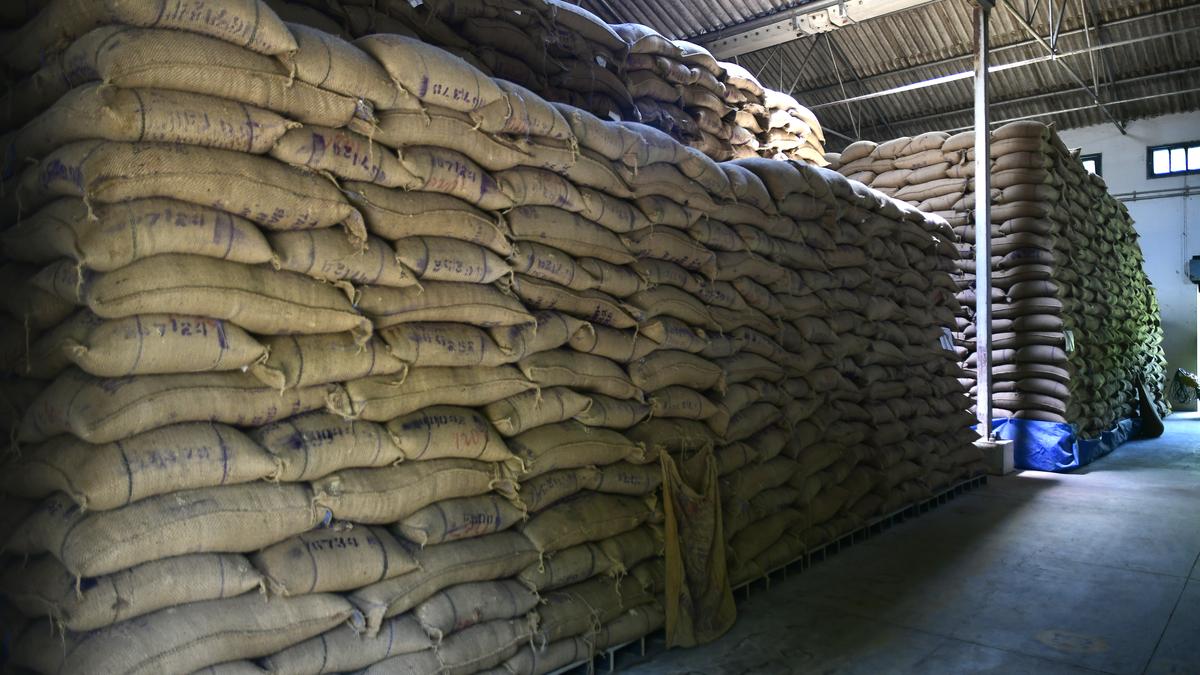
Punjab faces a major storage crisis as godowns near capacity with existing rice and wheat stocks, leaving minimal space for 75 lakh tonnes of new rice. Slow evacuation by the Food Corporation of India and limited offtake have created a severe supply logjam.
Punjab is staring at a severe foodgrain storage crisis as its godowns are filled to capacity, leaving barely any room to accommodate nearly 75 lakh tonnes of rice produced from last year’s paddy procurement.
The state has a total covered storage capacity of 182 lakh tonnes. However, as of February 16, it is already holding 144 lakh tonnes of rice from the previous two seasons and 48 lakh tonnes of wheat. Of the wheat stock, 32 lakh tonnes is stored in covered godowns, while 16 lakh tonnes lies on open plinths — temporary raised platforms under tarpaulin, exposed to weather risks.
This effectively leaves only six lakh tonnes of covered space available for freshly milled rice.
Floods, procurement and rising stocks
Despite flood-related crop damage during the last kharif season, around 110 lakh tonnes of paddy reached mandis for procurement. This is expected to yield approximately 75 lakh tonnes of rice, further intensifying the storage crunch.
Since rice must be stored in covered facilities, the state government has asked millers to retain stocks at their own premises due to lack of space in government godowns.
Evacuation at all-time low
Repeated attempts by the state’s food and civil supplies department to evacuate old wheat and rice stocks have failed. A senior official recently visited New Delhi to urge the Centre to expedite grain movement from the state.
However, the Union ministry of food and public distribution has reportedly expressed its inability to accelerate evacuation, citing surplus stocks in consumer states. Other grain-producing states such as Haryana, Uttar Pradesh (particularly its western region), and Madhya Pradesh are also grappling with similar stockpile pressures. As a result, grain movement from Punjab is currently at an all-time low.
Officials say the situation mirrors 2019, just before the COVID-19 pandemic. At that time, large-scale food distribution schemes introduced during the lockdown helped liquidate excess stocks. This time, however, no such extraordinary offtake mechanism is in place, leading to what officials describe as a “complete logjam”.
The Centre has offered 2 lakh tonnes of grain over five years to the World Food Programme, but officials say the quantity is too small to significantly ease Punjab’s burden.
Ethanol diversion not an immediate fix
In a bid to ease future pressure, the Centre has mandated that from the upcoming kharif season, rice millers in Punjab must separate 10% broken rice for ethanol production. While the move could reduce storage requirements by about 10% in the coming seasons, it offers little relief for the current glut.
GFX
Storage woes
182 lakh tonne: Total covered space to store foodgrains in Punjab
144 lakh tonne: Rice stored in state godowns of previous two seasons
48 lakh tonne: Wheat of previous seasons stored (32 lakh tonne in covered godowns and rest over open plinths)
75 lakh tonne: Rice to be milled in current season
To Read more about Rice News continue reading Agriinsite.com
Source : Hindustan Times