Oil price rises bolster India’s ethanol push despite drawbacks

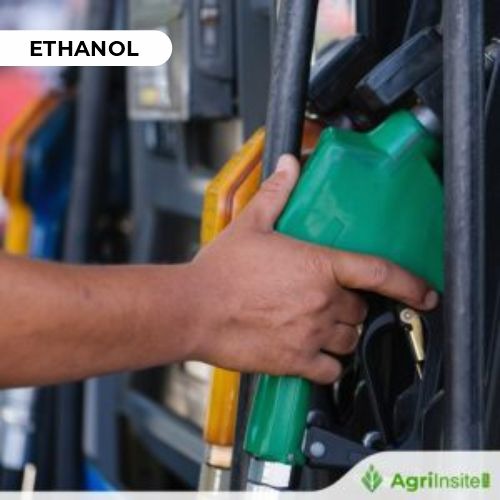
India is pushing for higher ethanol blending in fuel to cut oil imports, but experts warn of trade-offs including lower efficiency, higher water use, and pollution risks. Concerns also arise over crop diversion, resource stress, and potential impact on long-term decarbonization goals.
NEW DELHI – India is seeing a push to further increase the amount of ethanol in gasoline as oil prices surge due to the conflict in the Middle East, even as the ambitious national biofuel program may hold back efforts to cut pollutants.
Ethanol, made from crops such as sugarcane, rice and maize, is central to India’s plan to cut costly oil imports and reduce planet-heating emissions from transport. Under the government program, state-run oil companies mix 20% ethanol with each liter of gasoline before it reaches fuel pumps.
India reached its target of 20% ethanol fuel, known as E20, last year, five years ahead of schedule, despite a backlash from drivers complaining of reduced fuel efficiency and increased engine wear.
Prime Minister Narendra Modi said in March that ethanol blending had helped reduce crude import dependence during the U.S. and Israeli war with Iran.
Transport Minister Nitin Gadkari has called for even higher blends, such as 85% ethanol, and for vehicles to eventually run entirely on the fuel.
India is the world’s third largest crude importer with some 85% of its oil needs met through imports. The government’s drive to raise blending levels stems from a desire to cut its crude import bill and boost energy security. India currently also has a surplus ethanol production capacity.
But experts warn a clear, long-term strategy for decarbonizing transport is lacking and could bring trade-offs on efficiency, water use and the climate.
After rolling out E20 gasoline nationwide, the government has set up an inter-ministerial panel to explore ways to use surplus ethanol production capacity, including raising blending levels.
Ethanol producers are pushing for higher targets and wider adoption of flex-fuel vehicles, capable of running on high levels of ethanol.
Researchers looking at India’s transport sector warn the benefits are more constrained as blending levels rise.
“Higher blending can cut oil imports, but not as much as often claimed,” said Shyamasis Das, a fellow at the Centre for Social and Economic Progress, a public policy think tank.
Ethanol has roughly a third less energy per liter than pure gasoline, requiring vehicles to burn more fuel to generate the same power, according to the U.S. Energy Information Administration. This limits the extent to which blended fuels can reduce the demand for oil, Das said.
“Ethanol blending is not the most effective way to reduce emissions or improve fuel efficiency in transport,” said Anumita Roychowdhury, executive director at the Centre for Science and Environment, a Delhi-based think tank.
The biofuel reduces greenhouse gas emissions, but coughs out other pollutants, said Roychowdhury.
“While some pollutants may fall, others like nitrogen oxides can increase, and burning ethanol also produces toxic emissions such as carbonyl compounds,” Roychowdhury said.
She said that India would need to introduce regulations, like those in Brazil, which also uses high levels of ethanol to power vehicles, but regulates emissions of toxic compounds such as acetaldehyde and formaldehyde.
In just over 11 years, India has raised the percentage of ethanol in gasoline more than 13 times, from 1.5% in 2014 to 20% in 2025, a far faster rate of increase than many other major ethanol-producing countries.
The government says the shift to biofuel saved 1.06 trillion rupees ($12 billion) in crude oil imports and avoided 54.4 million metric tons of carbon emissions over a decade, equivalent to emissions from 12 million gasoline cars a year. It also describes the reduction in fuel efficiency as marginal.
The transport and petroleum ministries did not respond to requests for comment.
“The climate impact depends on how the ethanol is produced, not just how it is used,” Das said.
In India, most ethanol used for blending is derived from food crops, rather than agricultural waste, raising concerns about both emissions and resource use.
“Using crops like sugarcane and maize for ethanol will put more pressure on water and land,” Das said, warning that this could deepen stress in already water-scarce regions that could in turn trigger social tensions.
In several states, farmers have protested against new ethanol distilleries, citing water strain and pollution, and the diversion of crops like maize to produce fuel has made it more expensive to feed poultry and other livestock.
The ethanol push is also shifting farmers away from growing oilseeds, undermining India’s efforts to cut cooking oil imports, to instead raise crops for the ethanol industry.
During the current supply year, oil companies sought about 10.5 billion liters of ethanol, but received offers for roughly 17.8 billion liters, according to industry data.
Das said India was pursuing competing energy options simultaneously, from biofuels to electric vehicles and hybrids, “which risks spreading resources thin and confusing industry.”
Ethanol could be better suited for industry, where systems can be adapted to handle lower-energy fuels more efficiently, rather than pushing it into transport and risk slowing the transition to cleaner technologies, Roychowdhury said.
“If too much pressure is put on transport to absorb ethanol, it could derail the transition to zero-emission mobility,” she said.
To Read more about Ethanol Industry & Bio Energy News continue reading Agriinsite.com
Source : Japan Times