Bangladesh’s food grain stocks reach record 2.26mn tonnes

Bangladesh has reached a record 2.262 million tonnes of public food grain stocks, driven by strong Boro rice procurement, providing ample reserves to support food security and stabilise domestic prices. Officials said the high stock levels eliminate the immediate need for rice imports, while procurement is expected to increase further through August.
Bangladesh has set a new all-time record for public food grain stocks, surpassing all previous highs.
In August 2025, the interim government recorded what was then the country’s highest-ever public food grain stock of 2.249 million tonnes. Before that, the previous record stood at 1.985 million tonnes, set by the Awami League government in 2022.
However, the latest figures show that all previous records have now been surpassed. According to official data, government warehouses currently hold 2.262 million tonnes of food grains, including rice and wheat, marking the highest stockpile in the country’s history.
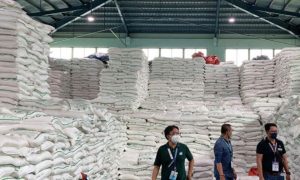
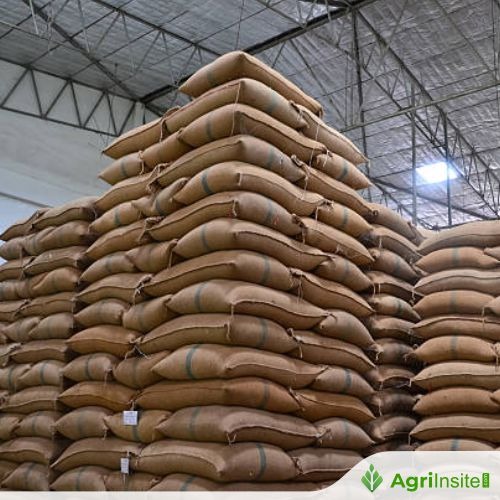
Data from the Ministry of Food show the current stock comprises 1.805 million tonnes of rice, 195,161 tonnes of paddy and 330,205 tonnes of wheat. Officials say Bangladesh has never before held such a large rice stock.
The Directorate General of Food (DGoF), the government agency responsible for food procurement, said the record stock has left government warehouses with virtually no spare storage capacity. Authorities are also face a shortage of storage bags.
Meanwhile, the ongoing Boro procurement drive, which will continue until Aug. 31, is progressing at a promising pace compared with previous years.
The DGoF expects public food stocks to reach an even higher level once the procurement campaign concludes, further strengthening the country’s food security.
“We have surpassed all previous food stock records. The stock will increase further after the Boro procurement ends,” Moniruzzaman, director of the Procurement Division at the Directorate General of Food, told Jago News.
He said the record stock had helped keep market prices stable and would continue to support an uninterrupted food supply.
“There is currently no dependence on imports. No rice is being imported, and there are no concerns over food security in the foreseeable future,” he added.
According to procurement data, the government has so far collected 818,593 tonnes of parboiled rice, 58,742 tonnes of non-parboiled (Atap) rice and 304,300 tonnes of paddy during the current Boro season.
By the end of August, the government aims to procure 1.2 million tonnes of parboiled rice, 100,000 tonnes of Atap rice and 500,000 tonnes of paddy.
In Bangladesh, public food procurement and distribution take place simultaneously. During the harvest season, the government purchases paddy and rice from farmers. Throughout the year, the Directorate General of Food distributes food grains under various social safety net and market intervention programmes to strengthen food security for low-income households and help contain inflation.
As a result, public food stocks naturally fluctuate throughout the year.
When government reserves remain at satisfactory levels, pressure on the market eases, allowing consumers to buy rice at lower prices. Strong reserves also enable the government to expand social safety net and food distribution programmes, benefiting low-income and vulnerable groups.
Economist and researcher Dr Jahangir Alam Khan said governments should maintain emergency food reserves equivalent to 15 days of national consumption, which for Bangladesh amounts to about 1.3 million tonnes.
“For many years, the country did not even maintain that minimum level. Now public food stocks stand at around 2.25 million tonnes, which is highly commendable,” he told Jago News.
“This will allow the government to expand food distribution programmes. There will be no need for imports, and there should be no concerns about food security.”
He added that the Boro harvest had been good and households across the country had adequate food supplies.
“As a result, there is no shortage or panic in the market. If this situation continues, the market is likely to remain stable until the Aman harvest,” he said.
Final production figures for fiscal year 2025-26 are not yet available. However, Bangladesh produced 46 million tonnes of rice and 1.041 million tonnes of wheat in FY2024-25.
According to the Food Outlook report published by the UN Food and Agriculture Organization (FAO) in November 2025, Bangladesh’s annual demand is estimated at 41.1 million tonnes of rice and 7.4 million tonnes of wheat.
The figures indicate that domestic rice production exceeds demand, while the country continues to face a significant shortfall in wheat production.
To ensure stable prices and uninterrupted food supplies, both the public and private sectors are permitted to import rice and wheat.
For FY2025-26, the government allocated provisions to import 700,000 tonnes of rice and 800,000 tonnes of wheat.
As of June 21, the government had imported 534,000 tonnes of rice and 738,000 tonnes of wheat. During the same period, the private sector imported 735,000 tonnes of rice and 6.582 million tonnes of wheat.
To Read more about Rice News continue reading Agriinsite.com
Source : Jago News 24