India’s rice exports hit regulatory cracks in the EU market

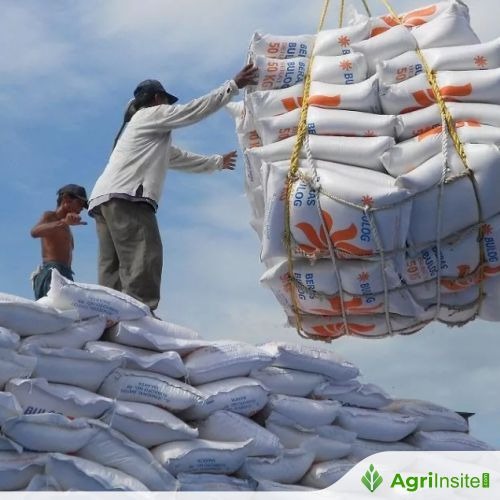
India’s rice exports to the EU face quality compliance concerns, with 52 consignments flagged in 2025. An ICRIER paper cites overlapping APEDA and EIC responsibilities, pesticide residues and storage issues, recommending a single agency for export oversight and traceability.
India’s rice exports are failing EU quality checks due to the absence of an accountable agency, leaving 92% of its basmati-heavy EU trade at stake, according to people with knowledge of the matter.
India faces roughly one rejection for every 9,100 tonnes of rice sent to the EU, according to an ICRIER working paper.
India shipped roughly 4,73,800 tonnes of rice to the EU, of which 52 consignments faced regulatory flags in 2025, trailing only Pakistan, whose 55 flagged consignments were the most among major suppliers.
The gap sits between two overlapping bodies- the Agricultural and Processed Food Products Export Development Authority (APEDA) and the Export Inspection Council (EIC)- that jointly oversee India’s rice exports without a clear division of responsibility, according to a working paper published by the Indian Council for Research on International Economic Relations (ICRIER) in July 2026.
“Exporters are spending money like a pendulum between these agencies to get clearance for their shipments”, said Vinod Kumar Kaul, Director-General, IREF (Indian Rice Exporters Federation).
APEDA and the EIC split rice-export oversight by function. APEDA promotes exports and runs traceability. EIC handles inspection and certification, deciding whether a shipment is actually fit to leave India.
In practice, both bodies set standards, train exporters, and operate their own laboratory networks, leaving no clear line separating who is responsible when something goes wrong at the EU border.
Of the 126 laboratories APEDA has authorised nationally, only 50 are equipped to test rice, and just 47 of those are notified by India’s food safety regulator, the paper notes. It recommends consolidating export oversight under a single nodal agency with end-to-end traceability, replacing the current split between APEDA and EIC.
“APEDA is unable to take matters into its own hands as the issue falls under the Ministry of Commerce”, said Kaul.
Exporters continue to chase the EU market despite this gap, drawn largely by pricing. “Everyone wants to export to the EU because of the premium pricing offered,” said Ajay Bhalothia, General Secretary of the All India Rice Exporters Association (AIREA) and Founder & Managing Director of Fortune Rice Ltd. Few fully understand the SOPs or control checks that come with it, he added.
The notifications trailed only Pakistan’s 55 among major suppliers, while Cambodia, Myanmar, and Thailand each logged one or zero, under the EU’s Rapid Alert System for Food and Feed (RASFF).
Most rejections trace back to pesticide residues banned in the EU but still used in India. Others stem from grain-storage fungi linked to poor post-harvest handling. Both India and Pakistan face mandatory EU border testing on a share of their rice shipments.
As of February 2026, under Commission Implementing Regulation (EU) 2026/194, India no longer needs mandatory testing for this storage-linked contamination—but mandatory pesticide testing still applies.
“Rice exporters have written to the government multiple times to ban the use of pesticides for rice production, but there has been no response yet”.
Repeated rejections point to a deeper flaw: either producers are deliberately flouting EU limits, or the testing and certification system is failing to catch problems before shipments leave India, according to people mentioned above.
With inspection split across multiple agencies and laboratories using inconsistent standards, it’s often unclear which one should be held responsible when a consignment is turned away.
Exporters, for their part, describe a steadier experience shipping to the EU. “Quality, food safety, and traceability remain at the core of our export strategy,” said Akshay Gupta, Head- Bulk Exports at KRBL Ltd., “supported by robust internal quality controls that have enabled us to consistently meet stringent EU requirements.”
None of this is addressed by the India-EU free trade agreement concluded in January 2026. Rice isn’t included in the deal’s tariff schedule. The compliance regime governing testing and rejections sits outside the FTA’s scope altogether.
Vikas Magoon, Managing Director, LT Foods Europe, described the agreement as “non-consequential” for the company- neither a benefit nor a disadvantage.
The EU doesn’t charge one flat rice tariff- it varies by type. Milled rice pays around €200 a tonne, non-basmati brown rice pays €30, but basmati brown rice enters duty-free, and that’s how most Indian basmati reaches Europe. This rule existed before the FTA and remains unchanged.
The stakes are rising as India’s EU rice trade narrows to a single product. The ICRIER paper recommends consolidating export oversight under one nodal agency with end-to-end traceability, replacing the current split between APEDA and EIC, giving India a single point of contact when a shipment is turned away, rather than the current uncertainty over which of the two bodies is responsible.
To Read more about Rice News continue reading Agriinsite.com
Source : CNBCTV18