Philippines – DA warns against forcing rice prices down despite high inflation, urges cuts in power, supply chain costs

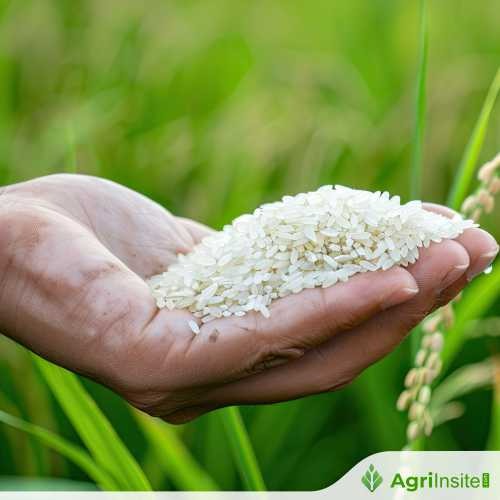
The Philippines’ Department of Agriculture urged the government to reduce electricity costs and improve agricultural supply chains rather than force rice prices lower. Rice inflation reached 20.3% nationally and 23.6% among low-income households in September, highlighting the challenge of balancing consumer affordability with farmers’ incomes.
The government should focus on lowering electricity costs and improving agricultural supply chains instead of forcing rice prices down at the expense of Filipino farmers, according to the Department of Agriculture (DA).
DA Undersecretary for Policy Asis G. Perez said Philippine rice prices are already lower than those in neighboring Asian countries, arguing that further price reductions could undermine farmers’ incomes without addressing the underlying costs of agricultural production.
Speaking at a press briefing following the signing of 29 international joint venture (JV) agreements during the Association of Southeast Asian Nations (ASEAN) Food Security and Agribusiness Summit 2026 on Saturday, Oct. 10, in Manila, Perez pushed back against calls for cheaper rice, saying government policies should balance consumer affordability with fair returns for producers.
“You know the Philippines’ prices of rice [are] way below that of our Asian [neighbors]. Baka hindi lang naha-highlight,” Perez said.
He argued that rice remains relatively affordable in the Philippines when measured against household incomes, citing a global food affordability index showing that Filipinos spend approximately 6.7 to seven percent of their average income on rice, compared with 25 percent in India.
However, the latest government inflation figures highlight the growing pressure on Filipino consumers, particularly low-income households, as rice prices continue to rise sharply.
The latest Philippine Statistics Authority (PSA) data showed that rice inflation accelerated to 20.3 percent in September from 19.4 percent in August, meaning rice prices were more than one-fifth higher than in the same month last year.
The increase contributed to faster nationwide food inflation of 6.8 percent in September from 4.6 percent in August, while headline inflation climbed to 7.2 percent from 6.1 percent, matching the more-than-three-year high recorded in April.
The impact was even more pronounced among the bottom 30 percent of income households, whose rice inflation reached 23.6 percent in September, up from 22.5 percent in August.
Food inflation for these households accelerated to 9.8 percent from 8.3 percent, while their overall inflation rate rose to nine percent from 8.2 percent, exceeding the national headline rate by 1.8 percentage points (ppts).
Food and non-alcoholic beverages accounted for 55.7 percent of inflation among the poorest households, underscoring their greater vulnerability to rising food prices.
The PSA figures measure changes in consumer prices rather than rice affordability relative to income, the basis of Perez’s comparison with other Asian countries.
Perez nevertheless maintained that continually demanding lower agricultural prices while seeking higher wages and incomes creates an imbalance that disadvantages farmers.
“Whenever we talk about prices, we always want prices to go down when everybody is asking salaries to go up and income to go up. So if that is the attitude, then what will happen to our farmers?” Perez said.
He argued that government intervention should instead target the high costs incurred by farmers and agricultural businesses, particularly electricity tariffs and inefficiencies in processing and distribution.
Reducing these expenses, he said, would provide a more sustainable way to improve food affordability without squeezing farmers’ margins.
Perez also cautioned that repeated calls for lower food prices could reinforce the perception that existing agricultural prices are inherently excessive, regardless of the costs borne by producers.
“Every time we harp on lowering the prices, it creates a tendency [in] the mind of everybody that our prices are bad,” Perez added. “What we really need to look for is not something cheap. You know, nobody would like to be cheap, but everybody wants to be fair.” – Danielle T. Bayani
To Read more about Rice News continue reading Agriinsite.com
Source : Manila Bulletin