Government tightens imports as Zimbabwe pushes local wheat production

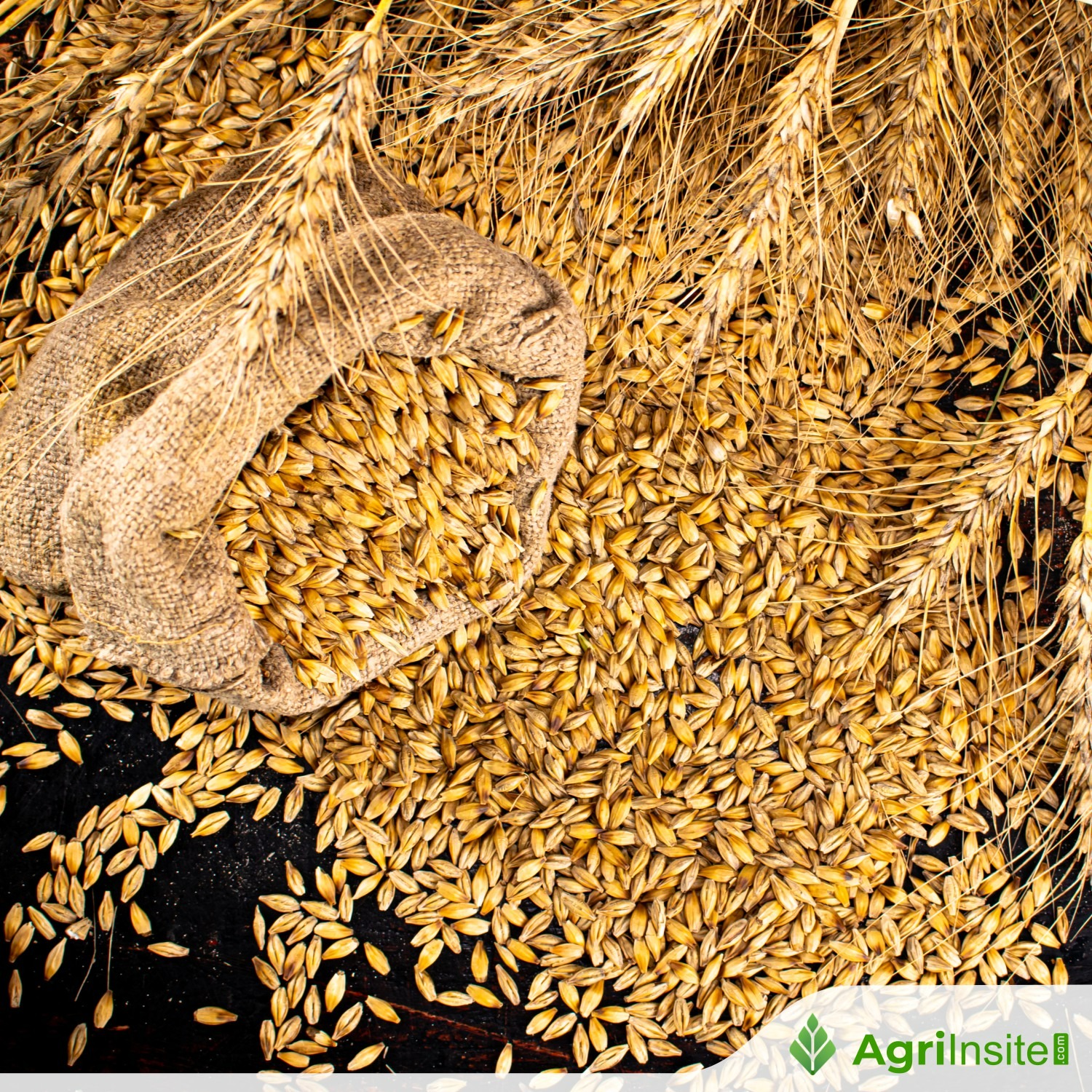
Zimbabwe will require grain importers to prove they support local production under Statutory Instrument 87 of 2025. The policy aims to protect farmers and reduce import dependence as wheat cultivation expands, with planted area rising from 60,000 hectares in 2020 to over 130,000 hectares.
Government will require grain importers to demonstrate that they are supporting local production before being allowed to bring grain into the country, as Zimbabwe steps up efforts to reduce dependence on imports and strengthen food security.
The measures are being implemented alongside efforts to expand wheat production, with Government saying the country should increasingly produce locally what it is currently importing.
Agriculture, Mechanisation and Water Resources Development Permanent Secretary, Professor Obert Jiri, said Statutory Instrument 87 of 2025 had established a framework for managing grain imports while protecting local farmers from unfair competition.
Prof Jiri was speaking in Harare at the Zimbabwe 2026/27 Agricultural Season – A Whole Value Chain Preparedness Summit.
He said Government was not opposed to imports where they were necessary, but wanted those imports managed in a way that encouraged local production.
“There is a pillar which talks about enhanced grain imports. Should we need to import grain, how should we do it?”
Prof Jiri said SI 87 of 2025 kept the borders permanently open for grain imports, but imposed conditions designed to support domestic production.
“We have put Statutory Instrument 87 of 2025, which allows the borders to be open permanently,” he said.
“We only ensure that first, we protect our farmers from unfair competition, and then we also emphasise local production or local support to production by those that want to import.”
“Essentially, SI 87 says before you import you must show proof that you have supported local production,” he said.
“It also says how do we protect locally produced grain from competing unjustifiably with grain produced outside?”
The policy comes as Zimbabwe seeks to consolidate major gains in wheat production, which has become increasingly important to national food security.
Speaking at the National Technologies for African Agricultural Transformation (TAAT) Wheat Field Day 2026, Prof Jiri said wheat production had expanded significantly, with the area under the crop increasing from about 60 000 hectares in 2020 to more than 130 000 hectares.
Average yields have also increased from about two tonnes per hectare to more than 5,3 tonnes per hectare across all farming sectors.
Prof Jiri said wheat had evolved from being largely a commercial crop into an important food-security crop, with wheat grain being among the foods distributed to vulnerable households during the 2024 drought.
“It is not our desire to import what we can produce locally,” he said.
However, Zimbabwe still imports some hard wheat to meet specific industry requirements.
Prof Jiri said researchers and seed houses were working on varieties with hard-wheat characteristics.
He challenged breeders to develop varieties that could help Zimbabwe sustain wheat production under changing climatic conditions.
The varieties should have higher yields, be drought-tolerant and resistant to diseases and pests, while requiring less water.
Prof Jiri also called for renewed consideration of summer wheat production as Zimbabwe adapts its agricultural systems to climate change.
Beyond production, he said Zimbabwe needed to increase local processing and value addition so that more jobs and investment were retained within the country.
The drive to increase local production comes against the background of high production costs, which Prof Jiri said continued to make Zimbabwean farmers less competitive than producers in some neighbouring countries.
“Our fuel prices and our fertiliser prices are high. Our cost of production in Zimbabwe is very high. Thirty-two to 40 percent of our cost of production is fertiliser alone. We can’t compete with those where they produce local fertiliser. We import a lot of it. Almost all the fertiliser we use is imported,” he said.
The import-management measures form part of Government’s six-pillar drought response plan, which includes enhanced strategic grain reserves, accelerated climate-smart production, an integrated financing architecture, livestock drought mitigation, enhanced imports, and coordination, early warning systems and capacity building.
The approach is aimed at ensuring that where imports are required, they complement rather than undermine domestic production, while investment in local agriculture continues to reduce the country’s exposure to external supply shocks.
To Read more about Wheat News continue reading Agriinsite.com
Source : The Herald