A looming crisis for farmers and sugar mills: Why minimum selling price (MSP) of sugar needs to be raised urgently

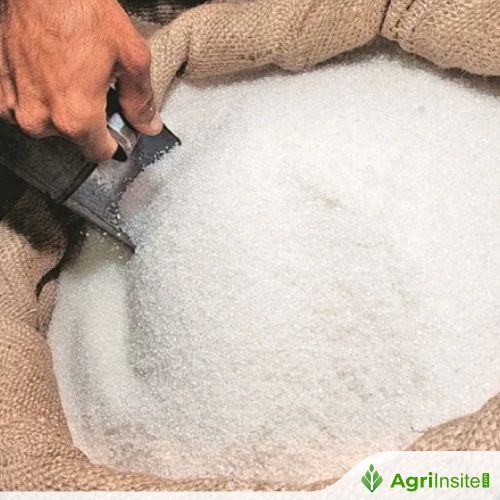
India’s sugar sector faces severe financial strain as cane FRP/SAP hikes outpace the stagnant sugar MSP of ₹31/kg, unchanged since 2019. With production costs rising to ₹41.7/kg, mills are selling below cost, risking large cane arrears, weakened ethanol output, and potential mill closures unless MSP is urgently revised.
As India’s second largest agriculture-based economy, sugarcane remains one of India’s most strategic crops, supporting nearly 5.5 crore farmers and contributing over ₹1.1 lakh crore annually to the rural economy. The stagnant Minimum Selling Price (MSP) of sugar at ₹31/kg since February 2019, while sharp and repeated increases in the Fair and Remunerative Price (FRP) and State Advised Prices (SAP) of sugarcane is pressuring the industry towards financial stress.
Over the last six years, the FRP of sugarcane has increased from ₹275 in 2018-19 to ₹355/quintal in the current sugar season (2025-26), a drastic 29 per cent rise along with several major sugar-producing states including Uttar Pradesh, Karnataka, Punjab, Haryana, and Uttarakhand revising State Advised Price (SAP) well beyond the FRP in the current season. As a result, in the current season, the estimated cost of sugar production has increased to around ₹41.7/kg widening the gap between sugar MSP and cost of sugar production. With MSP remaining stagnant, mills are now selling sugar well below production cost, a situation that is neither sustainable nor fair to the industry.
Bumper output
With bumper sugar production estimated in the current season, sugar mills are obliged to operate to safeguard farmer livelihoods, maintain crushing schedules, and avoid large-scale crop distress even when circumstances turn unfavourable. The industry facing the unfavourable situation with less diversion to ethanol, lack of price parity in global market, and falling domestic sugar prices.
Mills pay around ₹1.25 lakh crore annually to 5.5 crore farmers. This year, due to the higher cane costs, the total liability is expected to see an addition of ₹20,000–25,000 crore to farmer payment. With sugar prices crashing – ex-mill sugar prices are at around ₹3630–3690 per quintal in Maharashtra and Karnataka, and marginally higher in UP resulting in foreseeable losses for mills and building cane payment arears in coming month. Current ex-mill prices have already created a ₹6,000+ crore deficit, and if the sugar MSP remains unchanged, cane arrears will begin rising sharply from January 2026 onwards, triggering farmer distress and a systemic payment crisis which the industry has worked hard for last 5 years.
Surplus domestic stocks and stable domestic sugar consumption have deepened the problem. Domestic sugar consumption has remained stagnant 281 LMT in 2024–25, with mere growth expected in upcoming years.
Compounding to the financial crisis to the mills and halt in the country’s biofuel revolution is the lack of clarity in the Nation’s Ethanol Blending Programme beyond 20 per cent. In the current season, sugarcane ethanol has only received 28 per cent of total allocation, leading only about 34 lakh tonnes of sugar diversion to ethanol, resulting in a significant sugar glut in the domestic market. Lower ethanol offtake means underutilised distilleries, weakened cash flows, and reduced ability to repay loans, and payment to farmers.
Key for energy transition too
In a recent study on sugar consumption done by the Indian Sugar & Bio-Energy Manufacturers Association (ISMA), sugar has extremely low weightage in the CPI basket an increase of sugar MSP at ₹41 would have negligible inflationary impact on the consumer.
Under these conditions, MSP correction becomes central not only to the sugar sector but also to India’s energy transition. A dynamic formula that adjusts sugar MSP automatically with changes in cane FRP and SAPs is the need of the hour for the sugar industry to sustain their operation and ensuring timely payment to farmers.
Without urgent MSP correction and its alignment with increased FRP/SAPs, the industry faces closure of mills in upcoming months, delayed farmer payment, rising farmer arrears, ethanol supply disruptions, and a cascading crisis across the rural economy. A fair, cost-reflective MSP is vital not just for mills but for farmers, energy security, and the future of India’s integrated sugar-bioenergy ecosystem.
To Read more about Sugar Industry continue reading Agriinsite.com
Source : The Hindu Business line