Corteva eyes hybrid wheat for India to free up land for biofuel crops

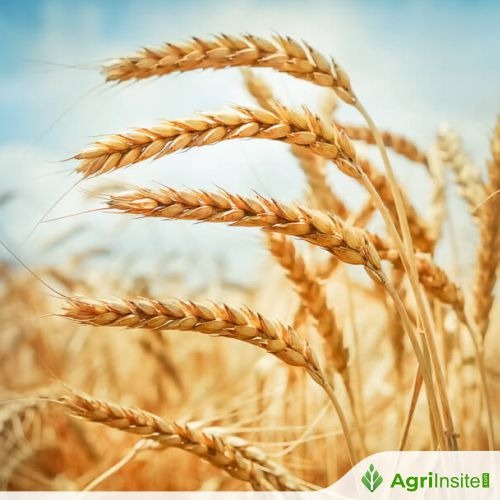
Corteva Agriscience is developing hybrid wheat for India, aiming to boost yields and free land for corn and mustard. Commercial seeds may arrive in 10–15 years. The company also focuses on rice, corn, and mustard, using AI, biologicals, and hybrid technology to enhance productivity and smallholder farmer incomes.
US agritech giant Corteva Agriscience is developing hybrid wheat varieties tailored specifically to Indian growing conditions, with commercial seeds expected to reach the market in 10–15 years, a senior company executive said, reported PTI.
The technology is aimed at raising per-acre wheat productivity and freeing up agricultural land for other priority crops such as corn for ethanol and mustard for edible oil and sustainable aviation fuel, Brook Cunningham, President of Corteva’s Asia Pacific operations, told PTI in an interview.
“We announced a new sterility system for hybrid wheat at our investor day last year and have begun investing in India-specific germplasm,” Cunningham said during her visit, calling India a “top priority” for the initiative. She noted that hybrid wheat typically requires a 25-year global development timeline but said Corteva has already prioritised work on localised germplasm suited to Indian conditions.
Cunningham, who took on her current role in June and serves on the company’s global executive leadership team, said India is at an “inflection point to feed and fuel the world,” citing the country’s self-sufficiency in rice and wheat and its export potential in fruits, vegetables, corn, and sustainable aviation fuels.
With the global population set to grow by another two billion in the next 25 years, alongside mounting challenges from climate change and pest resistance, she stressed that “technology is the only way India achieves food security and export ambitions amid climate impacts.” Corteva’s seeds, crop-protection products, and biologicals, she added, give farmers the tools to maximise output from every hectare.
The company has recorded a 12% compound annual growth rate in India while keeping its focus on accessibility for the country’s 150 million smallholder farmers, most of whom operate on less than two hectares. Cunningham described the model as a “win-win,” explaining that value generated from R&D is shared among farmers, the value chain, and the company. Yield gains and other benefits are distributed in a way that ensures both grower viability and Corteva’s ability to invest, she said.
According to Cunningham, Corteva’s technologies typically boost yields for smallholders by 15–20% on farms averaging around 0.3 hectares, with some innovations increasing incomes by 20–30%. She emphasised the need for efficient delivery and collaborative partnerships that balance shareholder growth, farmer needs, and government goals.
A former investment banker, Cunningham joined Corteva in late 2022 after 15 years in finance, attracted by agriculture’s potential for impact—particularly in smallholder-dominated markets.
Corteva, active in India since 1972, operates two major research hubs in Telangana and invests about USD 1.4 billion annually in global R&D, roughly 8% of its revenue. Cunningham declined to disclose specific investment figures for India or the hybrid wheat programme.
Beyond wheat, the company sees strong growth prospects in corn, with acreage expected to expand by 15% over the next two years on the back of rising ethanol and protein demand. She said new rainy-season corn hybrids will be introduced soon.
Corteva also launched Clearfield mustard hybrids in India this year and plans to scale them over the coming years. In rice—where hybrid adoption in India remains in single digits—Cunningham sees significant scope for yield improvement, with Corteva preparing to bring its top global technologies to the market.
The company’s offerings include crop-protection products spanning traditional chemistry and biologicals to address resistance challenges. It is also leveraging artificial intelligence to speed up the development of new technologies.
Corteva remains on track to achieve 5% global net sales growth in 2025.
To Read more about Wheat News continue reading Agriinsite.com
Source : Chinimandi



