From energy generator to data powerhouse: Why technology will define the future of India’s sugar industry : Editorial by Uppal Shah


India’s sugar industry is evolving into a biofuel powerhouse, driven by ethanol blending and digital transformation. Adoption of AI and IoT can boost efficiency, recovery, and policymaking through real-time data. However, scaling technology requires investment and support, especially for smaller mills, to unlock the sector’s full bio-economy potential.
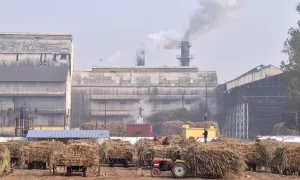
The domestic sugar industry has scaled dizzying heights, and it’s no longer limited to only producing sugar. It has transitioned to being the cornerstone of the country’s biofuel revolution.
At a time when cities and countries are facing shortages of traditional cooking and automobile fuel, due to the West Asia strife, India has woken up to this immense realisation of what the agricultural wealth and the potent waste-to-wealth story that is waiting to be explored. However, to fully realise the advantage of this, we have to dovetail the sugar industry with technological advancement and see the wonders it can generate.
At the recently held ISMA Event, the great length at which technology- AI, IOTR was discussed at great length. Key policy makers felt the need to get real-time data from the industry, which can result in instant and effective policy for the industry.
Can you imagine what untapped wealth is lying idle?
The conference has signalled a mindset shift, placing digital transformation, artificial intelligence (AI), and industrial IoT at the heart of the sugar sector’s next phase of growth.
For decades, India’s sugar industry has battled production cyclicality and acute financial constraints. The emergence of ethanol blending, particularly the ambitious 20% blending target, has helped stabilise revenues and diversify output, and has contributed to massive savings in crude oil imports, reinforcing the sector’s strategic importance to India’s energy transition.
Speaking at the event, Sanjeev Chopra, Secretary, Department of Food & Public Distribution, articulated a critical insight: the future of policymaking in the sugar sector will depend on the quality, granularity, and timeliness of data. This is a fundamental shift.
Policymaking, especially in agriculture-linked industries, has suffered due to delayed data. But in a dynamic bio-energy ecosystem, real-time data becomes essential, not just for governance, but for competitiveness.
This is where AI and IoT come into play.
Smart data collection embedded across the production and the entire value chain can generate real-time insights on recovery rates, energy consumption, and process inefficiencies. AI-driven analytics can then translate this data into actionable decisions, enabling mills to optimise operations on the fly.
One of the biggest advantages of introducing technology into this industry is cost competitiveness. The sugar industry’s transition hinges on its ability to extract greater value from every tonne of sugarcane. The sugar recovery rate plays a crucial role in determining the total sugar production in a given season. A proper analysis of crop challenges and addressing the issue in real time can go a long way in improving crop health and recovery.
Real-time data systems can bridge the long-standing gap between industry and government. When policymakers have access to accurate, live data, decisions on cane pricing, ethanol diversion, and export policies can be more responsive and evidence-based. This reduces friction and builds trust across stakeholders.
Technology can play a crucial role in byproduct valorisation. From bagasse-based cogeneration to ethanol production and compressed biogas, the sugar mill of the future will resemble an integrated bio-refinery. Technology will be the glue that binds these processes together, ensuring optimal resource utilisation and minimal environmental impact.
In an interview with Seema Paroha, Director, NSI- Kanpur, she said that in sugar factories, AI can help in the accurate estimation of sugarcane yield, monitoring of cane quality, optimisation of crushing operations, reduction of energy and water consumption, and improvement in recovery rates.
She said that AI-based forecasting models can help in estimating cane availability, planning harvesting schedules, and optimising transport logistics. During crushing, intelligent control systems can regulate milling pressure, imbibition water, evaporation, and crystallisation parameters to maximise recovery.
In supply chain management, AI can improve inventory control, market forecasting, and distribution efficiency. Such integrated adoption will enhance the operational stability and profitability of sugar factories.
However, challenges remain. The adoption of advanced technologies requires capital investment, skilled manpower, and a cultural shift within organisations. Smaller mills, in particular, may struggle with the upfront costs and technical complexities. This is where policy support, industry collaboration, and knowledge-sharing platforms become critical.
India stands at a unique juncture. With a large agricultural base, an expanding energy demand, and a proven ethanol programme, the sugar industry has the potential to become a cornerstone of the country’s bio-economy. But to realise this potential, it must embrace technology not as an add-on, but as a core driver of value.
For further inquiries or to contact Uppal Shah, Editor-in-Chief, please send an email to uppal@chinimandi.com.
To Read more about Sugar Industry continue reading Agriinsite.com
Source : Chinimandi