Haryana : 15% decline in sugarcane yield worries Panipat farmers

Sugarcane farmers in Panipat reported a nearly 15% decline in per-acre yields in 2025–26 despite rising acreage. Heavy September rainfall, Red Rot disease, Top Borer attacks and ageing early varieties hurt yields and sugar recovery. Rising input costs and stagnant cane prices have further reduced profitability.
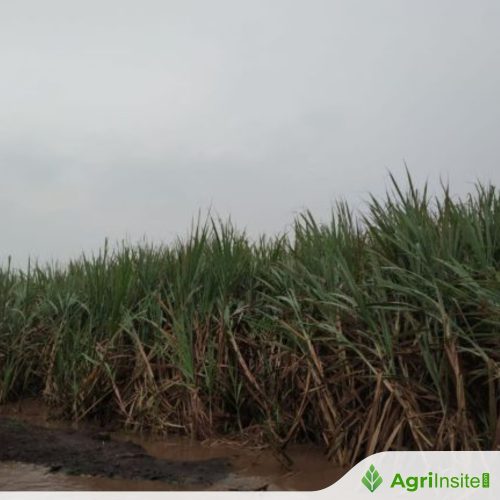
Sugarcane farmers in Panipat district have recorded about a 15 per cent decline in yield per acre during the 2025–26 season, raising concern despite a steady increase in the area under cultivation over the past four years.
Apart from reduced yield, sugar recovery at the local sugar mill has also fallen this year. Farmers and officials attribute the decline to several factors, including heavy rainfall in September last year, the impact of Red Rot disease and Top Borer insect attacks, particularly in early varieties.
Official data show that the area under sugarcane cultivation has increased consistently. In 2021–22, the crop was grown on 24,130 acres, which rose to 25,104 acres in 2022–23 and 26,118 acres in 2023–24. In 2024–25, the area expanded sharply to around 32,000 acres in the district.
At present, early varieties — Co 238, CoH 160 and CoH 118 — account for around 46 per cent of the area, while mid varieties such as Co 5011 and CoH 119 cover the remaining 54 per cent. However, the area under early varieties has been declining every year as they are more prone to insect attacks and diseases, prompting farmers to shift towards mid varieties.
Satpal Singh, a sugarcane farmer from Jatal village, said that he was cultivating the crop on around 20 acres, but yields had dropped significantly. “Excess rainfall has affected almost every crop this year, including paddy and sugarcane. The crop looks good, but the weight of the cane is very low. A reduction of around 50 to 60 quintals per acre is being recorded this year,” he said.
Sudhir, a farmer from Bhalsi village, echoed similar concerns, attributing the decline mainly to climatic factors. “The rainfall was very heavy in September last year, which affected yield formation. Around 50 quintals per acre less yield is being witnessed this year,” he said.
Sudhir added that sugarcane cultivation had become unprofitable due to rising input costs. “The government price of sugarcane is Rs 415 per quintal, which is very low. It should be increased to at least Rs 500 per quintal as the prices of urea, pesticides, diesel and labour have been rising regularly,” he said.
Sandeep, a farmer from Hathwala village, said yields in the area had declined by 50–60 quintals per acre. “The heavy late rains have affected the crop this year,” he said.
Explaining the vulnerability of early varieties, he said, “We have been sowing Co 238 for many years, but this variety is highly susceptible to disease and insect attacks. Late rains also create favourable conditions for Top Borer and Red Rot disease. Due to all these factors, yield has reduced.”
Sudhir further pointed out that Co 238 was nearly 15 years old and highly prone to pests and disease. “The government has not introduced any new early variety so far, forcing farmers to continue with this variety,” he said, urging the authorities to launch new early varieties.
He added that there were three sugarcane purchase centres in the district — Hathwala, Bapoli and Sanoli Khurd. “The Hathwala centre is the oldest. Around 4,000 quintals are purchased daily from here and sent to the sugar mill,” he said.
Meanwhile, sugarcane crushing has been underway for the past three years at the new sugar mill in Dahar village. The state government established the mill at a cost of Rs 360 crore on 70 acres, with a crushing capacity of 50,000 quintals per day. Equipped with modern technology, the plant became fully operational in 2022.
Farmers from 172 villages in Panipat district, 11 villages in Karnal district and nine villages in Sonepat district are registered with the Panipat Cooperative Sugar Mill.
Government figures show that 65.51 lakh quintals of sugarcane were crushed in 2022–23, 63.45 lakh quintals in 2023–24 and 62.10 lakh quintals in 2024–25. Sugar recovery has also declined to 8.5 per cent this year, compared with 9.2 per cent last year.
Karambir Singh, Cane Development Officer at the Panipat Cooperative Sugar Mill, said around 2,500 farmers were registered with the mill. “This year, a decline of around 15 per cent per acre has been recorded,” he said.
He attributed the lower yield mainly to climatic conditions. “Due to heavy late rainfall, the crop showed good vegetative growth, but the weight of the cane did not increase proportionately,” he said, adding that sugar recovery stood at around 8.5 per cent.
He said several factors were responsible for the lower recovery, including soil conditions, excessive use of urea and increased sowing of mid varieties compared to early varieties.
Dr Rajiv Singh, Assistant Sugarcane Development Officer, said the government had launched several schemes to encourage sugarcane cultivation. “Under the National Food Mission for Sugarcane (NFSM) and the Technology Mission on Sugarcane (TMS), various incentives are being provided to farmers,” he said.
He noted that the area under sugarcane cultivation was increasing each year, particularly after the establishment of the advanced sugar mill in the district. “We have also created a WhatsApp group to inform farmers about government welfare schemes and the latest farming technologies,” he added.
Refuting reports of an outbreak of Red Rot disease and Top Borer infestation, Dr Singh said farmers were regularly advised to maintain a distance of around four feet between plants. “However, many farmers sow at a spacing of only 2.25 feet, which also affects yield,” he said.
To Read more about Sugar Industry continue reading Agriinsite.com
Source : The Tribune