How Trump’s new Iran tariff has taken the aroma off India’s basmati exports

US President Donald Trump’s threat of a 25% tariff on countries trading with Iran has raised risks for India’s basmati rice exports. Iran, India’s third-largest basmati market, faces payment uncertainties, disrupted trade routes and falling prices, hurting exporters amid sanctions, currency turmoil and political unrest.
United States President Donald Trump’s latest salvo threatening to impose an additional 25 per cent tariff on any country doing business with Iran can have a significant impact on India’s basmati rice exports.
The reason: Iran is India’s third largest market for basmati rice.
The Islamic Republic accounted for $753.20 million out of India’s total basmati exports of $5,944.49 million in 2024-25 (April-March). That was next only to the $1,203.67 million of Saudi Arabia and $850.08 million of Iraq.
In quantity terms, out of the total exports of 60.65 lakh tonnes (lt), Iran’s share was 8.55 lt, with Iraq’s at 9.06 lt and Saudi Arabia’s at 11.74 lt.
The current fiscal has seen Iran overtaking Iraq, with its exports to the former soaring by 20.9 per cent from 4.95 lt in April-November 2024 to 5.99 lt in April-November 2025. On the other hand, exports have contracted to both Iraq (by 2.9 per cent, from 5.16 lt to 5.01 lt) and Saudi Arabia (by 2.8 per cent, from 6.89 lt to 6.70 lt).
Moreover, all these are official figures. Basmati exports to Iran are also routed through Dubai. The United Arab Emirates (UAE) imported 3.89 lt of basmati rice from India in 2024-25 and 2.52 lt during April-November 2025. A lot of these shipments are believed to be diverted to Iran, with exporters using the more reliable banking channels and payment systems in the UAE.
“Exporters prefer either shipping through Dubai or selling in Iranian government tenders floated by the Government Trading Corporation of Iran, Iran Garment Company Ltd, and Jahad Sabz Company. These two routes are safer from a payment standpoint than exporting directly to private buyers in Iran,” said a trade source.
But the proposed new Trump levy has made exporters wary of striking fresh contracts even through the hitherto less risky routes. “The 25 per cent additional duty rate (announced by Trump in a Truth Social Post on January 12) has not been officially imposed. It has, however, created huge uncertainty among the trade. Nobody wants to export in this situation where there is no guarantee of payment for even the rice already shipped out,” Vijay Setia, former president of the All-India Rice Exporters’ Association told The Indian Express.
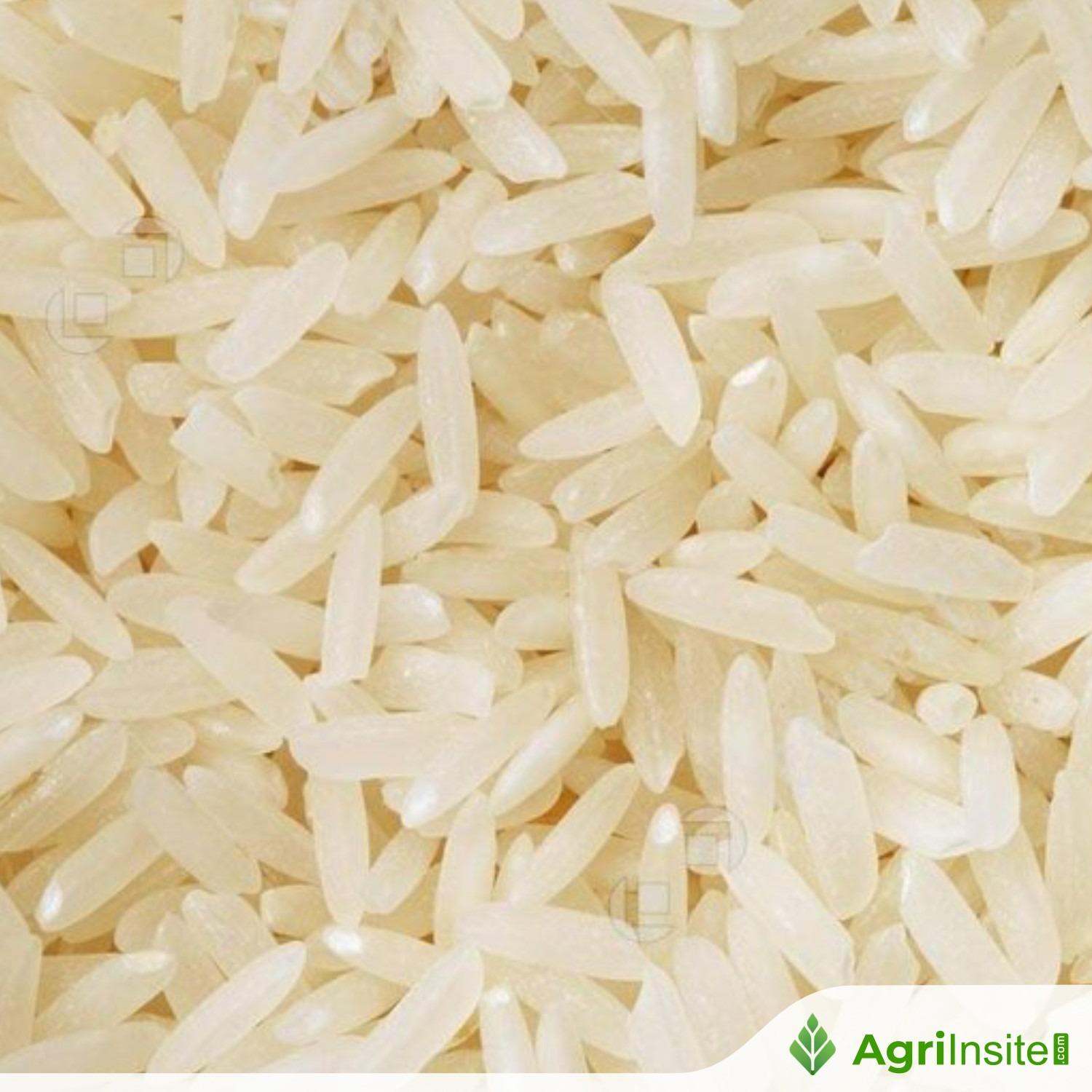
The impact is being felt in prices. India mostly exports parboiled Pusa Basmati-1718 and Pusa Basmati-1509 rice to Iran. These varieties, bred by the Indian Agricultural Research Institute in Delhi, have a good market in Iran due to their extra kernel length and volume expansion capacity: a cup of milled 1718 or 1509 grains give around 4.5 cups on cooking, making it possible to serve more plates of biryani from the same quantity of rice.
Pusa-1509 basmati rice rates in Haryana’s mandis rose from Rs 54-55 per kg in October to around Rs 68 towards December. But since late last month, when the street protests in Iran broke out, prices have fallen to Rs 63-64. Wholesale prices of Pusa-1718 rice have similarly eased from Rs 70 to Rs 65-66 levels. Pusa-1509 paddy prices have also dropped to Rs 3,200 per quintal in the last 4-5 days, from Rs 3,300-3,400 prior to the disturbances.
India’s main basmati exporters to Iran include the Amritsar (Punjab)-headquartered Supple Tek Industries, Shree Jagdamba Agrico Exports (based in Gharaunda, Haryana), Shiv Shakti Inter Globe Exports Pvt Ltd (Taraori, Haryana), GRM Overseas Ltd (Panipat, Haryana), and KRBL Ltd (Noida, Uttar Pradesh).
India’s basmati rice exports to Iran
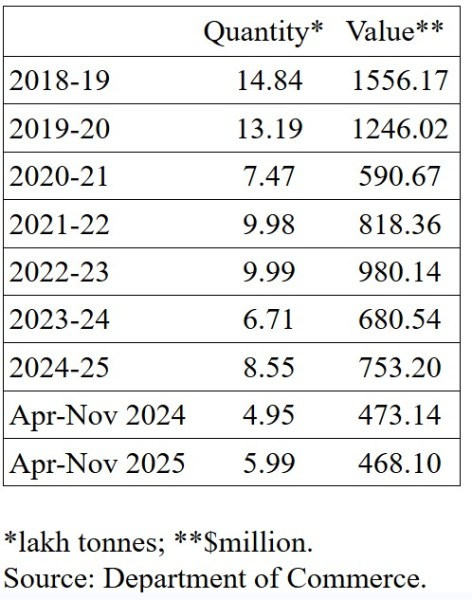
Basmati exports from India to Iran actually peaked in 2018-19, at nearly 15 lt and valued at over $1.5 billion. But with US sanctions being reinstated under the first Trump administration in November 2018, exports settled at lower levels (see table). As the sanctions began to bite and create shortages of foreign exchange, payment issues too correspondingly rose.
While Trump’s newly announced 25 per cent tariff—to be imposed on goods imported from any country “doing business” with Iran—has been the last straw, it was preceded by the Islamic Republic’s own decision, on January 1, to stop the issuing of subsidised foreign currency.
Importers of essential products such as rice could earlier access dollars at a preferential exchange rate of 28,000 tomans. That ended in the new year, with all importers now having to buy foreign currency at the open market rate of around 130,000-131,000 tomans-to-the-dollar.
The decision to end the heavily-subsidised exchange rate regime was a trigger for both inflation and the protests that ensued. But it has also made Iranian imports unviable, hitting the Indian basmati trade hard as well.
To Read more about Rice News continue reading Agriinsite.com
Source : The Indian Express