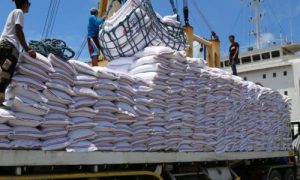
Nigeria spends N51bn on rice imports in one year


Rising rice imports are weakening Nigeria’s domestic rice industry, making local production uncompetitive due to high costs. Over 90 rice mills have shut down as cheaper imports dominate the market, forcing many farmers to abandon rice cultivation and threatening the country’s food security goals.
The big gains recorded in the country’s rice industry under the previous administration are being eroded by rising imports, with the country spending N51 billion ($34.4 million) on foreign rice in 2024, according to UN Comtrade data.
Despite gains in rice productivity per unit area under the Buhari administration and the expansion of milling capacity, Nigeria’s local rice remains uncompetitive with imports due to persistently high production costs.
The inability of the country’s rice to compete has also forced farmers to abandon cultivation, resulting in heavy losses. The trend is a challenge for President Bola Tinubu’s plan to boost food production, drive food security, and increase foreign exchange proceeds from non-oil exports.
It is getting costlier to cultivate rice locally and sell at a rate that is profitable, said Muhammed Augie, former state chairman, Rice Farmers Association, Kebbi chapter.
Augie explained that farmers are struggling to find buyers for their paddy as most millers that sourced from them have shut down their operations, noting that the situation has forced them to switch to the cultivation of other grains, such as sorghum and others.
“Last year, less than 30 percent of rice fields in Kebbi were cultivated,” he said. “Rice farmers are in limbo and lots of them are abandoning cultivating the grain,” he added.
Ibrahim Salah, a rice farmer and aggregator in Mallam Dori Local Government Area of Jigawa State, told BusinessDay that cultivating rice is no longer profitable for farmers owing to low demand and high input costs.
“The demand for paddy is very low at the moment and it is not profitable for us,” he said.
The UN Comtrade data also revealed that Benin and Togo spent $705.7 million and $74.4 million, respectively, on foreign rice imports in one year, with much of it likely smuggled into Nigeria through the country’s porous borders.
While exact figures are difficult to track, estimates suggest that the country needs 6 million metric tons of milled rice to meet demand.
According to the Rice Processors Association of Nigeria (RIPAN), the country needs 11 million metric tons of paddy to meet domestic demand, but produces 4.8 million metric tons, leaving a shortfall of 6.2 million metric tons.
The country’s rice milling industry has a processing capacity of 7.5 million metric tons, data from RIFAN showed. The association in a 2023 snapshot report says most millers have a large unutilized capacity and hence huge overheads per unit of capacity utilised, owing to macroeconomic challenges.
Nigeria granted an import waiver for essential goods, including rice, in June last year, easing pressure on food prices. The policy has benefited consumers but squeezed farmers’ margins.
Over 90 mills shut down operation
Over 90 rice mills have shut-down operations as they are unable to favourbly compete with cheaper imports. Millers are also squeezed by the high-rate of smuggled rice through the country’s porous borders.
Peter Dama, national chairman of Rice Millers Association of Nigeria (RIMAN), said millers cannot compete with cheaper imports owing to high production costs.
“Rice millers cannot ramp up production and compete with cheaper imports with the high cost of paddy, energy costs and interest rate,” he said, noting that over 50 small-scale millers shut down operations last year.
He faulted the federal government’s duty-free import policy for rice exporters, noting that it might lead to the collapse of the local industry.
To Read more about Rice News continue reading Agriinsite.com
Source : Business Day