Oman is promoting wheat farming plan to enhance national food security

Oman is boosting wheat production under its 2023–2027 expansion plan to strengthen food security and reduce import reliance. Backed by subsidies, modern farming, and smart technologies, output has risen significantly. While imports remain key, the strategy balances local growth with resilience, supporting Vision 2040 goals amid global supply uncertainties.
OMAN – Oman’s Ministry of Agriculture, Fisheries and Water Resources has rolled out an ambitious wheat-farming plan under the Wheat Cultivation Expansion Project (2023-2027), targeting enhanced food security amid global supply disruptions and in line with Vision 2040 goals.
The Ministry of Agriculture, Fisheries and Water Resources has promoted modern agronomic practices, including improved seed varieties, better irrigation management, balanced fertilization, and integrated pest control, to lift productivity and grain quality, measures credited with supporting higher yields in pilot and expanding cultivation areas.
The Ministry’s wheat programme began with a wheat seed distribution drive, irrigation advice, and on-field monitoring to support production outcomes.
Local wheat production surged to 10,128 tonnes in the 2024/2025 season, up from 7,000 tonnes previously, driven by expanded cultivation in key areas like Dhofar’s Najd region (over 6,400 acres) and North Sharqiyah’s Al Mudhaibi.
Backed by RO 5 million (US$13M) in government subsidies through 2027, the initiative introduces high-yield, climate-adapted varieties, modern equipment, and free harvesting services to farmers.
The plan addresses Oman’s heavy reliance on imports, which meet its 350,000-tonne annual wheat needs through major mills such as Salalah and Oman Flour Mills.
Post-Ukraine crisis, incentives such as RO 500 (US$1,300.46) per tonne purchase prices and improved storage silos ensure supply stability, blending local growth with strategic imports.
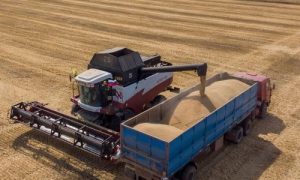
Harvesting kicked off in mid-March 2026 and will intensify in April and May, with projections exceeding 8,000 tonnes from Dhofar alone, supported by smart technologies that tackle water scarcity and high costs.
Dr. Ahmed al Bakri, Under-Secretary for Agriculture, emphasized the dual focus on sustainability and resilience, noting a 9.1% sector growth to RO 831 million (US$ 2.16B) GDP contribution by Q3 2025.
The Sultanate of Oman’s agricultural policies are moving towards a dual model that gradually boosts local production while continuing to import to meet the majority of demand.
This approach ensures the stability of food supplies amid global market fluctuations and supports agricultural sustainability.
The sector is expected to witness gradual growth in the coming years, supported by the expansion of cultivated areas, the use of smart farming technologies, and improved productivity, despite ongoing challenges related to water scarcity and climate change.
The initiative aligns with Oman’s broader national development strategy, including goals outlined in Oman Vision 2040, which emphasizes sustainable agriculture, food security, and economic diversification.
Oman’s approach exemplifies Gulf diversification, empowering smallholders with seeds, training, and machinery while maintaining import buffers.
As harvests peak in April-May 2026, experts anticipate further yield gains, reinforcing national silos and export potential for surplus.
To Read more about Wheat News continue reading Agriinsite.com
Source : Milling MEA