Pakistan : 5% voluntary ethanol blending proposed

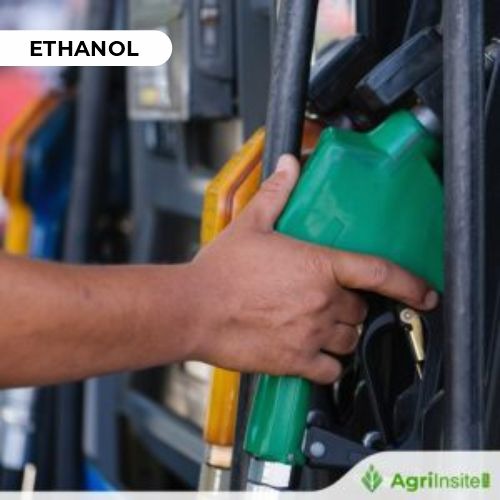
A committee led by Pakistan’s Petroleum Minister recommended 5% voluntary ethanol blending (E5) with petrol, citing commercial viability and consultation with oil companies. Current production of 400,000–450,000 tons is mostly exported. Challenges include infrastructure investment, vehicle compatibility, and sustainable supply. Global models like Brazil, India, and the US highlight policy consistency, long-term targets, and flex-fuel adoption.
A committee formed by Prime Minister Shehbaz Sharif has recommended 5% voluntary ethanol blending with petrol based on commercial viability and in consultation with oil marketing companies.
The committee, headed by Minister for Petroleum Ali Pervaiz Malik, had been tasked with exploring options for fuel blending. It submitted a report to the Prime Minister’s Office, which asked it to present the study to the deputy prime minister. Oil industry officials point out that the current ethanol production from sugarcane crushing stands at only 400,000 to 450,000 tons per year. Ethanol exports from Pakistan have been used for blending to produce E10-E15 fuel. At present, most of the ethanol produced in the country is exported due to price incentives.
The committee also conducted a price comparison. The monthly average of ethanol and petrol prices indicates that ethanol remains consistently cheaper than petrol. The average difference is calculated at $225 per ton. The committee noted that due to reduced energy content in ethanol, its price needed to be lower by 20% to 30% in order to become cost-effective. Infrastructure will also require notable investment. The committee was of the view that significant capital investment should be pumped into ethanol storage and blending facilities.
Vehicle compatibility has been evaluated too. According to the committee, new vehicles are compatible with E5 and E10 fuels. However, Pak Suzuki Motor Company has declared incompatibility with ethanol blending in the case of older vehicles and two-wheelers. The committee took up for discussion sustainable supplies as ensuring consistent supply was a challenge, particularly when export prices were higher.
Previous attempts at ethanol blending
A pilot project for blending 10% ethanol (E-10) was introduced through state-run oil marketing company Pakistan State Oil (PSO), which continued from 2010 to 2012. The project was initiated in Sindh and later expanded to Punjab.
The E-10 price was kept lower by Rs2.50 per litre compared to the regular petrol price through the petroleum levy differential. PSO was allowed to utilise Rs1.70 per litre for the development of infrastructure over a period of two years.
However, the project was stopped in 2012 due to the sudden unavailability of ethanol. As its export prices picked up, the producers preferred to export. Only PSO had been tasked with implementing the project. It was introduced as a separate grade, requiring substantial investment. Auto manufacturer Pak Suzuki declared that E-10 was not suitable for consumption in its vehicles.
Global best practices
Brazil launched ethanol blending in 1975 with E10 and currently E27 is being offered. It ensured consistent long-term policy implementation and investment in infrastructure with the objective of reducing reliance on imported fuels and curbing greenhouse gas (GHG) emissions.
The South American nation introduced flex-fuel vehicles in 2003, which can run on E25-E100. It is also the largest producer of sugarcane, accounting for 25% of global production.
India initiated ethanol blending in 2003 with E5 and currently it is selling E10 and is moving to E20. It has adopted a consistent long-term policy, the diversification of feedstock and regulated ethanol prices.
The objective is to reduce dependence on imported fuel and emissions intensity. It has become the second-largest producer of sugarcane with 19% of global production.
Earlier, the US launched ethanol blending in 1970 and currently E10 is being used across the nation. In some states, higher blending ratios are applied. The United States sets flexible annual blending targets depending on the availability of ethanol. Its aim is to reduce GHG emissions and enhance rural income. It is the largest producer of corn-based ethanol.
To Read more about Ethanol Industry & Bio Energy News, continue reading Agriinsite.com
Source : The Express Tribune