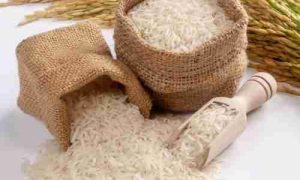
Punjab’s Basmati production sees sharp decline; flood damage and low yields pull down arrivals by 27%

Punjab’s Basmati production is set to drop sharply this year, with mandi arrivals down 27% due to floods and heavy rainfall cutting yields. Despite similar acreage, nearly 70,000 hectares were damaged. Output may fall to 25 lakh tonnes, pushing prices higher even as export demand stays strong.
Punjab’s Basmati rice production is expected to witness a significant decline this year, as till date only 19.19 lakh tonnes have arrived in the mandis against 26.25 lakh tonnes last year by this time – a dip of around 27 per cent. Last year’s total arrival was 33.02 lakh tonnes. Experts are estimating around 25 lakh tonnes of production this year – a drop of 8 lakh tonnes from last year and 1 lakh tonne less than the 2023 output, which was 26 lakh tonnes. This reduction comes despite the state maintaining almost the same cultivated area as last season.
According to officials, two major factors are behind the fall in production: extensive crop damage caused by floods and a sharp decline in per-acre yield due to heavy rainfall.
Punjab Agriculture Department’s field reports indicate that the state had 6.84 lakh hectares under Basmati this year, slightly higher than the 6.80 lakh hectares recorded last year and significantly above the 5.96 lakh hectares cultivated in 2023.
However, flooding across the Majha region, along with parts of Malwa and Doaba, caused severe damage. Officials estimate that 50,000 to 70,000 hectares of Basmati fields were affected – the majority in Majha, which is also the main hub of Basmati production. As a result, the effective Basmati-cultivated area dropped to approximately 6.15-6.25 lakh hectares.
Till date, the maximum Basmati arrival has taken place in Amritsar, where 4.90 lakh tonnes have been purchased, followed by 2.97 lakh tonnes in Fazilka, 2.19 lakh tonnes in Patiala, 1.60 lakh tonnes in Sangrur, 1.46 lakh tonnes in Tarn Taran, 1.42 lakh tonnes in Sri Muktsar Sahib, 1.34 lakh tonnes in Gurdaspur, 96,000 tonnes in Mansa, 74,434 tonnes in Faridkot, etc. Majha region’s three districts – Amritsar, Tarn Taran, and Gurdaspur – alone witnessed 7.70 lakh tonnes (40 per cent) out of 19.19 lakh tonnes of total arrival.
Rainfall impact
Agricultural experts report that heavy and prolonged rainfall further impacted crop performance. Farmers who usually harvest 21-22 quintals per acre are now getting only 16-18 quintals per acre, leading to a substantial fall in overall productivity.
Punjab remains a dominant force in the country’s Basmati export market. Around 40 per cent of India’s total exported Basmati rice originates from the state – much of it under the GI-tagged Punjab Basmati, which enjoys high global demand for its aroma and grain quality.
Ashok Sethi, Director, Punjab Rice Millers and Exporters Association, says, “We expect nearly 25 lakh tonnes of Basmati this year. The dip is mainly due to around 70,000 hectares of damaged crops and the adverse effect of heavy rains on yield.”
Prices surge
With production down, Basmati prices have surged. Different varieties are currently fetching between Rs 2,700 per quintal to Rs 4,500 per quintal, depending upon the variety and quality. Since Basmati is a non-MSP crop, the market is largely driven by private players and exporters.
The lower yield may have short-term revenue impacts for farmers, but robust demand and strong market prices are expected to cushion the losses to some extent, says an exporter, adding that for Punjab, a key player in the global Basmati supply chain, maintaining export momentum will remain a priority despite the production setback.
As the harvest season progresses, all eyes will be on actual procurement levels and export trends, which will determine the final impact of this year’s unusual weather challenges on the state’s agricultural economy, says Sethi.
To Read more about Rice News continue reading Agriinsite.com
Source : The Indian Express