Strong baht and high prices curb Thai rice exports as global trade hits record

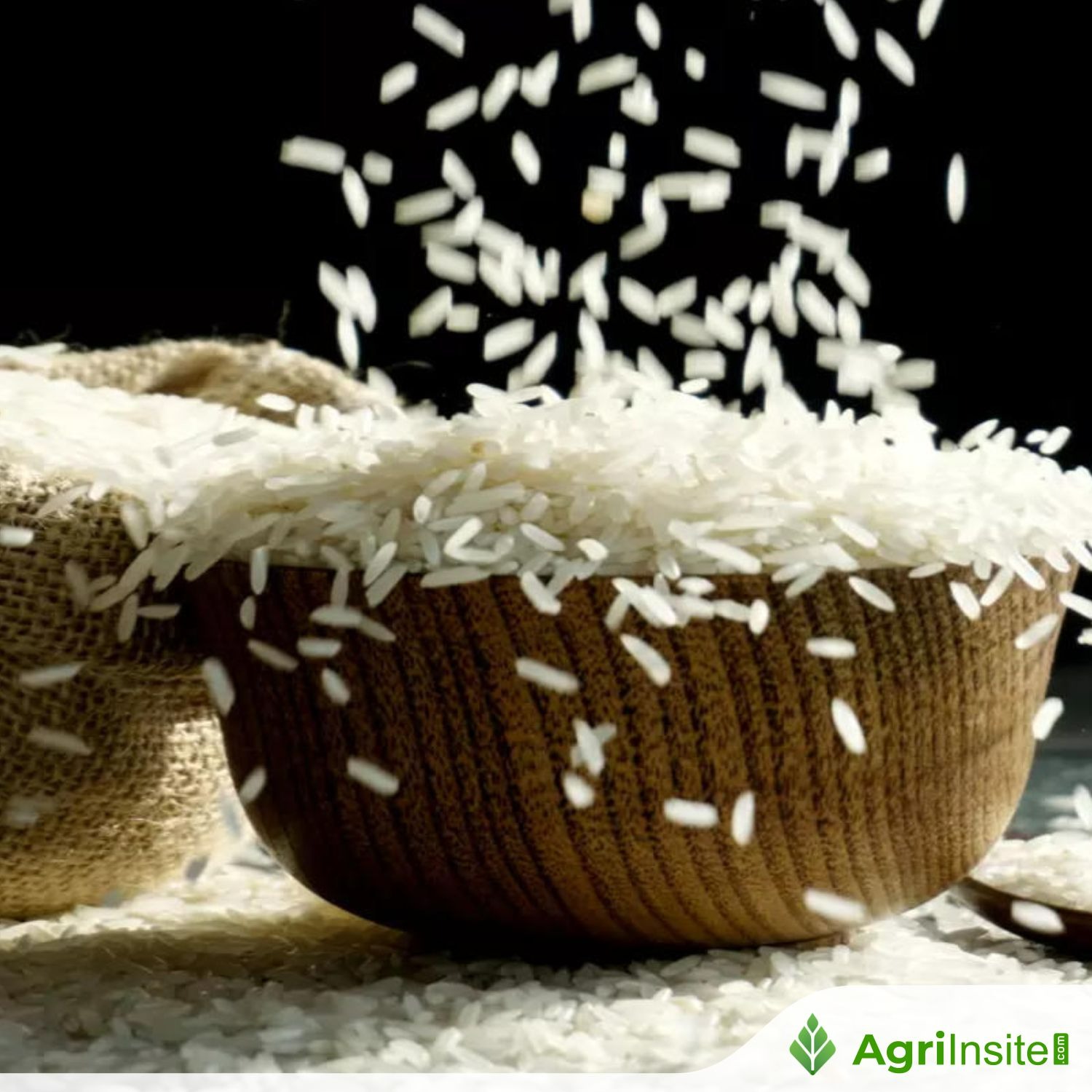
Global rice production for 2025/26 is forecast at 541.3 million tons, led by higher output in Cambodia, while India and China remain top producers, according to the US Department of Agriculture. Record consumption and trade are expected, though Thailand faces export pressure due to strong currency and high prices.
Information from the US Department of Agriculture (USDA) in its Rice Outlook: February 2026 report shows that global rice production in 2025/26 has increased to 541.3 million metric tons, up 0.1 million tons from the previous forecast, largely driven by Cambodia.
“The production forecast for Cambodia has been raised, as increased use of chemical fertiliser and the adoption of improved hybrid rice varieties have lifted expectations for higher yields.”
Meanwhile, output from India is projected at 152 million metric tons, and China at 146 million metric tons, the world’s two largest rice producers.
However, this year’s production remains below last year’s record (2024/25), which peaked at 541.7 million tons.
2026: Record-high global rice consumption
Even though record-high global rice consumption is largely driven by record consumption in several major rice-consuming countries, including Bangladesh, India, Nigeria, the Philippines, Thailand, Vietnam, and the United States.
At the same time, global ending stocks at the end of 2025/26 are projected at 190.9 million tons, up 0.5 million tons from the previous forecast, but 0.4 million tons lower than last year.
Upward revisions to ending stocks for countries such as Thailand (due to reduced exports), Burma (lower consumption), and Cambodia (higher domestic production) more than offset declines in Vietnam, Japan, and South Korea.
China and India together account for the largest share of global rice stocks, largely due to government stockholding programmes.
Therefore, global rice trade in 2026 is expected to reach a record high, up 3.1 million tons from 2025. Global rice trade in calendar year 2026 is forecast at 62.8 million tons (milled basis).
Thai rice exports face headwinds from a strong baht and high prices
“This month’s projection is slightly lower than the previous forecast due to a reduced forecast for Thailand, where export rice prices are relatively higher than in other Asian rice-exporting countries, mainly due to a strong baht and higher domestic rice prices. Larger expected exports from Burma, China, South Korea, and Tanzania partially offset the reduced forecast for Thailand in the global rice market.”
Data from the Thai Rice Exporters Association show Thai rice prices compared with other exporters as follows: White rice 5% broken (FOB): Thailand US$410/ton, Vietnam US$363–367/ton, India US$350–354/ton, Pakistan US$365–369/ton.
Jasmine rice: Thai Hom Mali 100% US$1,171/ton, Vietnam Jasmine US$433–437/ton, Cambodia Phka Malis US$834/ton.
Parboiled rice: Thailand parboiled 100% STXD US$445/ton, India 5% broken US$353–357/ton, Pakistan 5% broken US$409–411/ton.
Production subcommittee eyes an additional 1.7 billion baht to support farmers
News reports from the Production Subcommittee of the National Rice Policy and Administration Committee, Meeting No. 1/2569, said the meeting considered key issues to improve farmers’ quality of life, including:
1. Approved in principle an additional budget for the project to support main-season paddy farmers and promote cultivation suited to each area’s potential for the crop year 2568/69. Previously, the Cabinet approved a target of 4.63 million households, but registrations and updates have continued beyond expectations. As a result, an additional budget of 1,792 million baht was requested to support approximately 233,729 households that have not yet received payments but meet programme criteria. The Rice Department and the Department of Agricultural Extension were asked to review the farmer registration process to make it more rigorous and streamlined.
2. Approved in principle a project to shift rice cultivation to other economic crops to reduce rice planting in unsuitable areas, while incentivising farmers to plant oil palm intercropped with rice, feed maize, and bananas. The meeting assigned the Rice Department to review operational steps and crop types to align with local needs and market direction, and to integrate public–private cooperation to thoroughly assess feasibility and investment returns for each crop.
Pay 600 baht/ton for organic rice, 500 for low-carbon rice
3. Approved in principle a project to promote premium, high-quality rice production to add value, supporting the production of 300,000 tons of organic rice and 700,000 tons of low-carbon rice under premium, high-quality production methods. The government will provide co-funding of 600 baht per ton for organic rice and 500 baht per ton for low-carbon rice. The Rice Department was tasked with preparing project details based on the subcommittee’s recommendations, especially setting production standards, developing inspection and certification systems, and selecting suitable rice varieties. Implementation must cover the entire supply chain, from production and processing through to marketing, and consider certification costs, while integrating work with the Ministry of Commerce to deliver tangible results.
Watch: white paddy prices remain volatile
4. Review the project to compensate losses for cooperatives and farmer groups participating in the credit scheme to delay sales of main-season paddy for crop year 2567/68, after many cooperatives incurred losses from purchasing paddy above market prices to help support prices, amounting to around 579 million baht. The Department of Agricultural Extension was asked to review the data and clarify the pricing criteria used for calculations.
5. Approved the appointment of a working group for a project to promote and develop the domestic market system for agricultural products, chaired by the Deputy Permanent Secretary of the Ministry of Agriculture and Cooperatives (Production Development mission group), to ensure the continued allocation of the EU quota for white rice exports.
Data from the Thai Rice Millers Association show that as of 11 Feb 2569 (Ayutthaya), white rice at 15% moisture was 7,400–7,800 baht/ton, down from the previous week (4 Feb 2569) at 7,600–8,000 baht/ton.
Hom Mali rice, crop year 68/69, at 15% moisture in Ubon Ratchathani was 16,500–17,000 baht/ton, unchanged.
To Read more about Rice News continue reading Agriinsite.com