India’s rice exports dip amid geopolitical strain; Thailand sees price softening as Indonesia bets big on storage infrastructure

Global rice markets are shifting amid geopolitics and currency moves. India faces export slowdown due to West Asia tensions, though pricing remains competitive. Meanwhile, Indonesia boosts storage to strengthen food security, highlighting a transition toward resilience, logistics, and supply chain efficiency in global trade.
Global rice markets are entering a phase of recalibration, as geopolitical tensions, currency movements, and strategic state interventions reshape trade flows across Asia
India, the world’s largest rice exporter, reported a 7.5 per cent year-on-year decline in rice exports to $ 11.53 billion in FY2026, according to the Ministry of Commerce and Industry. The slowdown sharpened in March, with shipments falling 15.36 per cent to $997.53 million, reflecting mounting disruptions in key West Asian markets.
At the center of this shift are geopolitical tensions linked to the US-Israel-Iran conflict, which have significantly impacted trade flows to major destinations such as Iran, United Arab Emirates, Saudi Arabia, and Oman. Iran, the largest importer of Indian basmati rice, has been particularly affected, with exporters citing payment delays, contract uncertainties, and logistical bottlenecks.
Despite the near-term headwinds, India’s structural strength in rice exports remains intact. The country shipped 20.1 million tonnes worth $12.5 billion in FY2024–25, reaching over 170 countries. Production fundamentals also remain robust, with output estimated at nearly 150 million tonnes, accounting for roughly 28 per cent of global production, supported by steady gains in productivity and farm practices.
Currency Dynamics Cushion Indian Prices
While export volumes have softened, India’s price competitiveness has held firm. A weakening rupee has helped offset rising domestic paddy costs, keeping export quotes stable even as global demand shows signs of fatigue.
India’s 5 per cent broken parboiled rice was quoted at $ 340–344 per tonne, unchanged week-on-week, while white rice prices hovered between $ 338–344 per tonne. The currency advantage has enabled India to remain competitive against peers such as Thailand and Vietnam.
In contrast, Thai rice prices have softened amid subdued demand, with traders pointing to limited buying activity from key markets including China and Philippines. Vietnam’s export momentum, however, remains steady, with shipments reaching 2.81 million tonnes between January and mid-April.
Indonesia Moves to Fortify Food Security
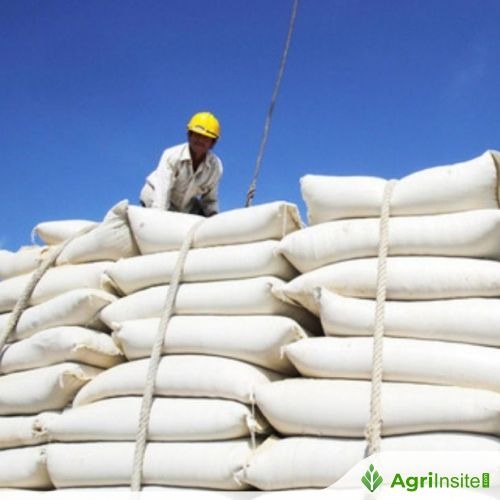
Amid shifting trade dynamics, Indonesia is taking a long-term view. The government has approved a $ 290 million investment to build 100 rice warehouses nationwide, aimed at strengthening food security and addressing storage constraints.
The initiative will be executed by Bulog, the state agency responsible for managing national rice reserves. The new facilities are expected to add 900,000 tonnes of storage capacity, easing pressure on an already stretched system as domestic production hits record levels.
Officials say the expansion is critical to prevent post-harvest losses, stabilize prices, and improve distribution efficiency, particularly during supply shocks. The move also signals Indonesia’s broader strategy to modernize its agricultural infrastructure while safeguarding farmer incomes.
A Market in Transition
Taken together, these developments underscore a global rice market in transition—where geopolitics, currency volatility, and state-led infrastructure investments are increasingly shaping outcomes.
For India, the challenge lies in navigating short-term disruptions without ceding long-term market leadership. For Southeast Asia, the focus is shifting toward resilience—whether through pricing strategies or structural investments.
As global demand patterns evolve, the next phase of competition may hinge less on production alone, and more on who can manage risk, logistics, and supply chains most effectively.
To Read more about Rice News continue reading Agriinsite.com
Source : AgroSpectrum India