Philippine rice crisis looms amid Mideast war; Php20/kilo campaign promise unrealised

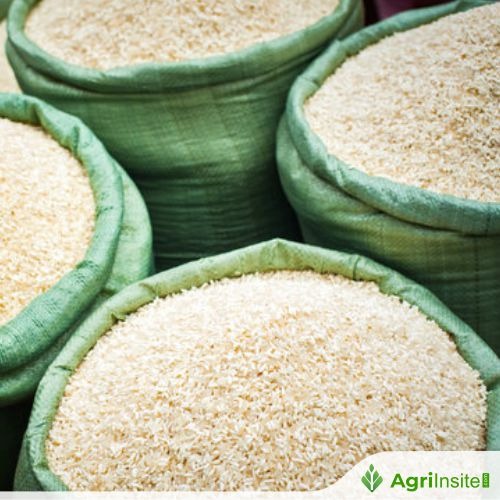
Long queues for subsidised rice in the Philippines highlight rising food insecurity as rice prices surge amid Middle East conflict, fuel inflation and import dependence. The government’s P20-per-kilo rice scheme offers temporary relief, while farmers face rising input costs and possible production cuts.
It’s Monday — a heartbreaking scene greets motorists and pedestrians along a busy road in Quezon City in the Philippines every weekday morning: A long line of mostly elderly residents lining up to buy cheap rice
Carrying empty bags, they are hoping to be allowed to buy five kilos of rice being sold by the Ferdinand Marcos Jr. government for P20 (Dh1.25) per kilo. While the special rice retail store called Kadiwa opens at eight o’clock in the morning, many of the buyers began lining up at midnight to ensure they would be able to buy before stocks run out for the day.
Reynaldo, a public transportation worker who recently lost his job, was at the head of the queue. The 63-year-old arrived at the government office at 11:47 the night previous. “It doesn’t matter that I went sleepless last night. I wouldn’t be able to afford rice at regular market prices, so I am taking my chances here,” he told Khaleej Times.
But there was no assurance that Reynaldo would be able to get his wish. Last week, the National Food Authority (NFA), operator of the Kadiwa store, announced that only those who have pre-registered online would be allowed to buy the specially-priced rice.
Feliza, a 62-year-old grandmother, howled in protest upon hearing of the requirement. She said she does not have a mobile phone nor would she know how to apply online. “Isn’t it enough that we suffer these long lines just to buy rice?” she asked.
Campaign promise
The 20-per-kilo rice was actually a campaign promise by President Marcos during his 2022 candidacy. He failed to deliver on the promise as the NFA must already buy palay (unhusked rice) at that price from farmers.
Since Marcos became president, production cost for each kilo of palay has only gone up. Farmers’ groups pointed out that they spend nearly P20 for each palay produced, making Marcos’ promise a losing proposition from the start and a drain to government’s coffers for the sake of keeping appearances.
Instead of massive capital infusion to bolster local rice production, however, Marcos’ most visible strategy is to allow rice importation from China, Vietnam, Thailand and India by millions of tonnes every year, hoping to bring prices down at the retail side. Meanwhile, nothing is being done about reported rice cartels that have controlled the rice industry for decades.
How war affects rice prices
In 2022, a kilo of rice was selling at P44, and was averaging at P55per kilo in January this year.
After the Middle East war erupted, local well-milled rice varieties are pushing near P60 (Dh3.75) while imported premium rice from Thailand sells at P67 (Dh4.19).
The Philippine Department of Agriculture said rice prices would likely remain at their current price ranges.
They admit, however, that many rice farmers are already thinking about skipping the next cropping season as the country’s supply of fertilizer, pesticides and herbicides – which are mostly processed from Middle East crude – has become dangerously low due to the constriction of the Strait of Hormuz.
Meanwhile, unemployment and inflation in the Philippines dramatically rose in the last quarter due to the war. Reynaldo was among its victims. His bus operator decided to scale back on operations, fielding less buses on the road due to runaway diesel prices. As among the older drivers in the fleet, he was the first to be let go.
It is for the likes of Reynaldo that the special P20/kilo rice is being offered, the government said. But it admitted that the special price is only a stopgap measure while the war rages thousands of kilometers away. Neither is it sure until when would it be able to keep the special store, and several others like it across the country, running.
To Read more about Rice News continue reading Agriinsite.com
Source : Khaleej Times