West, Central Africa push wheat revolution

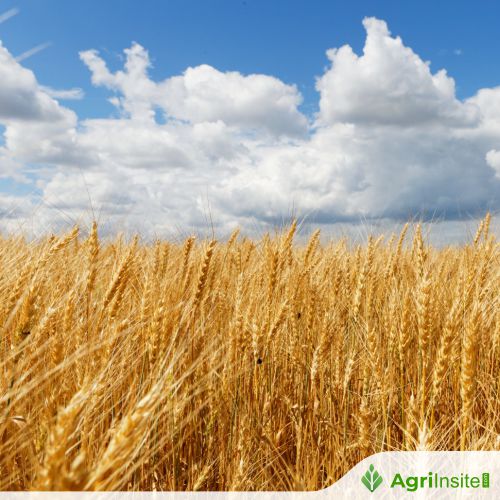
West and Central Africa produce only 1–1.3 million tonnes of wheat annually, leaving the region heavily import-dependent despite rising demand. Regional stakeholders are pushing irrigation, improved seeds, mechanisation and climate-smart farming to boost production, strengthen food security and reduce vulnerability to global grain shocks.
Despite Africa producing between 25 million and 30 million tonnes of wheat annually, West and Central Africa continue to contribute only a marginal share, exposing the region’s deep dependence on imports and vulnerability to global grain shocks.
Data from the Food and Agriculture Organisation of the United Nations show that wheat production on the continent remains concentrated in North and Southern Africa, with countries such as Egypt, Morocco, Algeria, Sudan, South Africa and Ethiopia accounting for the bulk of output.
However, West and Central Africa together still hover between 1.0 million and 1.3 million tonnes annually, a figure experts say is grossly inadequate for a region with one of the world’s fastest-growing populations and rising urban demand for bread, pasta and semolina products.
Within the sub-region, Nigeria remains the largest producer, though analysts argue that the country’s wheat output still falls far below national consumption needs estimated in millions of tonnes yearly. Nigeria harvested roughly 110,000 tonnes during the 2023 season from about 100,000 hectares.
In 2024, the Federal Ministry of Agriculture and Food Security enrolled more than 279,000 farmers in its subsidised dry-season wheat programme, with production estimated at between 120,000 and 150,000 tonnes and valued at nearly ₦893 billion. Further projections by the United States Department of Agriculture’s Foreign Agricultural Service indicated that Nigeria’s wheat harvest could rise to about 135,000 tonnes in the 2025/26 season, with yields averaging approximately 1.2 tonnes per hectare across 115,000 hectares.
In an interview, the Chairman,Board of Trustees, Federation of Agricultural Commodity Association of Nigeria(FACAN), Dr Victor Iyama noted that current initiatives promoted by the Federal Government could to increase domestic wheat production still under 200,000 tonnes annually.
He stressed that the wheat crop should be one of the government s top priorities, emphasizing the ongoing efforts to strengthen food security by providing farmers with a package of incentives and integrated support services.
In Morocco alone, wheat production reached nearly 4.15 million tonnes in the 2023/24 season despite the country possessing only a fraction of West Africa’s combined arable land. Although drought conditions later dragged Morocco’s harvest down to about 2.46 million tonnes in 2024/25, experts say the North African country still demonstrates what sustained investment in irrigation, improved seeds and farmer support systems can achieve.
It was against this backdrop that the West and Central Africa Wheat Development Network, alongside the Forum on Proven Agricultural Technologies and Innovations under the Food System Resilience Program, convened a high-level regional summit in N’Djamena. hosted by the Chadian Institute of Agricultural Research for Development. The gathering brought together government officials from Chad and Nigeria, agricultural researchers, regional institutions, private investors and farmers’ organisations under the theme, “Accelerating Wheat Impact in West and Central Africa: Scaling Adoption, Driving Innovation, and Shaping Policy for Sustainable Growth.”
Speaking with The Nation, the Communication Officer of the West and Central Africa Wheat Development Network, Mohammed Abba Sadiq, said the region possesses the capacity to significantly raise output if ongoing national initiatives are sustained and better coordinated.
“There is growing momentum across member countries including Nigeria, Cameroon, Chad, Niger and Senegal to reduce wheat deficits through irrigation expansion, improved varieties and stronger farmer support systems,” he said.
Participants at the summit acknowledged that simply expanding cultivated land would not be enough to bridge the widening production gap. Instead, experts from international agricultural research institutions and the FAO stressed that the region must prioritise improved heat-tolerant seed varieties, irrigation systems capable of supporting dry-season farming, mechanisation and intensive agronomic training for farmers.
Delegates further warned that weak seed systems remain one of the biggest obstacles to sustainable wheat production growth in the region. They argued that without reliable access to certified, high-quality seed in commercial quantities, investments in land preparation, fertiliser and irrigation would continue to deliver disappointing yields.
The six-point roadmap adopted at the end of the summit urged governments across the region to elevate wheat into a strategic priority crop and fully integrate its development into national agricultural policies. Participants also called for climate-smart farming practices, stronger phytosanitary controls to prevent the spread of crop diseases across borders, and expanded investments in storage, processing and marketing infrastructure.
Stakeholders maintained that improving production alone would not guarantee food security unless governments simultaneously strengthen downstream value chains capable of reducing post-harvest losses and improving farmer profitability.
To Read more about Wheat News continue reading Agriinsite.com
Source : The Nation Online NG