Indonesia Stockpiles Food Reserves Ahead of El Nino

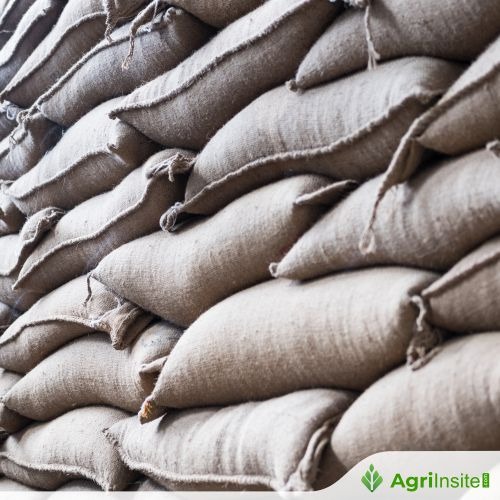
Indonesia is strengthening El Niño preparedness with 5.2 million tonnes of rice reserves, feed corn, sugar and cooking oil stocks while boosting domestic production. Officials expect adequate supplies of key foods, maintain rice self-sufficiency without imports, and ensure stable national food security.
Principal Secretary of Indonesia’s National Food Agency Sarwo Edhy ensures that the government is simultaneously preparing various mitigation measures to face El Nino. “We must remain vigilant in facing El Nino with strong food reserves, increasing production, stronger distribution, and the collaboration of all stakeholders,” said Sarwo in a written statement on Thursday, July 9, 2026.
According to Sarwo, one tangible evidence of this preparedness is Indonesia’s rice reserve stock, which reached 5.2 million tons as of July 8, 2026.
Meanwhile, the total food reserves held by provincial-level regional governments were recorded at 7,340 tons by the end of June. The food reserve stock of district- and city-level regional governments is 13.15 thousand tons, distributed across 323 areas.
In addition to rice, Sarwo stated that the government has 188,000 tons of feed corn as of July 8, 2026. This feed corn stock is distributed to poultry farmers through the Food Supply and Price Stabilization (SPHP) program.
Furthermore, the stock of cooking oil is recorded at 1,100 kiloliters managed by Perum Bulog and ID Food. Then, the remaining stock of consumption sugar is approximately 2,790 thousand tons, also managed by Bulog and ID Food. Lastly, the stock of chicken meat is recorded at 38 tons.
The National Food Agency is optimistic that regular domestic food production can support the supply of perishable commodities such as chili, shallots, and commercial chicken eggs.
Citing the Food Balance Sheet Projections processed by the National Food Agency, the production of large chilies throughout this year is estimated to reach 1.51 million tons with an annual consumption demand of 929.27 thousand tons.
The production of bird’s eye chili is estimated to reach 1.5 million tons, while the consumption demand is estimated at 913,610 tons.
The annual production of shallots is estimated at 1.32 million tons, while the annual consumption demand is estimated at 1.25 million tons. Meanwhile, the production of commercial chicken eggs is estimated to reach 6.98 million tons with a consumption demand of 6.47 million tons. As for the production of commercial chicken meat, it is estimated to reach 4.89 million tons with a consumption demand of 4.02 million tons.
Head of the National Food Agency Amran Sulaiman stated that the government has already prepared food reserves, not only for rice, to face El Nino this year. He estimates that the government’s food reserves, particularly its rice reserves, are sufficient to meet people’s needs.
Amran said that the extent of society’s dependence on rice consumption is the benchmark for the government to prioritize achieving self-sufficiency in the food commodity. “Because more than 50 percent of the time we eat rice,” said Amran.
Along with this target, Amran stated that Indonesia has already achieved medium rice self-sufficiency. Even though the self-sufficiency regulation allows for a maximum of 10 percent rice imports, Indonesia no longer imports rice.
According to the National Food Agency, Amran’s statement is also in line with the Food Hope Pattern score, which indicates that the public’s consumption of rice will reach more than 50 per cent by 2025.
This is followed by consultations on animal products, which account for 12.7 percent, and oil and fats, which account for 12.4 percent. Vegetable and fruit consumption at 6.8 percent, sugar at 4 percent, and the rest are legumes, tubers, and oily seeds.
To Read more about Rice News continue reading Agriinsite.com
Source : Tempo.co