Brazil Supplies N289bn Raw Sugar To Nigeria In 3 Months

Nigeria imported 460,800 tonnes of Brazilian raw sugar worth $210 million between May and July. While Brazil remains the dominant supplier, Nigeria is expanding domestic sugar production through the National Sugar Master Plan, aiming to reduce import dependence and boost local industry.
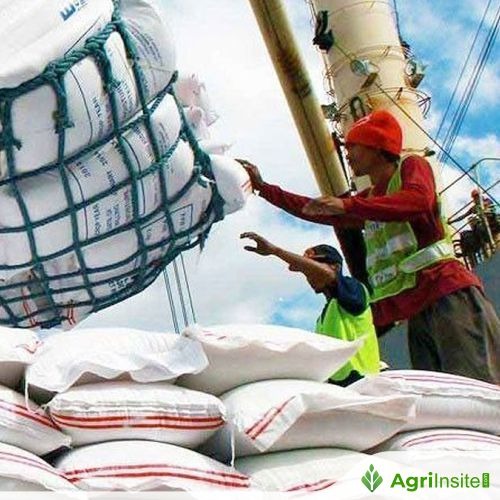
Raw sugar supply from Brazil to Nigeria has reached 460,800 tonnes valued at N289 billion ($210 million) in three months. The consignments were ferried on Freight on Board basis seven vessels between May and July to Apapa Bulk Terminal Limited (ABTL) and Greenview Development Nigeria Limited (GDNL) at Lagos Port Complex, Apapa as price of the cargo rose by 15 per cent from $400/tonne to $470 per metric tonne in the period.
The Nigerian Ports Authority (NPA)’s shipping data explained that in July, 109,425 tonnes were ferried to the port; June, 224, 755 tonnes and May, 112,600 tonnes.
In July, Ken Wave discharged 52, 425 tonnes; Equinox Sofrano, 57,000 tonnes and Bulk Colombia, 10,908 tonnes. Also, between May and June four vessels berthed at the Port with Grace laden with 57,600 tonnes; WF Artemis, 55,000 tonnes; Genco Bourgogne, 53,000 tonnes and Unity Explorer, 55,000 tonnes and Desert Moon with 54,220 tonnes are expected at the Apapa Bulk terminal Limited (ABTL) and Greenview Development Nigeria (GDNL) respectively.
Meanwhile, the National Sugar Development Council (NSDC) is making moves to reduce the cost of sugar production in Nigeria, noting thatfactories in the country pay between two and 10 times more than their competitors for power, credit and logistics.
The Executive Secretary of the council, Kamar Bakrin, said at the Nigeria Sugar Institute (NSI) in Ilorin that the future of the industry hinges entirely on a new calibre of specialised professionals who can drive strict efficiency and profitability across the value chain.
He noted that Nigeria was targeting to produce two million metric tonnes of sugar annually as NSDC graduated the first cohort of specialists trained under its flagship residential capacity-building programme designed to drive the implementation of the National Sugar Master Plan (NSMP) 2.0.
He explained: “Neither field productivity nor factory efficiency, on its own, can move the needle greatly. True sustainability and the ultimate elimination of our import dependency demands that we fuse the two. “We must develop personnel who master both leadingpractice cane yields and peak extraction efficiency to unlock long-term economic viability.”
Meanwhile, the Federal Government has urged Dangote Sugar Refinery (DSR) to increase its annual production capacity to 600,000 metric tonnes by 2030, as Nigeria continues to grapple with a significant gap between local output and national consumption.
The Minister of State for industry, John Enoh gave the directive during a visit to the DSR complex in Numan, Adamawa State during the inspections of sugar projects nationwide, saying that country consumes about 1.8 million metric tonnes of sugar annually, far above current local production levels, a deficit the government says must be urgently addressed.
Recall that in January, three vessels discharged a combined 157,985 tonnes, with shipments handled at both GDNL and Apapa Bulk Terminal.
The shipping records also indicated that between January and February, about 212,985 tonnes of sugar were shipped from the Port of Santo to Lagos, following low price to attract buyers as Brazil is targeting average monthly exports of around 158,000 tonnes to Nigeria as report by the United States Department of Agriculture’s Foreign Agricultural Service (FAS) in Lagos said that Nigeria’s sugar imports are expected to rise to 2.03 million tonnes to meet growing demand from consumers and the food industry.
The report noted that sugar consumption is projected at 1.7 million tonnes in the current year and could reach 1.8 million tonnes by 2026–27. However, domestic production remains largely unchanged, with sugarcane output estimated at 3.5 million tonnes over 100,000 hectares.
Brazil continues to dominate Nigeria’s raw sugar supply, accounting for over 97 per cent of imports as the country imported 1.7 million tonnes of raw sugar in 2025, a 5 per cent increase from the previous year.
To strengthen domestic production, the National Sugar Development Council and the Bank of Industry have set up a N10 billion Sugar Project Acceleration Fund.
To Read more about Sugar Industry continue reading Agriinsite.com
Source : New Telegraph