India’s Kharif crop area trails by 16 lakh hectares as uneven monsoon hits rice, maize sowing

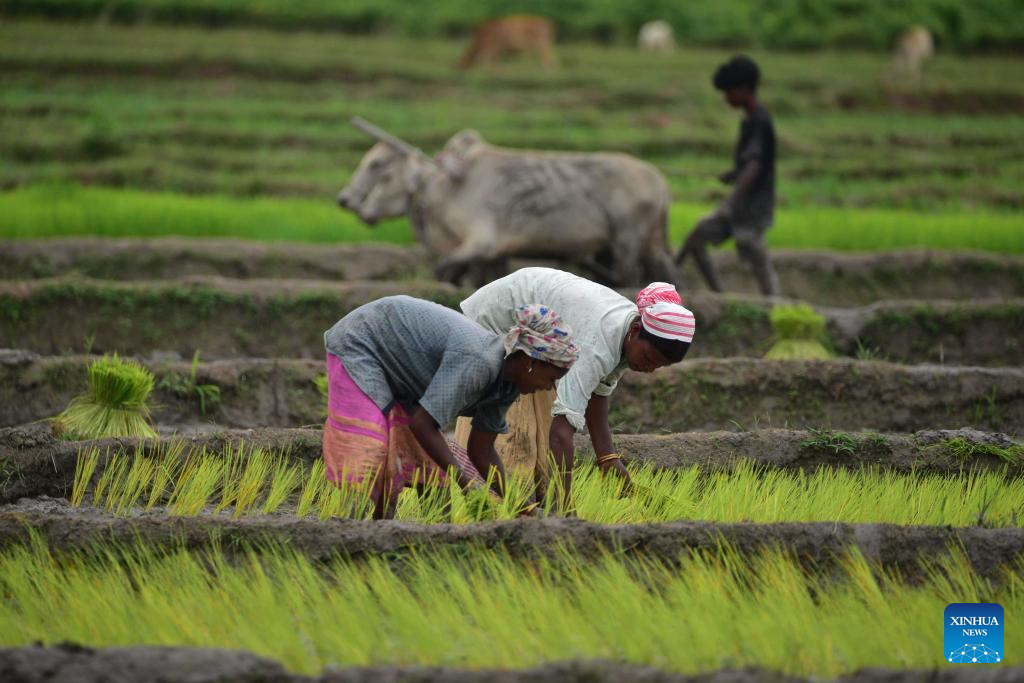
India’s kharif sowing reached 1,056.70 lakh hectares, down 1.5% from last year. Rice, maize and ragi acreage declined, while pulses increased and oilseeds remained stable. Uneven monsoon rainfall and developing El Niño conditions continue to influence sowing patterns and crop prospects.
India’s kharif sowing is entering its final stages, with the overall area remaining marginally below last year’s level despite a significant narrowing of the gap during the course of the monsoon season, reported Rural Voice.
According to the latest data from the Ministry of Agriculture and Farmers Welfare, kharif crops had been sown across 1,056.70 lakh hectares as of August 21, 2026, compared with 1,072.77 lakh hectares during the corresponding period last year.
The total area under kharif crops was therefore lower by 16.07 lakh hectares, or 1.50%, from a year earlier. Lower acreage under key crops such as rice, maize and ragi has kept the overall sowing area below last year’s level, although higher pulses coverage and stable oilseed acreage have helped contain the decline.
Rice, the country’s largest kharif crop, was planted across 405.10 lakh hectares, compared with 418.29 lakh hectares during the same period last year. The area under the crop was lower by 13.19 lakh hectares, or 3.15%.
Despite the year-on-year decline, rice sowing is gradually moving closer to the normal area of around 412 lakh hectares, according to data from the Department of Agriculture and Farmers Welfare.
Pulses, meanwhile, have recorded an increase in acreage. The total area under pulses stood at 113.63 lakh hectares as of August 21, compared with 112.14 lakh hectares a year earlier, marking an increase of 1.49 lakh hectares, or 1.33%.
Tur was sown across 43.86 lakh hectares, while urad and moong accounted for 24.38 lakh hectares and 32.68 lakh hectares, respectively. Urad recorded a strong 12.22% increase in acreage from last year, while tur sowing was marginally higher by 0.97%. Moong acreage, however, declined by 3.67%.
The area under Shri Anna and coarse cereals stood at 176.36 lakh hectares, down 1.92% from 179.81 lakh hectares during the same period last year.
Maize acreage fell 4.06% to 89.51 lakh hectares from 93.30 lakh hectares. Ragi registered one of the sharpest declines among major kharif crops, with its area dropping 27.14% to 4.81 lakh hectares from 6.60 lakh hectares a year ago.
The decline was partly offset by higher sowing of jowar and bajra. Jowar acreage increased by 6.41%, while the area under bajra rose by 2.13%.
Oilseed sowing remained broadly unchanged from last year. The total area under oilseeds stood at 188.37 lakh hectares, compared with 188.69 lakh hectares during the corresponding period last year, representing a marginal decline of 0.17%.
Groundnut acreage increased by 1.18%, while sesamum recorded a 15.16% rise. The area under sunflower surged by 80.98%, while nigerseed acreage increased by 48.94%, although both crops account for a relatively small share of the overall oilseed area.
Soybean acreage declined by 1.15%, while castorseed recorded a sharper contraction of 20.80%.
Among commercial crops, sugarcane acreage stood at 58.44 lakh hectares as of August 21, compared with 58.87 lakh hectares during the same period last year, a decline of 0.72%.
Cotton sowing was also marginally lower, with acreage standing at 108.45 lakh hectares against 108.73 lakh hectares a year earlier. However, the combined area under jute and mesta increased by 1.68% to 6.34 lakh hectares.
The progress of the kharif season has been influenced by uneven monsoon rainfall and the developing El Niño conditions. Cumulative rainfall across India between June 1 and August 21 was 13% below the long-period average, according to India Meteorological Department data.
Central India remained largely close to normal, with rainfall only 2% below average. However, the deficit was considerably higher in other regions. East and Northeast India recorded rainfall 26% below normal, while South Peninsular India reported a 23% shortfall. Northwest India received 11% less rainfall than the long-period average.
The uneven spatial distribution of rainfall has affected sowing patterns across states and crops. However, the further advance of the monsoon and improved rainfall in several regions during the latter part of the season have helped reduce the gap in total kharif coverage from the larger deficit seen during the initial weeks of sowing.
With kharif planting now nearing completion, the final acreage pattern indicates a relatively modest overall decline of 1.50% from last year. The recovery in pulses acreage and the stability in oilseed sowing have helped offset weaker coverage under rice and coarse cereals, although the uneven monsoon remains a key factor for crop development and production prospects in the remaining months of the season.
To Read more about Rice News continue reading Agriinsite.com
Source : ChiniMandi