Biofuels, green hydrogen key to India’s energy security: Ajay Sood

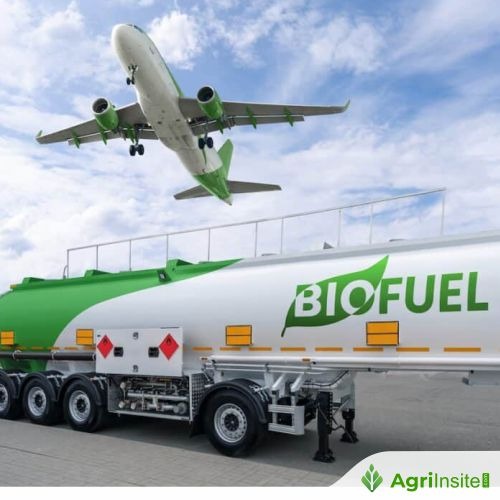
India is prioritising biofuels such as ethanol, methanol and butanol to strengthen energy security and sustainability. Technologies for biodiesel and bio-jet fuel are advancing, while green hydrogen and biogasification programmes are also being promoted to reduce emissions and diversify clean-energy options.
NEW DELHI: India’s move towards alternative fuels, particularly biofuels such as methanol, ethanol and butanol, is becoming increasingly important for the country’s energy security and sustainability, Principal Scientific Adviser to the Government of India Ajay Sood said, The Economic Times reported.
“Ethanol is one hydrocarbon, but you can also get other biofuels which have higher energy density like butanol that can also be produced in a bio mode, so biofuels, in general, will be important for energy security,” Sood told ET.
He said India has already developed and transferred technologies for producing biodiesel and bio-jet fuel. In 2025, the Council of Scientific and Industrial Research–Indian Institute of Petroleum (CSIR-IIP), Dehradun, developed indigenous technologies to produce biodiesel and bio-jet fuel using non-edible vegetable oils, waste oils, used cooking oil and agricultural waste.
The institute has so far developed and transferred nearly 50 technologies for commercial-scale production, with the aim of helping reduce carbon emissions.
Sood said green hydrogen would be another important area for India, including its use in transportation.
“The another big thing will be green hydrogen. It will be used for transportation. We already have India’s first hydrogen-powered train,” he said.
Prime Minister Narendra Modi flagged off India’s first hydrogen-powered train on July 17. The train is operating on the 89-kilometre Jind-Sonipat route.
Indian Railways plans to raise the train’s maximum speed to 110 kmph from the current 75 kmph. The country’s first indigenous hydrogen fuel cell trainset has 2,400 kW of propulsion power from onboard fuel cells. It does not produce carbon dioxide, with pure water vapour as its only by-product.
Sood also stressed the need to keep biofuel prices reasonable to encourage wider adoption while continuing to focus on sustainability.
He said the Centre has also introduced a programme aimed at promoting biogasification. The government launched the GOBARdhan Scheme, or Galvanizing Organic Bio-Agro Resources Dhan, in 2018. The programme is formally known as the National Circular Bioenergy Scheme.
The Union Cabinet approved a revamped version of the scheme in August this year, with a total allocation of ₹23,731 crore for the period from FY 2026–27 to FY 2035–36.
India’s non-fossil fuel power capacity reached 271.97 GW in January 2026, accounting for 52.3% of the country’s total installed power capacity. The expansion forms part of India’s broader economic and environmental strategy for improving energy security.
Industry estimates indicate that by 2027, biofuels could account for 5.4% of global transport fuel use, including around 1% of aviation fuel.
To Read more about Ethanol & Bioenergy continue reading Agriinsite.com
Source : ChiniMandi