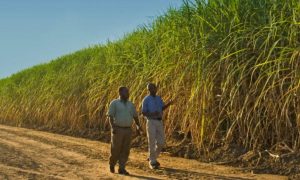
Uttar Pradesh sugar output may stay near 9 mt despite higher cane yields


Uttar Pradesh’s 2026-27 sugar production is projected at around 9 million tonnes despite 10% higher cane yields, as lower acreage and early crushing may offset gains. Industry estimates differ from government data, raising concerns over production and sugar policy decisions.
Lucknow: Uttar Pradesh’s sugar production is expected to remain around 9 million tonnes (mt) in the 2026-27 sugar season, despite an estimated 10% improvement in sugarcane yields, particularly in the western part of the state, The Hindu Businessline reported.
The projection is below market expectations of production crossing 10 mt. A decline in sugarcane acreage and the possibility of an early start to crushing are likely to offset the benefit of higher yields.
Sugar industry sources said the area under sugarcane could fall by 1-2 lakh hectares this year, based on estimates maintained by mills in their respective command areas. The state government’s provisional figures also indicate a decline, with acreage estimated at 28.13 lakh hectares compared with 28.61 lakh hectares a year earlier.
However, data from the Union Agriculture Ministry present a different picture, showing the state’s sugarcane area at 28.02 lakh hectares, around 36,000 hectares higher than the previous year.
The crop planted this year will form the main source of cane for the 2026-27 crushing season, with mills normally beginning operations after Diwali.
Industry observers expect cane yields to improve significantly this year, but they caution that mills may not benefit fully if crushing begins too early.
Bakshi Ram, a noted sugarcane breeder credited with developing the CO-0238 variety, said average yields could improve by at least 10% this season. However, he stressed that mills should ideally begin crushing from November to capture the full benefit.
An early harvest could also affect farmers because immature cane generally has lower sugar content. For mills, lower recovery would directly increase financial pressure, while farmers could also receive lower returns from cane with reduced sugar content.
According to Bakshi Ram, the crop is currently in good condition and there have been few reports of pest attacks. However, the extent of damage caused by recent floods in parts of Uttar Pradesh remains unclear.
Rainfall has been significantly above normal in several parts of the state in recent weeks.
India Meteorological Department data show that eastern Uttar Pradesh, comprising 42 districts, received 85% excess rainfall between August 26 and September 8. Despite this recent surplus, cumulative monsoon rainfall since June 1 remains 5% below normal.
Western Uttar Pradesh, covering 33 districts, received 80% excess rainfall during the same fortnight, while its cumulative monsoon rainfall is 10% above normal.
Farmers in western Uttar Pradesh expect the improved weather conditions to boost yields. Paramjit Singh Hooda, a farmer from Shamli, said the crop could produce 10-15% more cane this year, as last year’s crop suffered from pest attacks that reduced production substantially.
Hooda, who cultivates sugarcane on five acres but is gradually reducing his cane area in favour of other crops, also questioned the current cane price of ₹400 per quintal, saying it was low compared with the recovery being achieved by mills.
If a mill achieves a 10.19% recovery, every 100 kg of cane crushed produces around 10.19 kg of sugar.
Differences between government and industry estimates of sugarcane acreage have emerged as an important issue for sugar policy.
An industry expert said accurate acreage assessment was essential for the government to determine production, diversion and trade policies.
The expert pointed to the sharp revision in the industry’s production estimate for 2025-26. In July 2025, the industry had projected gross sugar production at 34.9 mt, but the estimate was subsequently reduced to 30.9 mt.
According to the expert, the inaccurate assessment affected policy decisions, including the timing of restrictions on diversion of sugarcane juice and B-heavy molasses for ethanol and measures concerning sugar exports.
With domestic availability now under pressure, the government is increasingly relying on imports to meet market requirements, the expert said.
To Read more about Sugar Industry continue reading Agriinsite.com
Source : ChiniMandi