Corn ethanol poised to account for 33.6% of Brazil’s output by 2028

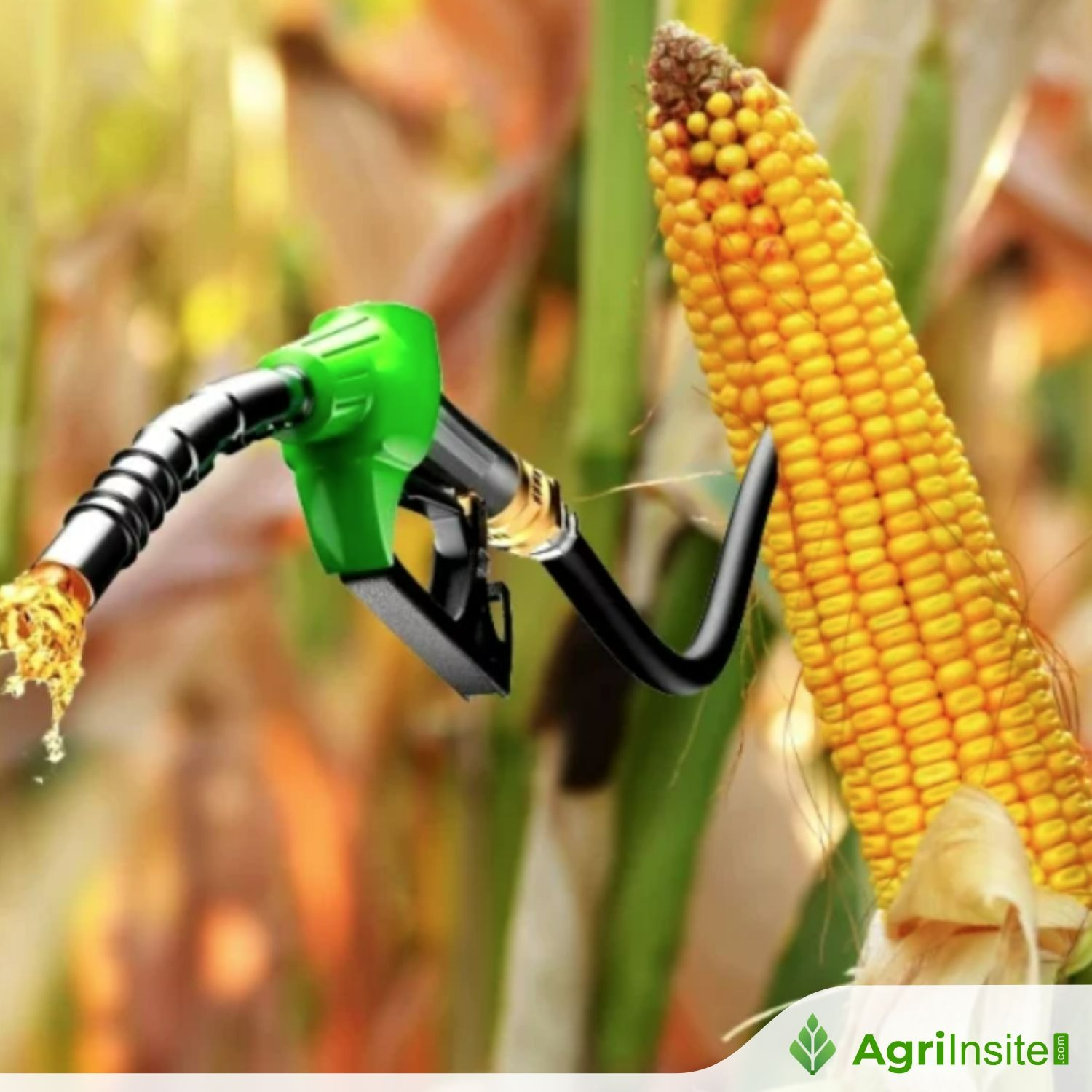
Brazil’s corn ethanol share could reach 33.6% in 2027-28, with production rising to 13.6 billion litres as eight new plants and five expansions boost capacity. Total ethanol output may reach 40.5 billion litres, requiring stronger domestic demand, particularly through higher blending mandates.
Brazil’s corn-based ethanol industry could account for around one-third of the country’s total ethanol production by 2028, reaching that milestone two years earlier than most market forecasts, reported the Agri Biz, citing fresh estimates from StoneX.
Corn ethanol is expected to account for about 27% of Brazil’s total ethanol output in the 2026-27 season, with its share projected to rise to 33.6% in 2027-28. The growth is expected to be supported by eight new plants scheduled to begin operations and five existing facilities undergoing capacity expansions, StoneX risk-management consultant Lígia Heise said.
StoneX expects corn ethanol’s share to rise to 28% in 2026-27 before accelerating sharply in the following season.
Production capacity is projected to reach 38,900 cubic metres a day in April 2027 and increase to 51,200 cubic metres a day by the end of March 2028.
Based on those capacity additions, corn ethanol production is estimated to reach 13.6 billion litres in the 2027-28 season, representing a 29.7% increase from the previous year.
Sugarcane-based ethanol production, meanwhile, is expected to reach 26.9 billion litres in 2027-28 and has remained relatively stable in recent years. As a result, corn ethanol is expected to become the main source of growth in Brazil’s overall ethanol production.
StoneX projects total ethanol output to increase from 33.7 billion litres in 2025-26 to 37.8 billion litres in 2026-27 and 40.5 billion litres in 2027-28.
The rapid expansion in supply, however, raises questions over whether domestic demand will grow quickly enough to absorb the additional ethanol. Heise said the market could see almost 3 billion litres of additional ethanol between 2027 and 2028, creating a need for significant new demand.
StoneX analyst Letícia Correa said the expected increase in production has not yet created major concerns over prices because consumption is expected to strengthen in 2027.
Consumption data from the second half of 2026 already indicate improving demand for hydrous ethanol, which is used directly in flex-fuel vehicles, Correa said. Demand could receive another boost if ethanol becomes more competitive with gasoline, with StoneX estimating that the price relationship between the two fuels could improve by seven percentage points.
Demand for anhydrous ethanol, which is blended into gasoline under government mandates, will depend more heavily on future blending requirements.
Brazil’s gasoline blend is currently E32, meaning gasoline contains 32% anhydrous ethanol. The current mandate is in place for six months through January and can be extended for another six months.
StoneX estimates anhydrous ethanol consumption at 14.75 billion litres during the current 2026-27 season.
If the E32 mandate remains in place through August 2027, anhydrous ethanol consumption would rise 3.7% year-on-year in the 2027-28 season, adding around 550 million litres of domestic demand.
A higher blending mandate could have a substantially larger impact. If Brazil raises the requirement to E35, with ethanol accounting for 35% of gasoline, in August 2027, StoneX estimates anhydrous ethanol consumption would increase 10.3%, generating an additional 1.52 billion litres of domestic demand in 2027-28.
However, a return to E30 in August 2027 would have the opposite effect, with domestic anhydrous ethanol consumption projected to decline 0.6% and demand falling by around 90 million litres in the 2027-28 season.
To Read more about Ethanol Industry & Bio Energy News continue reading Agriinsite.com
Source : ChiniMandi