Kenya sugar production jumps 56.7% as imports decline sharply

Kenya’s sugar production surged 56.7% to 690,521 tonnes during January–September 2026, while imports declined 31% amid improved domestic supplies. Cane crushing increased to 7.76 million tonnes, stocks rose significantly and average retail prices fell, although production remains below annual consumption requirements.
Kenya’s sugar production increased 56.7 per cent during the first nine months of 2026, supported by a substantial rise in sugarcane crushing, while imports declined as domestic supplies improved, Sacco Review reported.
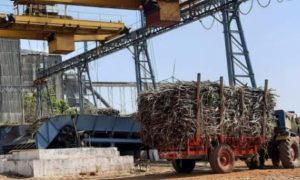
Sugar factories across the country produced 690,521 tonnes of sugar between January and September 2026, compared with 440,652 tonnes during the corresponding period last year. Cane crushing rose to 7.76 million tonnes from 4.97 million tonnes a year earlier.
Kenya Sugar Board Chief Executive Officer Jude Chesire shared the production figures on Friday while attending a meeting of the International Sugar Organization (ISO) Council in London.
Despite the improvement, domestic production remains below the country’s consumption requirements. Kenya expects sugar output to reach 900,000 tonnes this year, against annual demand of approximately one million tonnes. Production stood at 650,000 tonnes last year.
Chesire expects the country to bridge the supply gap next year and begin generating surpluses for export. He also highlighted the importance of the ISO in helping Kenya identify potential overseas buyers.
Apart from expanding export opportunities, Kenya is looking to strengthen its sugar industry through technology transfer and diversification.
Chesire said the country wants to learn from other sugar-producing nations about processing technologies and diversification opportunities. Discussions around ethanol and biofuels are also gaining momentum, with Kenya planning to study Brazil’s experience in the sector.
Chesire, who chairs the ISO Council, also played a role in resolving the organisation’s leadership deadlock after member countries failed to agree on a new Executive Director.
Following three unsuccessful ballots, with no candidate securing the required two-thirds majority, he held discussions with member states that resulted in an agreement to share the position. Devesh Devani of Mauritius will serve the first four-year term, followed by Eduardo Leão de Sousa of Brazil for the next four years.
Improved domestic production has coincided with a significant reduction in sugar imports.
Kenya imported 251,690 tonnes of sugar during January-September 2026, down 31 per cent from 364,486 tonnes in the corresponding period of 2025, representing a decline of 112,796 tonnes.
Imports of mill white and brown sugar recorded the steepest reduction, falling 71 per cent to 65,845 tonnes from 226,730 tonnes.
However, refined white sugar imports moved in the opposite direction, increasing to 158,006 tonnes from 137,756 tonnes a year earlier. The increase indicates that domestic mills are yet to meet demand across all sugar grades.
Kenya’s sugar stocks stood at 70,773 tonnes at the end of September 2026, significantly higher than the 14,033 tonnes recorded a year earlier.
Sugar exports also increased marginally to 315.57 tonnes from 244.80 tonnes during the corresponding period.
The improvement in domestic availability has also been reflected in retail prices. The average national price of sugar declined to Sh155 per kg in September 2026 from Sh171 per kg in September 2025.
Consequently, the cost of purchasing two kilograms of sugar fell to approximately Sh310 from Sh342, providing consumers with a saving of Sh32. Prices, however, continue to vary across shops and counties.
To Read more about Sugar Industry continue reading Agriinsite.com
Source : ChiniMandi