Bangladesh : Government stocks of rice, wheat rise, but distribution declines

Bangladesh’s government food grain stocks exceed 2.1 million tonnes, but subsidised rice and wheat distribution declined 26% under the OMS programme during July–October 2026. Economists urge expanded food assistance as inflation, rising poverty and food insecurity increase pressure on low-income households.
Arambagh slum in Rupnagar, Mirpur, is quite large, home to thousands of low-income people. In the past, the government used to sell food items at subsidised prices from trucks parked in front of the slum. Residents could not recall which agency operated the sales, but they said they used to queue up to buy the food. That service is no longer available.
Sufia Begum, 45, lives in the slum. She was found in front of Arambagh slum on Sunday. She told Prothom Alo that she previously had a Trading Corporation of Bangladesh (TCB) card, which allowed her to buy rice, lentils, oil, sugar and other essentials at subsidised prices. Her card has since been cancelled. Trucks selling government-subsidised rice and flour no longer come to the slum.
Sufia said her husband used to sell dried fish and vegetables from a roadside stall, but he can no longer set up his shop. She herself worked at a garment factory but lost her job after breaking her arm. Her family is now struggling financially.
Many people like Sufia and her family are facing hardship. Meanwhile, the government has substantial stocks of rice and wheat. However, at a time when people are struggling, the distribution of government rice and wheat has declined.
Economists say inflation remains high in the country, while various studies indicate that poverty has increased. At such a time, the government should release more food into the market so that people facing renewed financial difficulties in both urban and rural areas can buy essentials at lower prices.
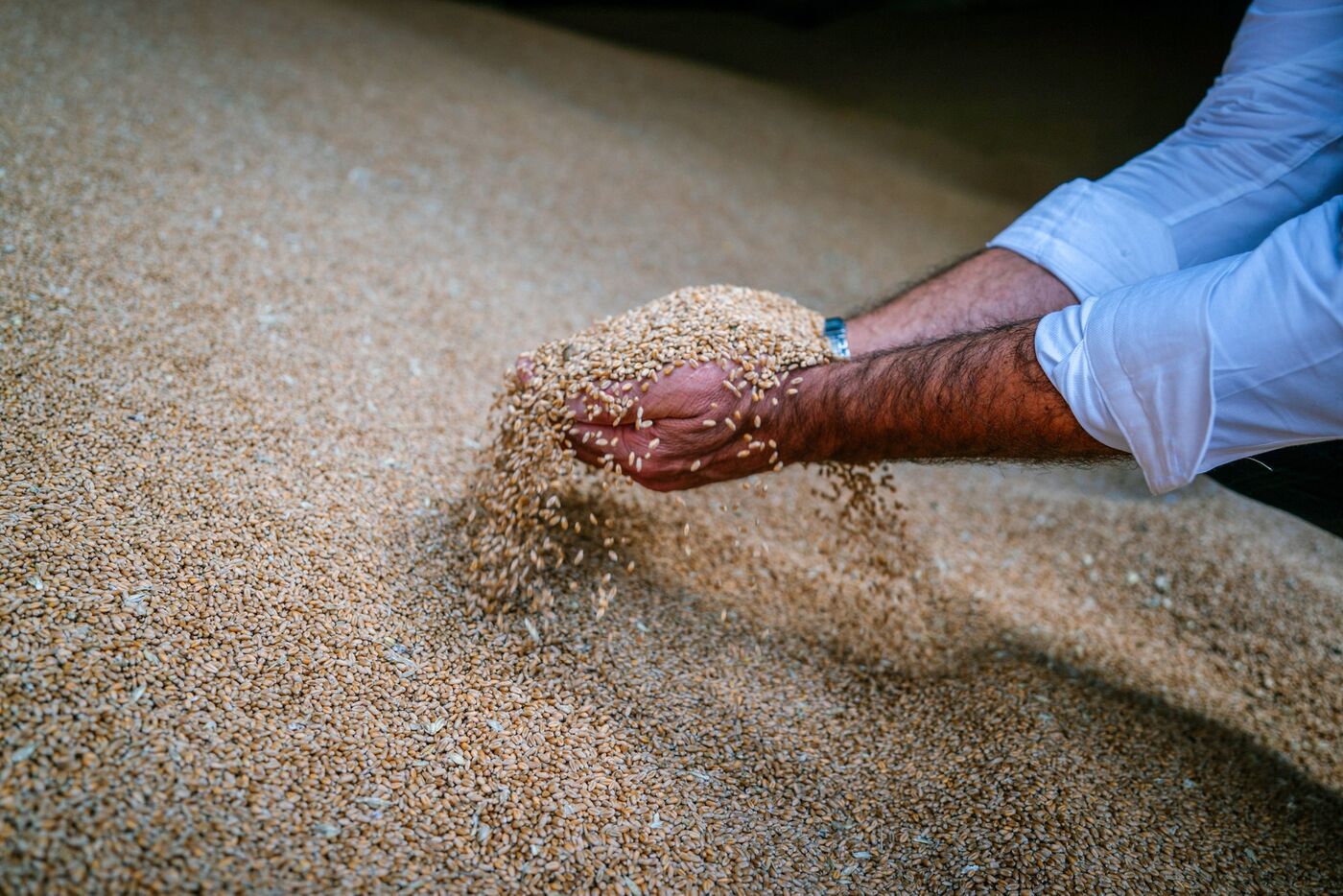
According to the Ministry of Food, the government currently has slightly more than 2.1 million tonnes of rice and wheat in stock, including around 1.8 million tonnes of rice and 300,000 tonnes of wheat. In June 2024, towards the end of the Awami League government’s tenure, which was ousted following the July mass uprising, food stocks stood at 1.47 million tonnes.
During the tenure of the interim government, food stocks exceeded 2 million tonnes. On 4 January, Ali Imam Majumder, food adviser to the former interim government, told journalists that food stocks were at their highest level in five years. He described the stock situation as highly satisfactory.
The current stock is more than 600,000 tonnes higher than what the Awami League government had at the end of its tenure. It has also increased further compared with the interim government’s period.
According to the latest data from the Ministry of Food, the government distributed 1.104 million tonnes of food grains between July and October, the first four months of the 2026–27 fiscal year. This was 67,000 tonnes less than in the same period of the previous fiscal year.
The government maintains food grain stocks in its warehouses to support poor people and stabilise the market. Rice and wheat are the main commodities stored. A portion of these stocks is sold at subsidised prices, while another portion is distributed as relief and assistance.
The government’s largest programme is the Food-Friendly Programme. Under this initiative, 5.5 million people receive rice at Tk 15 per kg for six months a year- from March to April, and from August to November. Each beneficiary receives 30kg of rice per month.
The Open Market Sale (OMS) programme runs throughout the year. Under this initiative, rice and flour are sold year-round through designated dealers’ shops and mobile trucks.
Rice under the Food-Friendly Programme is distributed against beneficiary cards. Those without cards cannot access this assistance. For them, the only options are OMS shops or mobile sales trucks.
According to the Ministry of Food, around 268,000 tonnes of rice and wheat were allocated under the OMS programme between July and October, 93,000 tonnes or 26 per cent less than in the same period of the previous year.
A report by the World Food Programme (WFP), published on 22 September, said the number of people in Bangladesh at risk of acute food insecurity could reach 18.1 million between September and December this year, an increase of 2.8 million from the beginning of the year.
The report cited inflation, declining purchasing power, agricultural losses caused by floods, child malnutrition and uncertainty over food assistance for Rohingya refugees as contributing factors.
In other words, the number of people at risk of food insecurity has increased, but government allocations have declined.
Saving Tk 20 per kg
The lowest price of coarse rice in Dhaka markets is currently Tk 50 per kg. Slightly better-quality coarse rice sells for Tk 55 per kg. Rice prices have remained largely unchanged over the past month, but they have not declined significantly either.
The government sells rice under the OMS programme at Tk 30 per kg. This allows low-income consumers to save Tk 20 on every kilogram they buy.
The government sells flour at Tk 24 per kg, while loose flour in the market costs Tk 48–50 per kg. This means consumers can save Tk 24–26 per kg by purchasing flour through the OMS programme.
A 2025 survey by the private research organisation Power and Participation Research Centre (PPRC) found that nearly 55 per cent of a household’s monthly expenditure in Bangladesh goes towards food purchases.
Poor families spend a significant portion of their income on rice and flour. Savings on these essentials could provide some relief.
Amena Begum, 60, lives in a slum near the Shaheed Buddhijibi Graveyard in Mirpur Section 1. She runs her household by selling bread. Speaking to Prothom Alo on Sunday, she said, “Prices of everything in the market are high. The government provides so many kinds of assistance, but nobody even puts our names on the list.”
Many people depend on rice sold under the OMS programme. One of them is Afia Begum, a resident of the Ispahani Sea Gate Gol Pahar slum in Chattogram city.
She told Prothom Alo that she now receives 5kg of rice once a month through the OMS programme at Tk 30 per kg. However, the rice supplied is atop rice (non-parboiled), rather than coarse rice. Her family is not accustomed to eating atop variety, but they buy it because of the price. Purchasing rice from the open market would cost Tk 55–60 per kg.
Afia also said TCB currently provides two litres of oil, one kilogramme of sugar, one kilogramme of salt and a bar of soap. She does not really need the soap but needs rice and onions. TCB used to provide rice two years ago, but no longer does so.
Why has distribution declined?
Alongside the Directorate General of Food, the government occasionally distributes rice through the state-owned Trading Corporation of Bangladesh (TCB).
The Directorate General of Food claims that the overall allocation has declined because no rice was allocated for TCB during the current fiscal year.
Md Jamal Hossain, additional director general of the Directorate General of Food, told Prothom Alo that no allocation had been made for TCB during the first four months of the fiscal year. The Ministry of Finance allocated 300,000 tonnes of rice for TCB from November. The distribution declined mainly because there was no allocation during the first four months, he said.
Through its Smart Family Cards, TCB provides around 7.5 million families with essential commodities such as oil, lentils and sugar at subsidised prices every month.
During periods of crisis, it also sells goods from mobile trucks outside the regular card-based programme. Long queues of people are often seen waiting to buy these products. Many return empty-handed because supplies run out.
In addition to oil and sugar, TCB occasionally distributed rice as well.
TCB spokesperson Shahadat Hossain told Prothom Alo on Sunday that the corporation had been corresponding with the authorities for four months to secure a rice allocation but had not received any so far. He hoped the allocation would come this month.
Food distribution needs to be increased
Inflation has remained high in Bangladesh since 2022. The recent conflict in the Middle East has pushed up prices of various commodities in Bangladesh, including fuel and cooking gas. Meanwhile, wages are increasing at a slower rate than inflation.
The government has started providing cash assistance through Family Cards, but the programme has yet to expand significantly.
Selim Raihan, a professor of economics at Dhaka University and executive director of the South Asian Network on Economic Modeling (SANEM), told Prothom Alo that during periods of crisis, poor people often have no option but to cut their food expenditure. They skip a meal or get by on half a meal. Government assistance does not reach everyone. Therefore, subsidised food distribution needs to be increased.
He added that poverty has increased in the country, which is a warning sign. The government needs to introduce large-scale assistance programmes at such a time.
Selim Raihan further said the government had substantial food stocks, which was a positive development. However, distribution needed to be increased.
Government to procure paddy and rice
Meanwhile, the government has decided to procure 300,000 tonnes of paddy and 550,000 tonnes of rice during the current Aman season.
The procurement prices have been set at Tk 35 per kg for paddy, Tk 49 for parboiled rice and Tk 48 for non-parboiled rice.
Food Minister Afroza Khanam disclosed the information at a press conference held at the Press Information Department’s conference room at the Secretariat on Sunday.
She said procurement of Aman paddy would begin on 24 November and continue until 28 February 2027. Rice procurement would begin on 1 December and also continue until 28 February.
To Read more about Wheat News continue reading Agriinsite.com
Source : Prothom Alo