Rabi sowing falls 11.3% as wheat, pulses acreage declines amid rainfall deficit

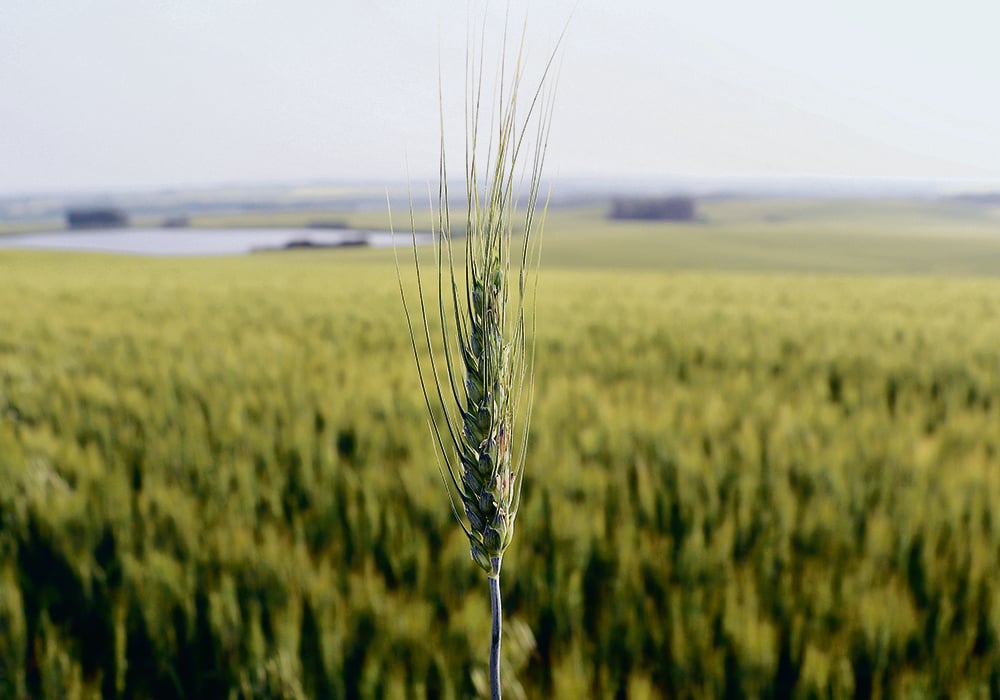
India’s Rabi sowing fell 11.3% year-on-year to 178.25 lakh hectares by November 13, led by declines in wheat and pulses acreage. Oilseeds also contracted 7.4%. A 34% post-monsoon rainfall deficit across the country has heightened concerns, despite favourable rainfall in northwest India.
India’s Rabi sowing declined 11.3 percent year-on-year as of November 13, led by a sharp reduction in acreage under wheat and pulses, even as post-monsoon rainfall across the country remains significantly below normal.
The total area sown under Rabi crops stood at 178.25 lakh hectares, compared with 201.04 lakh hectares during the corresponding period last year, a decline of 22.79 lakh hectares.
Wheat, India’s principal winter crop, recorded a 15.3 percent decline in sowing area to 50.07 lakh hectares, compared with 59.10 lakh hectares a year earlier. This translates into a reduction of 9.03 lakh hectares.
Pulses acreage declined 14.3 percent to 47 lakh hectares from 54.87 lakh hectares last year, largely driven by a steep reduction in gram cultivation.
Gram, which accounts for the largest share of Rabi pulses, saw its acreage contract 21.6 percent to 31.13 lakh hectares from 39.70 lakh hectares. However, lentil sowing increased 13.9 percent to 7.66 lakh hectares.
Together, wheat and pulses accounted for nearly three-fourths of the overall reduction in Rabi acreage.
Oilseeds also recorded a decline, with total acreage falling 7.4 percent to 61.71 lakh hectares from 66.62 lakh hectares last year. Rapeseed and mustard sowing declined 8.5 percent to 59.31 lakh hectares, compared with 64.78 lakh hectares during the corresponding period last year.
Sowing of coarse cereals declined 5.1 percent, while rice acreage fell 4.3 percent.
Rainfall deficit adds to concerns
The slowdown in Rabi sowing comes amid a significant shortfall in post-monsoon rainfall across large parts of the country.
According to the India Meteorological Department (IMD), India received 62.4 mm of rainfall between October 1 and November 16, against a normal of 94 mm, representing a deficit of 34 percent.
Nearly 59 percent of the country’s geographical area received deficient or largely deficient rainfall during this period, with central India recording a 49 percent shortfall and east and northeast India reporting a 51 percent deficit.
Rainfall in south peninsular India was 25 percent below normal, with Karnataka reporting a 47 percent deficit and Telangana a 72 percent shortfall. Maharashtra and Madhya Pradesh also recorded substantial rainfall deficits of 93 percent and 79 percent, respectively.
However, rainfall conditions have not been uniformly weak across major wheat-producing regions. Northwest India received 9 percent above-normal rainfall, while Uttar Pradesh recorded an 8 percent surplus. Punjab and Haryana also received rainfall substantially above their seasonal averages.
To Read more about Wheat News continue reading Agriinsite.com
Source : Moneycontrol