Centre tightens action against sugar mills breaching monthly stockholding limits

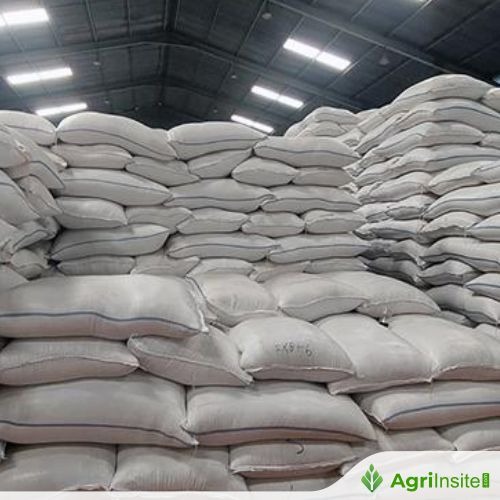
India’s Food Ministry has tightened penalties for sugar mills violating monthly stockholding limits and sales quotas. Mills breaching limits more than twice annually risk losing export quotas and government incentives. Excess sales will be deducted from subsequent quotas, while underutilisation and inaccurate GST reporting may also trigger penalties.
The Central Government has issued stricter guidelines against sugar mills that breach monthly stockholding limits, with immediate effect. The new guidelines replace those in a letter dated March 28, 2025, and repeat offenders now risk losing access to export quotas and other government incentives, according to a letter from the Department of Food and Public Distribution (DFPD).
The letter was issued by Arvind Kumar Rawat, Director of the Directorate of Sugar and Vegetable Oils, to the chief executives and managing directors of all sugar mills. It said the directorate examines the P-II form data that mills file on the National Single Window System (NSWS) portal, along with sales data shared by the Goods and Services Tax Network (GSTN).
According to the letter, an analysis of GST data showed that some sugar groups and individual mills were repeatedly breaching stockholding limits despite earlier directions and cuts to their domestic release quotas. It added that some mills had not filed Harmonised System of Nomenclature (HSN) code-wise details in Table-12 of their GST returns. The ministry said it views such non-compliance seriously.
Under the new guidelines, any mill or group that exceeds its monthly stockholding limit, or sells more than its allotted quota, will have the excess deducted from the next month’s quota. If a mill lacks enough stock for a full deduction in one month, the balance will be carried forward until the entire excess has been recovered. Joint teams of the Central and state governments will physically verify stocks and act against defaulting mills under the Essential Commodities Act, 1955. Violators may also be denied additional allocation, even if the cane commissioner or state government recommends it.
Mills that breach the limits more than twice in a year will be barred from benefits under DFPD schemes, including export quotas and incentives. The bar takes effect from the month of the third violation, subject to scheme provisions. The one-year period will be counted back from the date a scheme is notified. The letter gave an example: if an export quota is notified on December 1, 2026, violations between December 1, 2025 and November 30, 2026 will be considered.
State governments will be advised to act against such repeat defaulters. Possible steps include refusing crushing licences and reducing the cane area attached to the mill. For regular defaulters, no objection certificates (NOCs) for changing crushing capacity, or for a name change in the Industrial Entrepreneur Memorandum (IEM), may also be withheld, though transfers of ownership are excluded.
The guidelines also penalise under-use of quotas. A mill that sells and dispatches less than 90 per cent of its monthly quota without informing the department by the 20th of that month will have its next month’s quota cut to the share it actually used. Mills that have not filed correct HSN-wise sales details in their GSTR-1 returns will have their quotas suspended until the details are corrected and verified.
Requests for additional allocation will not be considered from mills that have pending quota or swapping adjustments, that hold sold stock on their premises for more than seven days after invoicing, or that have sold sugar to dealers not registered on the DFPD stock monitoring portal. Additional allocations will be granted for no more than one month at a time on state recommendation, and the letter said such recommendations do not guarantee approval.
Mills storing sugar sold to bulk consumers, agents or dealers in their own godowns under lease agreements must inform the DFPD within three days. They must state the quantity and storage period and attach a copy of the lease. Without this, the stock will be counted as the mill’s own during verification. Any sugar sold above the monthly quota will be treated as the mill’s own sale, even if it is reported as a trading sale, and will count as a stockholding violation.
The letter has been copied to cane commissioners of sugarcane-producing states, the Indian Sugar and Bio-Energy Manufacturers Association (ISMA) and the National Federation of Cooperative Sugar Factories (NFCSF) for circulation to member mills, and the All India Sugar Trade Association (AISTA).
To Read more about Sugar Industry continue reading Agriinsite.com
Source : ChiniMandi