E20 blending has no adverse impact on vehicles, saved Rs 1.97 lakh crore: Government

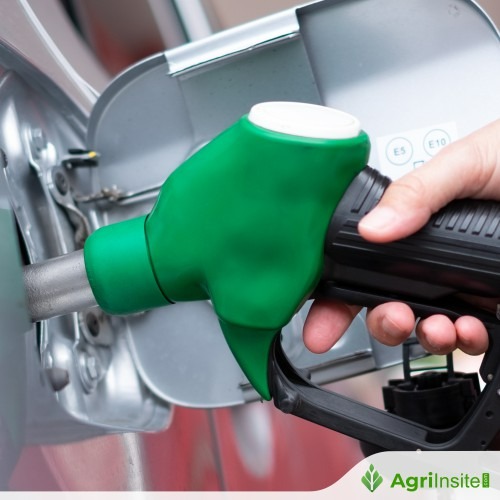
The Centre told the Rajya Sabha that E20 fuel has shown no adverse impact on vehicle performance, citing scientific studies and data from over 23 crore vehicles. It highlighted foreign exchange savings, lower emissions and farmer benefits, while confirming no decision beyond E20 yet.
The Union Government has told the Rajya Sabha that its Ethanol Blended Petrol (EBP) programme, including the nationwide rollout of E20 fuel, has not had any adverse impact on vehicle mileage, efficiency or longevity, citing extensive scientific studies and large-scale field data.
Minister of State for Petroleum and Natural Gas Suresh Gopi, replying to a question from Rajya Sabha member Rajeev Shukla, said the EBP programme had been implemented through a phased, calibrated and scientifically validated approach, based on a roadmap prepared by NITI Aayog in consultation with the Ministry of Petroleum and Natural Gas, Oil Marketing Companies, automobile manufacturers, the Automotive Research Association of India (ARAI), the Society of Indian Automobile Manufacturers (SIAM) and the Indian Institute of Petroleum (IIP), Dehradun.
He said extensive laboratory studies, durability trials and field validation were carried out before the introduction of E20, covering engine durability, material compatibility, fuel systems, corrosion resistance, drivability, emissions and fuel economy, and that E20-compatible vehicles are certified only after a prescribed homologation process.
According to the Minister, E15+ blended petrol has been in use for over three-and-a-half years and E19-E20 fuel for more than two-and-a-half years, with over 20 crore two-wheelers and more than three crore petrol cars running on these blends without verified evidence of widespread engine failure. He said manufacturer service data showed no abnormal corrosion or wear, and that manufacturers continued to honour warranty obligations on E20-compliant vehicles.
On mileage, the Minister said fuel efficiency depended on factors such as driving conditions, habits and vehicle maintenance, and that any reduction in fuel economy in E10-designed vehicles was generally limited to about 3-5 per cent, while E20 offered a higher octane rating and cleaner combustion.
The Minister said the EBP programme had saved over Rs 1.97 lakh crore in foreign exchange, substituted nearly 316 lakh metric tonnes of crude oil, cut about 952 lakh metric tonnes of carbon dioxide emissions and transferred more than Rs 1.66 lakh crore to farmers.
He added that field validation by the Inter-Ministerial Committee under NITI Aayog, along with Indian Oil Corporation Limited (IOCL), ARAI, IIP and SIAM, had confirmed that E20 fuel did not cause abnormal wear or compatibility issues, while SIAM and ARAI found that E20 improved acceleration and ride quality while lowering emissions. One of the country’s largest passenger vehicle manufacturers serviced 2.84 crore vehicles in FY 2025-26, including about 1.5 crore older, non-E20-certified vehicles, without reporting E20-related engine damage, and a leading two-wheeler manufacturer reported no higher incidence of damage on E20 compared with earlier fuel blends, the Minister said.
On the road ahead, the Minister said the Government had not yet taken any decision to raise ethanol blending in petrol beyond 20 per cent or to introduce ethanol blending in diesel for commercial use, and that any future move would depend on comprehensive scientific evaluation, vehicle compatibility studies, stakeholder consultations and the availability of adequate domestic ethanol production capacity.
To Read more about Ethanol Industry & Bio Energy News continue reading Agriinsite.com
Source : ChiniMandi