Efforts on in EU to render basmati rice as a generic variety

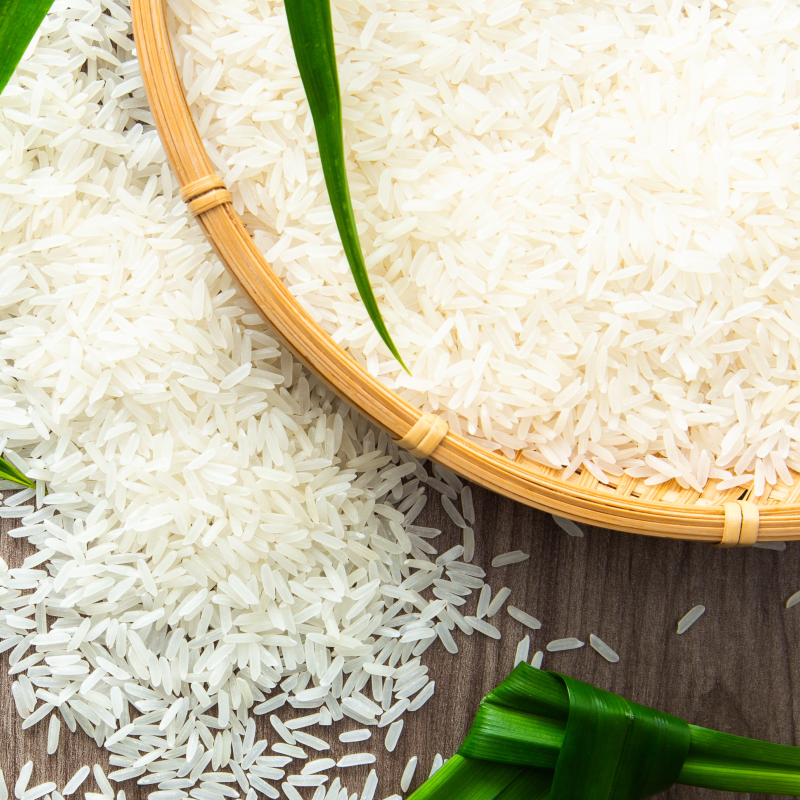
EU efforts to delay PGI status for Indian basmati rice are raising concerns that prolonged uncontrolled use could make “Basmati” a generic term. India applied in 2018, while Pakistan applied in 2024, with disputes over shared growing regions, GI claims and sovereignty.
Efforts are underway in the European Union (EU) to try to deny protected geographical indication (PGI) status for basmati rice from India and render it as a generic variety of the cereal.
Some experts in Europe are claiming that the sales of rice labelled as fragrant rice are ten times the output in the origin areas. The experts, however, have no proof or laboratory findings to prove that 90 per cent of rice sold as basmati is non-basmati, said trade sources.
Giving PGI status provides a country with the right to market a product exclusively, stating that it has unique properties and is specially grown in a particular region within its borders. It also gets a premium.
EU’s delaying tactics
In a video on the German media outlet DW, Delphine Marie‑Vivien of CIRAD, a French public agricultural research institution, said the area under cultivation in the basmati origin areas did not match the production.
In 2024, she warned that a delay in granting PGI for basmati could make it a generic rice variety. In the same report, an unnamed European Commission (EC) source talked of a “balanced outcome” in the battle for PGI in the Union.
The source spoke of separate protection for Indian and Pakistani basmati, while favouring a joint solution to the issue. The EU has been urging India and Pakistan to submit a joint application for a GI.
However, experts say that such a move will compromise India’s sovereign rights, as Pakistan has given parts of India as regions where the long-grained rice is grown.
3 issues
India applied for PGI in July 2018, and the EU has been dragging its feet on the application. During this period, Pakistan applied for PGI in April 2024. There are three issues with the Pakistan application. One, it claims India’s basmati areas as its. Two, it says basmati is a shared product with India. Three, it got domestic PGI registration for its basmati only in 2021.
This means the EU did not act on India’s application despite Pakistan not having a valid domestic GI registration and seems to have waited for Islamabad to complete the required formalities, trade sources said.
Marie‑Vivien worked on basmati rice earlier under the EU-funded SINER-GI research project. It was intended to provide inputs for the EU’s GI policy. However, the project report disclaimed it represented the European Commission’s official position.
Though the EU-India free trade agreement (FTA) was concluded in January this year, a separate agreement for GI products is under negotiation. EC records show GI negotiations only till March 2024, even though other negotiations with India have continued.
‘Uncontrolled use’
Sources said this is proof that the EC did not want the basmati PGI issue to derail a wider trade agreement. However, it did not resolve the basmati issue either.
The argument in favour of the EU is that the continuing disagreement between India and Pakistan has prevented the establishment of a common or coordinated system for defining, controlling and enforcing the geographical identity of basmati.
During the eight years in which the Indian application has remained unresolved with the EU, rice produced outside the recognised Basmati region has allegedly continued to be marketed under that name.
The sources said if such uncontrolled use of basmati continues, European consumers and traders may gradually not understand “Basmati” as rice originating from particular areas of India and Pakistan. Instead, they may regard it merely as the common name of an aromatic, long-grain rice type.
Tapping France’s anguish
At a later stage, the fragrant rice could be termed generic and the EU may not provide PGI registration, the sources said. This has other ramifications too. For example, the French are keen on exclusive marketing rights for their Cognac and Champagne.
A lower tariff and a strong GI protection by India for these could fetch a premium. On the other hand, a lower tariff and a weak GI protection results in the market having more imitation, as is happening in the case of Basmati.
The sources pointed out that the EU–India FTA substantially reduces Indian tariffs on European wine and spirits. For wines, the tariff is 20 per cent against 150 per cent earlier for premium ones, while it is 30 per cent for medium range ones. In the case of spirits, the duty will be 40 per cent against 150 per cent.
The EC has said a separate GI agreement is intended to help traditional EU products sell more in India by removing imitation competition. A trade expert said India could, however, leverage its position at the moment of discussing the GI agreement. This will be particularly crucial since France is looking for improved access to the large consumer market here.
Risk narrative
S Chandrasekaran, author of “Basmat rice: The Natural History Geographical Indication”, said the prolonged uncontrolled use of basmati might eventually change what European consumers understand as basmati rice.
“Using this, some in the EU are trying to construct a risk narrative. The current EU Basmati PGI registration status quo affects French interests through reciprocity and negotiating credibility,” he said.
The separate GI agreement negotiation is intended to remove imitation competition for European origin products, in particular French, in India. “This opportunity would be worth $6 billion in wine, spirit, cheese and other indications of origin food products. The EU is aware of India’s sensitivity in the case and it knows that the Indian government can take tough political decisions as basmati GI touches the sovereignty of India,” said Chandrasekaran.
The EU and India have not crossed the “red lines” during the FTA talks. Negotiations of other agreements between India-EU are pending and basmati may prove to be a tough nut to crack, he said.
To Read more about Rice News continue reading Agriinsite.com
Source : The Hindu Businessline