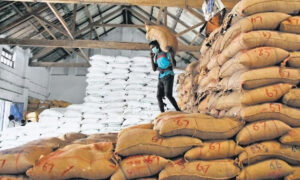
FAO sees higher Cambodian rice exports as global output dips


Global rice production is forecast to decline 2.5% to 552 million tonnes in 2026–27, according to FAO, amid thin margins and El Niño risks. However, trade is expected to rebound 2.9% to 61.6 million tonnes in 2027, with Cambodia among exporters projected to increase shipments.
Cambodia is among a handful of exporters forecast to ship more rice next year as global production falls, according to the Food and Agriculture Organisation of the United Nations.
In its biannual Food Outlook released this week, the Food and Agriculture Organisation of the United Nations said global rice output is expected to shrink for the first time in four seasons amid thin profit margins and the El Niño weather pattern.
Production could drop to 552.0 million tonnes in the 2026–27 season, down 2.5% from last year’s bumper harvest, with every region except Africa harvesting less.
“However, still sizeable main-crop plantings could keep overall output abundant in Asia,” the agency said.
Favourable weather before El Niño emerged has kept South American output “close to historical norms, despite planting cuts.”
Smaller crops are forecast in Australia, Central America, the Caribbean and Europe, while United States production is projected to fall to multi-decade lows.
Despite lower output and a slight rise in utilisation, global rice reserves are forecast to reach nearly 216.5 million tonnes, their second-highest level on record.
Large stockpiles should help cushion shortfalls in Bangladesh, Brazil and India, while adding to reserves in China, Indonesia and Japan.
Amid steady demand from importers outside East Asia, global rice trade is forecast to rebound 2.9% to 61.6 million tonnes in 2027.
“Increased shipments by India and Pakistan are anticipated to underpin the trade recovery,” the agency said. At the same time, “Brazil, Cambodia, Guyana, Myanmar and Uruguay are also seen shipping more.”
The export outlook is “more downcast for most other countries, as they could see their competitive edge undermined by tight supplies and/or quality/varietal constraints.”
Price gains since May reflect higher Indica prices, up 11.4%, which outweighed drops of 2% to 5% for glutinous, Japonica and aromatic varieties.
The Food and Agriculture Organisation of the United Nations All Rice Price Index averaged 112.3 points in October, up 7.1% from May and 14.1% from a year earlier.
To Read more about Rice News continue reading Agriinsite.com
Source : KHMER TIMES