Govt mulls curbs on rice exports

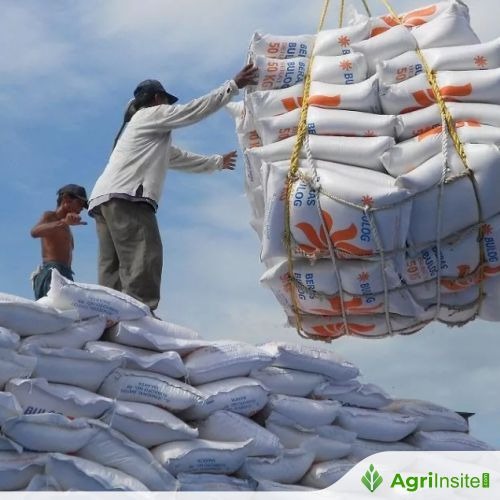
India is considering a 30% export duty and minimum export price on non-basmati rice to curb rising domestic prices amid lower kharif production prospects. Paddy area fell 4% in 2026, while rice output is forecast to decline to 147 million tonnes from 154 million tonnes.
The government is considering a proposal to levy a 30% export duty on non-basmati rice to improve domestic supplies and curb a sharp rise in local prices.
Sources told FE that discussions are also ongoing to impose a minimum export price for such grains, as local retail prices continue to rise amid prospects of lower kharif crop production due to the El Nino impact.
The curbs are likely to be a short-term measure, unlike the ban on shipment and imposition of MEP imposed in August, 2023, which continued for 14 months.
Earlier in November, when the plan to put curbs on export was put before an inter-ministerial panel, the Indian FOB price of white rice (% broken) was $384-389/tonne as against its competitors Pakistan ($415/tonne), Thailand ($495/tonne) and Vietnam ($480/tonne), trade sources said.
Rice exports, India’s largest agri-product shipment, rose 4.6% to $6.81 billion during April-October, 2026-27 year-on-year, despite supply disruption on account of West Asia conflict and prospects of decline in domestic production due to El Nino.
In October, 2026, India, the world’s biggest rice exporter shipped grain valued at $1.02 billion, an increase of over 18% compared to the same month last year.
“Any decision concerning restrictions or additional duties on non-basmati rice exports must be carefully balanced against the interests of Indian exporters, international trade commitments and the confidence of overseas buyers,” Ranjit Singh Jossan, vice president, All India Rice Exporters Association, told FE.
Jossan said in case of imposition of restriction on non-Basmati rice exports, all export orders against which APEDA-related approvals or registrations have already been issued, Letters of Credit have been opened, or partial shipments have already taken place should be specifically exempted from any newly imposed export duty or export banIndia has over 40% in the global grain trade.
The average retail price of rice, according to the Department of Consumer Affairs’ Price Monitoring Cell, increased to Rs 48.1/kg on Saturday, a 11% year-on-year increase. The prices have increased by around 2% on year in the last one month. Inflation in rice in October was 12.51% compared to 8.27% in September, 2026.
The government’s proposal of imposing restriction on rice exports follows, the food ministry earlier this month had directed all traders, wholesalers, retailers, big retail chains and processors and millers across southern states to declare their stock position of rice variants – Basmati, non-Basmati premium, par-boiled and broken – and paddy at the portal.
Sources said that the move comes after a review that rice prices especially Sona Masuri, Samba Masuri, RNR and Ponni in southern states have increased sharply in the last few months because of lower production.
Area under paddy declined by 4% to 42.68 million hectares (Mha) in the kharif season of 2026 compared to the previous season. Impact of rising prices is sharpest in southern India due to a nearly 26% deficiency in monsoon rainfall this season.
A major decrease in paddy area was reported in states including Karnataka (0.46 Mha), Telangana (0.43 Mha), Andhra Pradesh (0.18 Mha), and Tamil Nadu (0.15 Mha).
Trade sources said rice output is likely to decline to 147 million tonnes (MT) in the 2026-27 crop year (July-June) from a record 154 MT in 2025-26. India emerged as the world’s largest rice producer, surpassing China in the 2025–26 season.
The prospect of lower output has already led to a rise in retail prices for several rice variants last month, and traders and exporters expect prices to rise further in the coming months.
The government also announced doubling the rice offered under the open market sale scheme for private parties for 2026-27 to 5 MT from the Food Corporation of India’s surplus buffer.
To Read more about Rice News continue reading Agriinsite.com
Source : The Financial Express