Haryana : Shortage of rice millers hits paddy procurement in Karnal

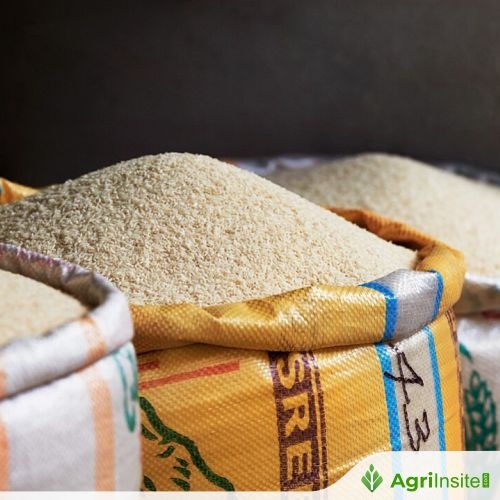
Paddy procurement in Haryana’s Karnal district is disrupted by a shortage of participating rice millers, with 1.60 lakh tonnes of pending custom-milled rice. Farmers allege procurement delays and moisture disputes are forcing sales below the ₹2,461 MSP, causing losses of ₹300–400 per quintal.
Paddy procurement in Karnal district is facing a serious bottleneck this season due to shortage of participating rice millers in the custom-milled rice (CMR) process. A large number of millers reportedly remain ineligible or reluctant to join the current procurement cycle due to pending deliveries from last year’s paddy procurement season, police action related to alleged ‘ghost procurement’, and lengthy registration process.
As per the millers, around 1.60 lakh metric tonnes of CMR from the previous paddy season is still pending with rice millers in the district. As per the policy, millers who have not completed delivery of last year’s rice to the Food Corporation of India (FCI) are treated as defaulters and are barred from participating in the fresh CMR operation.
Saurabh Gupta, president of the Karnal Rice Millers and Dealers Association, explained the millers’ issue. “Our rice is ready and we have been waiting for space at the FCI godowns, but the millers are not being allowed to deliver the rice. Due to this delay, the millers have been listed as defaulters. As per policy, the defaulters cannot join CMR,” he said.
Gupta urged the authorities to allow all millers to participate in the current season, arguing that the non-delivery was largely beyond their control.
Rajinder Monga, Jundla Rice Millers and Dealers Association, cited space shortage at the FCI godowns, the delay in delivery of fortified rice kernels (FRK), shortage of labour during the wheat season, and other operational hurdles as key reasons for the backlog.
“We demand the government to accept the pending CMR so that they can be treated as non-defaulters.” he added.
With a fewer mills enrolled in the CMR process, government procurement agencies are struggling for paddy procurement mandis at the declared minimum support price. This has left the farmers in a vulnerable position, forcing many to sell their produce to private traders at rates below the MSP, a situation that has already triggered protests and tension in several Karnal mandis.
Compounding the problem is the impact of last year’s action in connection with alleged ‘ghost procurement’. The action against the millers, arhtiyas and officials created fear among some of the millers, due to which they are reluctant to join the CMR operation.
Gupta said the registration for the current CMR season has also become a major point of contention. He claims the process is lengthy. “Officials are not fully aware of the updated procedures. Physical verification is being carried out by the administration, but the entire process is slow,” he added.
The shortage of active millers has a direct bearing on the pace of paddy purchase. When the mills do not come forward to lift and mill the procured paddy, it creates a backlog, leading to overcrowding, longer waiting periods for the farmers, and increased pressure to sell outside the official system.
Officials associated with the procurement agencies maintain that rules regarding the defaulters and pending stocks are being followed as per policy. They point out that physical verification is necessary to ensure only eligible and functional mills are allowed to participate.
As the peak arrival period continues, both farmers and millers are looking to the district and state authorities for urgent intervention to break the deadlock and ensure that the CMR mechanism functions as intended.
Meanwhile, there has been resentment among the farmers across the district. In a couple of grain markets, the farmers alleged that procurement agencies were allegedly using moisture levels as a pretext to delay purchases. Despite the official minimum support price (MSP) of Rs 2,461, the farmers are being forced to sell their produce to private traders at Rs 2,060–2,100 per quintal, a direct loss of Rs 300–400 per quintal.
The farmers claim that their private moisture meters show paddy moisture content below 17 per cent, while the meters of procurement agencies record higher readings. As per government norms, the maximum permissible moisture level for procurement is 17 per cent.
“The government announces MSP, but in the grain markets we are getting only Between Rs 2,000 and Rs 2,200. We have been sitting with our crop for four to five days. If it rains, the loss will be even higher,” said Mahabir, a farmer.
“We are being forced to sell the crop of our hard labour at throwaway prices. The procurement agencies and millers are hand in glove in this conspiracy,” said Raj Kumar, another farmer.
BKU (Sir Chhotu Ram) spokesperson Bahadur Singh Mehla demanded that the government should ensure smooth paddy procurement in the grain markets. “The government has started procurement on September 29, but still the government procurement is not smooth across the grain markets. Neither the officials of procurement agencies nor the millers are coming to the grain markets, due to which the farmers have no option but to sell their crops below the MSP,” he added.
Jagdeep Singh Aulakh, state core committee member of the BKU (Sir Chhotu Ram), said the farmers’ produce should be procured at MSP. “We bring all issues of the farmers to the notice of the district administration, after which some steps are taken,” he added.
Deputy Commissioner Dr Anand Kumar Sharma said he himself visits the grain markets to review the procurement. “The issues being taken up by the farmers are addressed on the spot,” he said, adding that the government would procure each and every grain of the farmers. “Several millers have joined the CMR operations and more will also join in a couple of days,” he added.
To Read more about Rice News continue reading Agriinsite.com
Source : The Tribune