India: Government revises FCI rice ethanol sale rules, approves rice allocation quotas across sectors

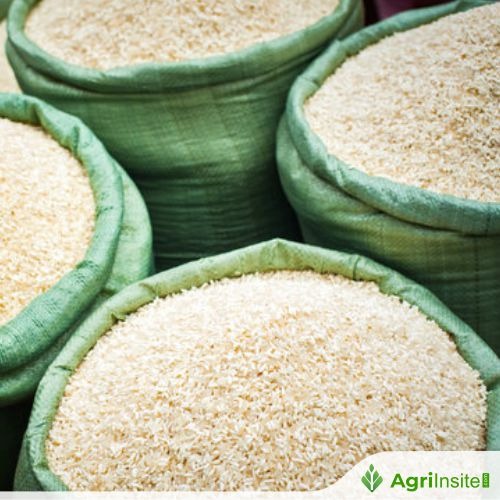
India approved 72 LMT of FCI rice for ethanol production under ESY 2025-26 and allocated rice under OMSS(D) 2026-27 for traders, states and milling. Revised guidelines mandate OMC-linked procurement, pre-payment, 10-day lifting, and standardized monitoring of ethanol production.
The Department of Food and Public Distribution (DFPD), under the Ministry of Consumer Affairs, Food and Public Distribution, has approved the allocation of rice under the Open Market Sale Scheme (Domestic) [OMSS(D)] 2026-27, earmarking quantities for private traders, state governments, community kitchens, rice milling transformation, ethanol production, and retail sale under the Bharat brand. Separately, the department has also issued revised modalities and a Standard Operating Procedure (SoP) governing the sale of FCI rice to ethanol distilleries for the Ethanol Supply Year (ESY) 2025-26, streamlining procurement, lifting and monitoring processes.
OMSS(D) 2026-27 rice allocation
Under the approved allocation, 25 lakh metric tonnes (LMT) of rice with 25% broken has been allocated for sale to private parties, cooperatives and cooperative federations through e-auction. The allocation also includes sale of rice from FCI depots to small private traders, entrepreneurs and individuals.
The government has approved the sale of 20 LMT of Custom Milled Rice (CMR) with 10% broken rice under the Rice Milling Transformation Scheme through e-auction in the open market for private parties. Additionally, 55 LMT of resultant broken rice produced under the transformation scheme has been approved for sale in the open market through e-auction.
For state governments, 16 LMT of rice has been allocated up to 31 October 2026, while 32 LMT has been earmarked for the period from 1 November 2026 to 30 June 2027. The allocation will be available to state governments and their corporations without participating in e-auction and also covers rice supplied to community kitchens.
The government has also approved the sale of 72 LMT of FCI rice to ethanol distilleries for ethanol production during ESY 2025-26 (1 November 2025 to 31 October 2026).
Revised modalities for ethanol distilleries
In a separate order dated 8 May 2026, DFPD revised the modalities and Standard Operating Procedures for the sale of FCI rice to ethanol distilleries under OMSS(D) Policy 2025-26 for ESY 2025-26. The revised guidelines refer to earlier communications dated 1 April 2026 and 22 October 2025 concerning allocation and operational procedures.
The revised modalities specify that old or broken rice should be utilised to the extent feasible for ethanol production. FCI rice will be supplied at a Pan India price of INR 2,320 per quintal for the period from 1 November 2025 to 30 June 2026. The total allocation will not exceed 72 LMT, comprising 52 LMT already allocated and an additional allocation of 20 LMT, with no additional transportation costs. Distilleries located in both surplus and deficit states are eligible to procure rice within this allocation ceiling.
Only distilleries registered with Oil Marketing Companies (OMCs) as ethanol suppliers will be eligible to procure FCI rice. Distilleries must submit a copy of a valid signed contract with an OMC, after which the preferred FCI Divisional Office will assign a depot for supply. The concerned Divisional Manager will allocate rice according to the ethanol quantity specified in the OMC contract, with supplies made either in a single lot or in multiple tranches depending on requirement.
The OMCs would be furnishing details of quantity of ethanol produced from FCI rice, received at respective depot every month in a format prescribed by OMCs to the concerned Divisional Manager of FCI.
Payment, transportation conditions
The revised modalities stipulate that rice will be supplied only on a pre-payment basis, with no credit sale permitted. Transportation costs from FCI godowns to distilleries will be borne entirely by the distilleries. Oil Marketing Companies are also required to furnish monthly details of ethanol produced from FCI rice in a prescribed format to the concerned Divisional Manager of FCI.
Standard operating procedure for rice lifting
Under the annexed Standard Operating Procedure, distilleries with valid OMC contracts are required to place advance indents along with advance payment for the required quantity, in accordance with OMC allocations. Following payment verification, FCI will issue a Release Order (RO) within 24 hours.
Distilleries are responsible for arranging transportation and must lift the allocated rice within 10 working days from the issue of the Release Order. They are also required to provide a tentative daily truck-wise lifting schedule in advance to the concerned Depot Manager. FCI, through the Depot Manager, will arrange labour to facilitate timely lifting after issuance of the Release Order.
Additional operational provisions
Where rice stocks are unavailable in the preferred division, FCI will arrange availability at the earliest, while allowing distilleries to opt for another division if required. The guidelines also permit supply through rail rakes where a distillery requests a full rake quantity at a nearby unloading facility, subject to release within Railway timelines. Depot Managers are required to inform distilleries about rake availability at the earliest, while any demurrage arising from delayed unloading will be borne by the distillery.
If a depot is unable to provide adequate manpower for lifting, distilleries may, upon request, lift rice on gazetted holidays or non-working days, except at depots operated by DPS or departmental labour. Depot Managers are responsible for ensuring labour availability.
The SoP further states that any issue related to lifting of FCI rice should be promptly brought by the concerned Depot Manager to the notice of the General Manager (Region) or Divisional Manager and, if necessary, escalated to the Executive Director (Zone). Distilleries may also register grievances related to rice lifting through the FCI Grievance Redressal web portal or the Android application named “FCI Grievance Redressal.”
To Read more about Rice News continue reading Agriinsite.com
Source : BigMint