Indian Rice Secures Iraq Deal as FOB Prices Ease from Early October Highs

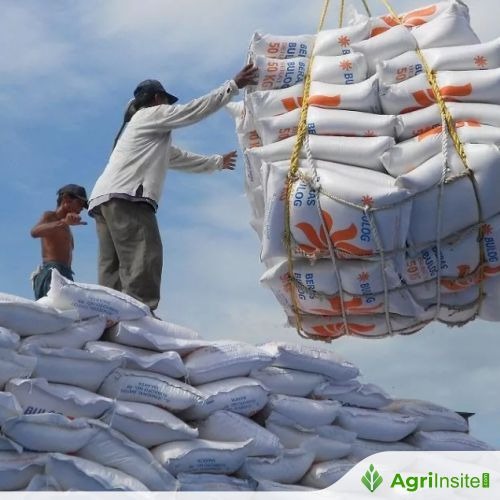
Indian rice exporters have secured an approximately 102,000-tonne order from Iraq, highlighting firm Middle Eastern institutional demand. However, Indian FOB prices for key steamed and sella varieties have eased slightly, while Vietnamese quotations remain stable amid cautious buying and monsoon-related supply uncertainties.
Indian rice exporters have booked a roughly 102,000 tonne rice order to Iraq, underlining solid demand from government and institutional buyers in the Middle East while FOB prices in New Delhi ease modestly from early-October peaks. The deal should support export flows and procurement activity, but its ultimate impact on domestic pricing will hinge on rice quality, delivery timing and availability of export-ready stocks. Over the past month, Indian and Vietnamese FOB quotations have been relatively stable to slightly softer, suggesting that the new Iraq business is being absorbed without triggering a sharp price spike. In India, recent policy adjustments have focused more on logistics and inspection rules than on outright new restrictions, allowing exporters to respond to demand where stocks permit. Market attention now turns to execution of the Iraq contract and any follow‑up tenders, as well as to evolving monsoon‑linked supply risks for the 2026/27 season.
Prices
Indian FOB rice prices in New Delhi show a gentle softening compared with levels seen on 3 October 2026, despite the fresh Iraq business.
| Origin | Location | Type | Delivery | Latest price (EUR) | Prev. price 2026-10-03 (EUR) |
|---|---|---|---|---|---|
| India | New Delhi | all golden, sella | FOB | 0.81 | 0.82 |
| India | New Delhi | all steam, pr11 | FOB | 0.32 | 0.33 |
| India | New Delhi | al ısteam, sharbati | FOB | 0.45 | 0.46 |
| India | New Delhi | all steam, 1121 steam | FOB | 0.70 | 0.72 |
| India | New Delhi | all steam, 1509 steam | FOB | 0.64 | 0.66 |
| India | New Delhi | white sella, 1121 creamy | FOB | 0.60 | 0.62 |
| India | New Delhi | white, non basmati (organic) | FOB | 1.25 | 1.28 |
| India | New Delhi | white, basmati (organic) | FOB | 1.55 | 1.56 |
| Vietnam | Hanoi | long, white, 5% | FOB | 0.33 | 0.33 |
| Vietnam | Hanoi | Jasmine | FOB | 0.35 | 0.35 |
| Vietnam | Hanoi | Japonica | FOB | 0.45 | 0.45 |
| Vietnam | Hanoi | Homali | FOB | 0.49 | 0.49 |
The latest quotations (10 October 2026) confirm a mild downtick of roughly 0.01–0.02 EUR for key Indian steamed and sella categories versus early October, while Vietnamese FOB prices in Hanoi are flat over the same comparison date. This suggests that current export demand, including the Iraq order, is being met without immediate upward pressure on quotes.
Supply & Demand
The newly reported ~102,000 tonne rice order to Iraq underscores firm institutional demand for Indian origins, particularly for bulk government-linked tenders in the Middle East. The scale of this contract is meaningful for individual exporters and ship operators, but small relative to India’s overall annual exportable surplus, so it does not, on its own, tighten the global balance.
Recent analysis points to a prospective reduction in India’s exportable rice surplus next year as weather risks and firm domestic prices converge, even though official stock levels remain comfortable. Against that backdrop, timely execution of the Iraq shipment will be closely watched for clues on logistics efficiency and the appetite of Iraqi buyers for follow‑up volumes on similar terms.
Fundamentals & Policy Backdrop
Fundamentally, India remains the world’s dominant rice exporter, but the 2026 kharif season has been shaped by El Niño‑linked monsoon uncertainty. While early‑season rainfall shortfalls prompted concern for rice and pulses, subsequent government updates and private forecasts now imply only a modest impact on sown area for rice, with production risks more about quality and regional distribution than aggregate output.
On the policy side, no fresh prohibitions have been introduced in the last few days. Export regulations continue to differentiate sharply between rice segments, and earlier moves in 2026 have mainly refined documentation and inspection rules for shipments rather than altering core market access. This stable framework helps exporters respond quickly when large institutional orders, such as Iraq’s, surface.
Weather Outlook (Key Asian Origins)
In India, the southwest monsoon is now in its withdrawal phase, with most kharif paddy in grain‑filling to maturity, so short‑term rainfall shifts matter less for yield than earlier in the season. Localised showers could still affect harvesting logistics and grain quality in some eastern and coastal belts, but widespread weather‑driven supply shocks in the very near term look unlikely.
In Vietnam, current weather conditions in the main delta regions are seasonally mixed, with scattered rains but no major flooding episodes reported in the last few days. As a result, Vietnamese FOB offers around Hanoi are steady, acting as an important reference and potential cap on sharp upside in Indian quotes if further demand from the Middle East materialises quickly.
Trading Outlook (Next 1–2 Weeks)
- Exporters in India: Use the Iraq order to lock in nearby shipments at current FOB levels, but avoid over‑committing forward volumes until more clarity on 2026/27 crop outcomes and any additional Iraqi tenders emerges.
- Middle East buyers: Consider layering in coverage for Q4 2026 and early Q1 2027 while Indian FOB prices are slightly softer and freight logistics are being optimised through bulk vessel programmes.
- Vietnamese and other ASEAN sellers: Monitor Indian offer behaviour closely; any tightening in Indian exportable surplus or new restrictions could quickly redirect incremental demand towards Vietnamese and Thai origins.
3‑Day Directional View
- India – New Delhi FOB (steamed & sella basmati/non‑basmati): Sideways to slightly softer, with exporters focused on execution of booked business rather than aggressive price hikes.
- Vietnam – Hanoi FOB (5% long white, Jasmine, Japonica): Largely stable, with limited short‑term supply shocks and competitive positioning versus Indian offers.
- Middle East bulk import demand (Iraq focus): Firm but price‑sensitive; follow‑up tendering will depend on how smoothly the current ~102,000 tonne programme is executed.
To Read more about Rice News continue reading Agriinsite.com
Source: CMB News