Rice Husk and Sugarcane Residue can be used to produce Eco-Friendly concrete, Indian Scientists make major breakthrough

Indian researchers found rice husk ash and sugarcane bagasse ash can replace 10% of cement in concrete, increasing compressive strength by 12.6% and 8.2%, respectively. The innovation promotes green construction, reduces emissions, improves waste management and supports biomass resource utilization.
New Delhi: A new study by Indian scientists has found that rice husk and sugarcane bagasse (sugarcane residue) can be processed through thermo-chemical treatment and used as a partial replacement for cement in concrete. The innovation not only enables the production of green concrete but also helps reduce carbon emissions, improve agricultural waste management, and promote resource recycling. According to the researchers, replacing 10 percent of cement with rice husk ash and sugarcane bagasse ash increases the compressive strength of concrete by 12.6 percent and 8.2 percent, respectively, compared to conventional concrete.
According to a report published in ‘The Tribune’, the researchers said the improvement in concrete performance is due to the densification of its microstructure, along with enhanced chemical reactivity and bonding properties. These findings confirm that rice husk ash and sugarcane bagasse ash can serve as effective partial substitutes for cement while supporting sustainable construction practices.
The study was conducted by eight researchers from the Central Road Research Institute (New Delhi), Symbiosis International (Pune), K.R. Mangalam University (Gurugram), Jamia Millia Islamia (New Delhi), Al-Falah University (Faridabad), and King Faisal University (Saudi Arabia). The research was published on June 25 in the prestigious peer-reviewed journal Scientific Reports.
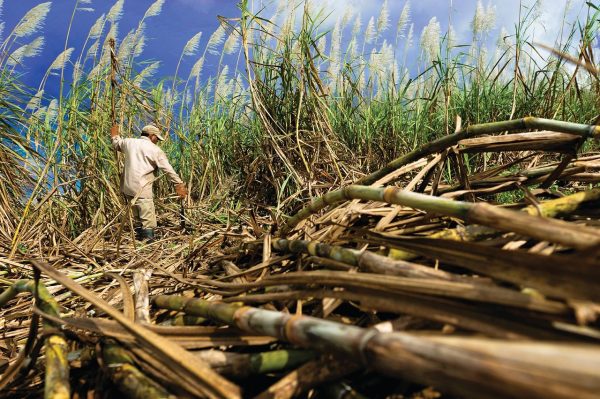
The researchers noted that agricultural countries such as India generate more than 100 million metric tonnes of biomass waste every year. Among these, rice husk and sugarcane bagasse are the most significant agricultural residues. Their improper disposal contributes to environmental pollution and creates major waste management challenges.
The study also highlighted that biomass gasification is an effective and sustainable method for managing agricultural waste. In this process, biomass is partially oxidized under limited oxygen conditions to produce syngas, which can be used for electricity generation and other energy applications. This not only reduces pollution but also converts agricultural waste into a valuable energy resource.
According to the study, the global biomass gasification market is expected to grow at a compound annual growth rate (CAGR) of approximately 21.5 percent between 2023 and 2028. As India works toward achieving its renewable energy goals, the sector is expected to witness significant growth. The researchers believe that ash produced from agricultural residues can be widely used in manufacturing green concrete, making the construction industry more environmentally sustainable while ensuring the efficient utilization of agricultural waste.
To Read more about Sugar Industry continue reading Agriinsite.com
Source : ChiniMandi