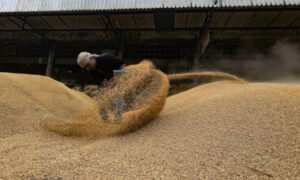
UK wheat stocks fall 24%, increasing reliance on imports

UK wheat availability in 2026/27 is forecast to fall 215,000 tonnes to 16.338 million tonnes due to lower opening stocks, despite higher production and imports. Barley availability is projected to decline 8% to 7.201 million tonnes, reflecting the lowest production since 2012/13.
Total wheat availability in the UK in the MY 2026/27 is estimated at 16.338 mln tons, down 215 thsd tons from the previous season. According to preliminary estimates by the Agriculture and Horticulture Development Board (AHDB), the main reason for the decline is significantly lower opening stocks, which have fallen by 466 thsd tons, or approximately 24%, to 1.514 mln tons. Even the expected increases in domestic production and imports will not fully offset the reduction in carryover stocks.
UK wheat production in 2026 is estimated at 12.074 mln tons, up 116 thsd tons year-on-year. A slight reduction in planted area was offset by an improvement in average yields, although weather conditions varied considerably across regions. In particular, insufficient rainfall negatively affected crops in southern England, while total production remained below the previous five-year average. Meanwhile, wheat imports in 2026/27 are forecast at 2.75 mln tons, an increase of 135 thsd tons compared with the previous season. However, demand for imported high-quality milling wheat is expected to be limited, as a significant share of domestically produced wheat exceeds the required protein specifications.
Domestic wheat consumption in the UK is projected to decline by 124 thsd tons to 13.979 mln tons in 2026/27. The main reduction is expected in food and industrial use, while feed consumption is likely to remain virtually unchanged. According to AHDB, wheat use in animal feed is forecast at 7.249 mln tons, up 29 thsd tons from the previous season. The composition of feed rations will depend on relative prices for wheat, barley and imported corn, as well as the availability of these grains across different regions of the country.
Meanwhile, the situation in the UK barley market is even tighter. Total barley availability in 2026/27 is forecast at 7.201 mln tons, down 658 thsd tons, or 8%, year-on-year. The main reason is a decline in production to 5.614 mln tons, a reduction of 753 thsd tons compared with 2025. This represents the lowest output since the 2012/13 season, reflecting reduced planted area and significant regional differences in yields. At the same time, opening barley stocks increased by 58 thsd tons to 1.337 mln tons, although this is insufficient to offset the decline in production.
Total domestic barley consumption in 2026/27 is expected to reach 6.001 mln tons, down 39 thsd tons from the previous season. Around 4.393 mln tons are projected to be used for animal feed, virtually unchanged year-on-year. Feed barley currently remains price-competitive with other feed grains, but tighter supplies could change the situation as the season progresses. Meanwhile, livestock farms’ demand for grain-based feed is expected to remain stable, partly due to the need to compensate for forage shortages during the winter.
To Read more about Wheat News continue reading Agriinsite.com
Source : UkrAgroConsult