Ukraine’s agricultural sector faces collapse as plant shutdowns and disrupted logistics threaten the wider economy

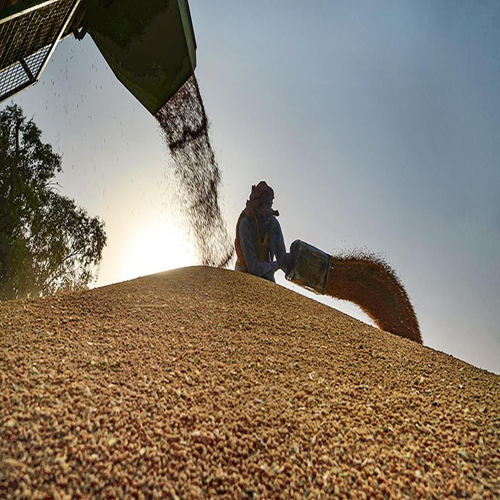
Russian attacks, Greater Odesa port blockades, surging fuel costs, and severe credit tightening have pushed Ukraine’s agricultural sector to the brink of crisis. With major processing plants shutting down and reserves depleting, up to 6.3 million hectares risk going unsown in spring 2027, threatening exports, rural land rents, and broader economic stability.
Ukraine’s agricultural sector, which generates up to 20% of the country’s GDP, is on the brink of a major crisis. Several processing plants have already announced temporary shutdowns following Russian attacks. This, in turn, is creating a cascade of problems for the entire Ukrainian economy.
The situation in Ukraine’s agricultural sector has become increasingly alarming. More than 7 million rural landowners could be left without rental payments, while areas planted with certain crops could shrink by nearly half, as could export volumes. This would lead to a decline in foreign exchange earnings, corporate revenues and tax payments to budgets at various levels.
These developments are the consequences of Russian attacks on agricultural enterprises and logistics infrastructure, the blockade of Greater Odesa ports, and the absence of a systematic government policy to support the agricultural sector under these difficult circumstances.
There are few prospects for a significant improvement in the situation. As a result, Ukraine’s agricultural sector, once regarded as one of the world’s major food suppliers, appears to be gradually moving from a position of strength toward one of financial distress.
The crisis will inevitably spread from agriculture to other sectors of the economy. Without an adequate response from the government and international partners, the consequences could be severe and unpredictable.
Plant shutdowns and production cuts
During the first weeks of November, several major agricultural processing companies announced the suspension of operations due to the risk of continued attacks, electricity disruptions and difficulties with export logistics.
Kernel, one of the world’s largest edible oil producers, announced a complete technological shutdown of all eight of its oilseed crushing plants. Other companies that reported scaling back operations included the producer of products under the Korolivskyi Smak brand, Delta Wilmar Ukraine, which operates an oilseed crushing plant in Odesa region, and the Oleina (Bunge) and Potoky (Alef Group) plants in Dnipro. The Nizhyn Fat Processing Plant also suspended operations, while Allseeds had ceased production earlier in the summer. Several companies halted raw material purchases and announced workforce reductions and the mothballing of production facilities.
These processing difficulties are compounded by challenges facing farmers. The inability to process harvested crops could force agricultural producers to reduce planted areas and lower selling prices in competition for buyers. With fewer processors purchasing sunseed, farmers may consider themselves fortunate to sell their crop at almost any price rather than at prevailing market levels. As a result, both processors and agricultural producers could face significant losses.
The Ministry of Agrarian Policy expects wheat planting areas to decline by 15–17% to 4–4.2 mln ha, while corn acreage could potentially be reduced by as much as half. According to a Barva Invest survey, approximately one in three or four farmers planned to reduce winter wheat acreage because of high logistics costs and export difficulties.
A model developed by the Ministry of Agrarian Policy and presented in the media by Minister Taras Vysotskyi indicates a risk that 6.3 mln ha could remain unsown in the spring. This could result in a loss of at least €500 mln in foreign exchange earnings every month, alongside the risk of unpaid land rent. Such developments could create a delayed economic shock in the coming years, as reduced domestic agricultural production translates into lower exports and revenues, generating a ripple effect throughout the economy.
Russian shelling, the physical destruction of production facilities and the lack of a stable electricity supply have become decisive factors behind plant closures.
In mid-November, Ukrainian intelligence agencies officially warned that agricultural processing facilities were among the priority targets of Russian attacks. Even before these warnings, port terminals, grain elevators, warehouses containing agricultural products and export convoys had suffered significant damage.
In addition, the average price of diesel fuel has increased by nearly 80% since the beginning of 2026, rising from UAH 58.3 to UAH 103.2 per liter as of November 16. This has substantially increased producers’ expenses for field operations, transportation and agricultural exports.
Combined with labor shortages resulting from military mobilization, these developments create a highly challenging outlook for the entire sector.
Ports and banks add to the pressure
Several additional factors have further complicated the situation. The first is the blockade of Greater Odesa ports, which stopped operating in mid-July. Export flows have been redirected to Ukrzaliznytsia, which transports agricultural products to Ukraine’s western borders, and to ports on the Danube.
According to calculations by the Ministry of Agrarian Policy, these alternative routes can handle no more than half of the country’s potential export volumes. Due to shortages of transport capacity, including railcars and locomotives, many of which have been destroyed, as well as a lack of train drivers, the ministry even proposed introducing priority export arrangements for higher-value products, such as vegetable oil rather than grain.
Including road transportation, realistic export capacity is estimated at 2–2.5 mln tons per month, equivalent to 24–30 mln tons annually, compared with potential exports of approximately 50 mln tons. This means that around 20–35 mln tons of grain may remain unexported by the end of the year. The baseline economic scenario assumes that the port blockade will continue until mid-2027.
The second major factor is the tightening of lending conditions by the National Bank of Ukraine and commercial banks, affecting the broader economy and the agricultural sector in particular.
Farmers have repeatedly reported that delays in government compensation payments under the subsidized “5-7-9%” loan program have forced them to pay full interest rates at the request of banks. Instead of preferential rates of 9–11%, borrowers may face rates of approximately 22–25%.
These requirements were imposed by banks, which were themselves under pressure from the regulator. Although the National Development Institution, which administers compensation payments, may delay settlements with financial institutions for up to nine months, NBU regulations classify a loan as overdue if payments have not been made for six months.
In October, the National Development Institution reimbursed banks only for March 2026, reflecting the corresponding delay in payments from the State Treasury.
A similar situation could arise again. With working capital already in short supply, additional financial pressure may become unbearable for agricultural producers. Despite statements expressing their willingness to support the sector, bankers, according to farmers, are constrained by their own lending limits and risk assessments. As a result, they are often reluctant to approve new loans or even restructure existing ones.
Farmers needed approximately UAH 80 bln in additional loans for the autumn planting campaign, but only slightly more than UAH 30 bln was actually disbursed, Minister of Agrarian Policy Taras Vysotskyi recently acknowledged.
The draft state budget for 2027 provides UAH 7.4 bln in agricultural support, which is UAH 6.7 bln less than the amount planned for 2026.
Against this backdrop, the closure of the USAID AGRO program represents another unfavorable development. The departure of a major grant provider that financed agricultural development and capacity building in Ukraine had been planned. However, no adequate replacement has been found among European or domestic institutions. Consequently, farmers have effectively lost an important source of international financial support.
The availability of financing has become one of the most pressing issues facing Ukraine’s agricultural sector in decades.
According to the minister, farmers require approximately UAH 200 bln in working capital financing during the autumn, while their needs could reach UAH 300–350 bln in spring 2027.
Without sufficient export revenues and with loan repayment deadlines approaching, some agricultural enterprises could find themselves on the verge of default. This creates a risk that thousands of farms may be forced to cease operations.
Meanwhile, financial reserves are likely to be depleted by the end of the year.
The minister noted that at the beginning of 2026, the total working capital available to agricultural enterprises, including funds held in bank accounts and deposits as well as supplier trade credit, amounted to approximately $5 bln.
Of this amount, around $2.7 bln consisted of companies’ own funds, while the remainder represented seeds, fertilizers and crop protection products supplied with deferred payment terms.
“As of October 1, approximately $2 bln remained in bank accounts, equivalent to $100 per hectare. But this is no longer a reserve. Normally, these funds are replenished in the autumn by revenues from the new harvest. This year, however, they are being used to cover the shortfall in income — rent, wages and loan repayments.
“According to our calculations, there will be no freely available funds left by January 1. This does not mean there will be no money at all. Limited exports continue, and the domestic market consumes agricultural products every month.
“However, there will be no reserves in bank accounts and deposits at the beginning of the year. The only sources of financing will be further sales and, for those who have access to it, supplier trade credit,” Vysotskyi said.
Unpaid land rent may be only the beginning
One of the main consequences that agricultural associations have been warning about for several months is the potential inability of farms to pay rent to landowners.
Most rental payments are due in the fourth quarter, precisely when the financial situation is becoming particularly difficult.
According to the Ministry of Finance, Ukraine has approximately 7 million owners of agricultural land shares. Failure to make rental payments would also reduce personal income tax revenues, levied at 18%, and military levy receipts, both of which contribute to local government budgets.
The Ministry of Agrarian Policy acknowledges that isolated cases of delayed payments in individual regions could develop into a widespread problem in 2027.
Given the government’s apparent reluctance to intervene, farmers seem to be facing these challenges largely on their own.
Consequently, a crisis of unpaid obligations and plant closures could be followed by a wave of bankruptcies among large and medium-sized agricultural land tenants.
Over time, this could lead to a substantial decline in rental payments and the overall value of agricultural land.
After all, where there are no businesses capable of cultivating land and processing the products grown on it, agricultural plots may attract little interest, regardless of how fertile they are.
Moreover, as the agricultural crisis deepens, a ripple effect can be expected across other sectors of the economy.
The primary transmission channel would be a prolonged reduction in foreign exchange earnings.
According to the NBU, agricultural export revenues in the second half of 2026 could be $4.6 bln lower than in the preceding period.
A decline in foreign currency inflows could accelerate the depletion of international reserves and contribute to further depreciation of the hryvnia.
This, in turn, would increase the cost of imported fuel, medicines, equipment and components used by the defense industry.
Ukraine’s dependence on international financial assistance would become increasingly critical. Any delay in funding from the EU or IMF could potentially trigger additional pressure on the foreign exchange market.
The accumulation of non-performing agricultural loans would also directly affect the banking system.
If farmers exhaust their available funds by January 1, as projected by the minister, one possible scenario would involve a wave of agricultural business defaults in the spring, accompanied by a substantial increase in the banking system’s share of non-performing loans.
State-owned banks hold the largest portion of loans issued under the “5-7-9%” program, meaning they could require additional government capitalization.
To protect their financial ratios, banks might respond by reducing lending to small and medium-sized businesses across the economy, not only to agricultural enterprises.
A payment crisis would also disrupt supply chains.
Suppliers of fertilizers, crop protection products, seeds and fuel typically provide agricultural inputs on credit against future harvests.
If the crisis develops according to the negative scenario, these suppliers would effectively become creditors to insolvent farms, placing distributors themselves at risk of bankruptcy.
Leasing companies and agricultural machinery dealers could face similar difficulties.
In turn, domestic agricultural machinery manufacturers could lose orders for at least the next one or two years.
Local communities would also suffer.
Their revenues depend heavily on personal income tax generated by land rental payments, taxes on agricultural employees’ wages and land taxes.
Under the worst-case scenario, agricultural enterprises could become unable to meet their obligations during the winter of 2026–2027, causing communities to lose all three revenue sources simultaneously.
The consequences could include school and medical clinic closures, unpaid heating bills and budget crises in hundreds of communities.
The role of agricultural and logistics businesses in regional economies should not be underestimated.
For example, if Odesa region loses stevedoring companies, logistics operators, trucking businesses and the small enterprises connected to them, the region could face unemployment and significant tax revenue losses extending well beyond agriculture into numerous related industries.
For a substantial share of Ukraine’s approximately 7 million land-share owners, many of whom are pensioners, rental income effectively serves as a second pension.
If tenants are unable to pay for the use of agricultural land, the consequences could include rising poverty, increased demand for social assistance and another wave of labor migration from rural areas already weakened by demographic decline.
Another risk concerns military service exemptions for employees of strategically important enterprises.
Even after the recent easing of eligibility criteria for agricultural businesses, companies approaching bankruptcy may find it almost impossible to meet the requirements.
If employees leave their jobs or avoid mobilization, farms may eventually lack the workforce needed to plant crops and maintain agricultural machinery.
Naturally, the land and assets of financially distressed enterprises also tend to lose value.
One possible scenario involves large-scale acquisitions through offshore structures and nominee owners, potentially including capital of unclear or even Russian origin.
Other risks include hostile takeovers of weakened enterprises, pressure on state-owned companies and corruption schemes related to debt restructuring.
The situation on international markets must also be considered.
Buyers in Egypt, Indonesia and China are restructuring their supply chains in favor of Russia or other competitors of Ukrainian agricultural businesses, and these are often long-term decisions.
Food prices in North Africa and the Middle East are rising, potentially contributing to instability and increased migration pressure on the European Union.
Higher volumes of rail freight transported through Poland and Romania could also trigger a recurrence of farmer blockades at border crossings, similar to those seen in 2023–2024, with local political forces potentially exploiting such protests for their own purposes.
Finally, unpaid land rents and the crisis in Ukraine’s agricultural sector could provide fertile ground for Russian information operations.
Propaganda outlets are likely to increasingly promote narratives such as “the government has abandoned rural communities,” “Ukrainian land has been sold to foreigners,” and “the war is being fought for oligarchs.”
Whether this could provoke social instability, protests in rural areas, a rise in populism, pressure on local and central authorities, and declining public trust in the government in regions away from the front line may be only a matter of time.
To Read more about Wheat News continue reading Agriinsite.com
Source : Ukr Agro Consult