Zimbabwe: Wheat harvest tops 675 000 tonnes

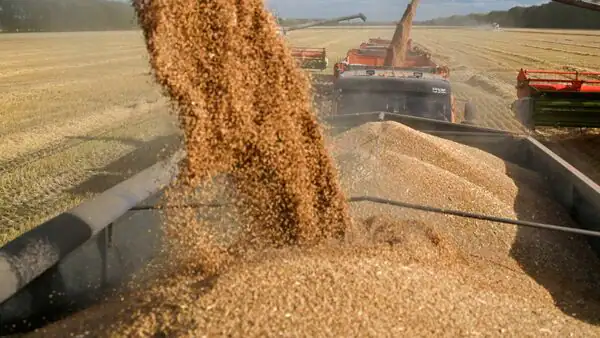
Zimbabwe harvested 675,826 tonnes of wheat from 99% of its planted area, marking a 5.6% increase over last year. The harvest supports plans to expand strategic grain reserves to 450,000 tonnes by year-end, strengthening food security ahead of an El Niño-affected summer season.
ZIMBABWE’S wheat harvest has reached 675 826 tonnes, bolstering national food security as Government intensifies efforts to build strategic grain reserves ahead of the anticipated El Niño-affected 2026/27 summer cropping season.
The latest harvest is up 5,6 percent from the 640 195 tonnes produced last year, providing a vital buffer as the country prepares for potential rainfall deficits.
In an interview on Monday, Lands, Agriculture, Fisheries, Water and Rural Development Minister Dr Anxious Masuka said 99 percent of the 130 316 hectares planted had been harvested, with just over 128 000 hectares reaped at an average yield of 5,3 tonnes per hectare.
The bumper harvest supports Government’s target of increasing the Strategic Grain Reserve (SGR) to 450 000 tonnes by year-end and 600 000 tonnes by October 2027 to cushion the country against potential summer crop shortfalls.
Dr Masuka said deployed machinery was helping to complete the remaining harvest before rains could cause significant damage.
“Well, we have now harvested 99 percent of the wheat area of 130 316 hectares. So just over 128 000 hectares have been harvested. The volume generated from that is 675 826 metric tonnes, at an average yield of 5,3 metric tonnes per hectare,” he said.
“We expect the remaining wheat to be harvested shortly, leaving only a few thousand hectares still to be reaped.”
With 482 combine harvesters capable of harvesting 14 000 hectares daily, authorities expect minimal weather-related losses.
“Of course, with 482 combine harvesters capable of harvesting 14 000 hectares a day, we expect all this wheat to have been harvested by now, so the rains will cause very minimal damage,” said Dr Masuka.
The minister noted that both planted hectarage and total output had increased compared to last season.
“Last year, we had 122 566 hectares and from that, at 5,2 tonnes per hectare, we harvested 640 195 metric tonnes. So this year, we are about 5,6 percent ahead of last year, with a larger area planted and a higher total output,” he said.
Dr Masuka credited the record performance to effective sector co-ordination and the availability of key production enablers, including electricity, water, chemicals, fertilisers and quelea bird control, while commending farmers for their efforts.
“And I must thank all the farmers for their sterling work, the co-ordination that has taken place within Government and the all-of-sector approach, the availability of electricity and water, and of course the effective control of quelea birds, as well as the availability of chemicals and fertilisers, with all 23 enablers functioning as they should,” he said.
Zimbabwe Commercial Farmers Union (ZCFU) president Dr Shadreck Makombe echoed these sentiments, noting that reliable power and water supplies, mechanisation and quelea bird control enabled farmers to irrigate and harvest without major disruptions.
“We have had reliable electricity and water supplies, while mechanisation and the availability of essential inputs have also played a critical role in supporting production,” he said.
Dr Makombe urged growers to maximise the use of irrigation infrastructure during the summer season to offset potential dry spells.
“We now encourage farmers to utilise every inch of their irrigated land for summer crops. Food security can be anchored on that land,” he said.
Dr Masuka added that sustaining this all-of-sector co-ordination under Government’s six-pillar strategy would be essential for summer production.
“And I hope that this spirit will be carried into the summer season as we implement the six-pillar strategy to ensure that, whether it rains or not, Zimbabwe remains capable of feeding itself,” he said.
To Read more about Wheat News continue reading Agriinsite.com
Source : The Herald