Wheat prices in Egypt surge to record highs amid weak currency and rising fuel costs

Wheat prices in Egypt surged after the recent Middle East Conflict 2026, driven by a weaker Egyptian pound, higher fuel costs, and logistics disruptions. Import challenges and rising global prices, including shipments from Russia, are adding pressure as the world’s largest wheat importer struggles to secure stable grain supplies. 🌾📈
Wheat prices in Egypt have risen sharply due to a depreciating national currency, higher fuel costs, and ongoing logistics issues following the outbreak of the Middle East conflict. Market sources report that prices for 12.5% protein wheat, ex-warehouse, increased from EGP 12,400 to 14,300 per metric ton since the conflict began on February 28. Meanwhile, the Egyptian pound has fallen about 9.4% to a record low of 52.39 EGP per US dollar as of March 13.
The recent fuel price hike has further increased transportation costs, while refined soybean oil prices also surged from EGP 63,000 to 70,000 per ton, intensifying pressure on the grain market. Local buyers note that the volatility affects not only wheat but also corn and soybean oil, creating broader instability across the food supply chain.
Importers are facing additional hurdles as some banks in Dubai have closed operations or suspended services, delaying payments for shipments. Some local millers report that they cannot pay for already arrived vessels, highlighting growing logistical challenges and uncertainty in domestic grain supply.
Due to the weak currency, wheat import prices have risen to match domestic levels, whereas local prices are usually lower. CIF prices for Russian wheat shipments to Egypt increased from $21 to $24 per ton, while the Milling Wheat Marker was assessed at $239/ton on March 12, up 2.5% since February 27.
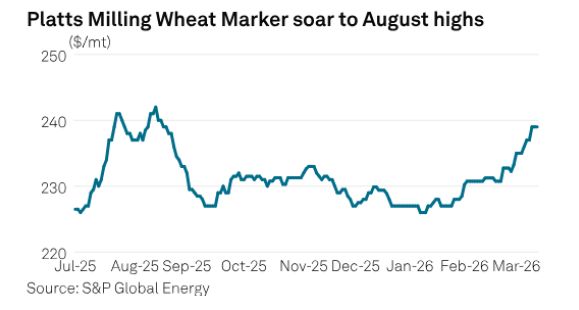
Egypt, the world’s largest wheat importer, is projected to import 13 million metric tons in the marketing year (July–June), with 9.5 million tons already purchased by early March. Millers continue to import wheat to meet domestic demand for flour, while some local suppliers are holding back stocks in anticipation of further price increases. Key Russian suppliers are also cautious, limiting offers until the market situation becomes clearer.
To Read more about Wheat News continue reading Agriinsite.com
Source : Ukr Agro Consult