Thailand : Rice exports challenged by Iran war and parched weather forecast

Thailand’s rice export outlook remains uncertain amid El Niño risks, Middle East conflicts and high fertilizer costs. Thailand exported 2.2 million tonnes in January-April 2026 against a 7 million-tonne target, while cheaper Indian rice at $340/tonne continues challenging Thai exports priced at $420/tonne.
The outlook for Thailand’s rice exports in the second half of the year remains uncertain as climate conditions and geopolitical conflicts could significantly influence trade volume, says a member of the Thai Rice Exporters Association.
The Department of Foreign Trade (DFT) projects Thailand will export 7 million tonnes of rice this year.
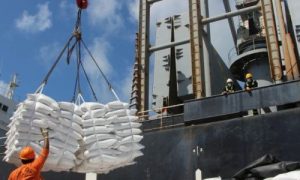
Thailand shipped roughly 2.2 million tonnes of rice in the first four months, according to the association.
Indian white rice 5% is currently priced at US$340 per tonne, while Thai white rice 5% is at $420 per tonne, according to the group.
Chookiat Ophaswongse, honorary president of the Thai Rice Exporters Association, said the wide price gap between Indian and Thai rice has enabled Indian exporters to capture a larger share of the African market, presenting a challenge for Thai rice exports.
In 2025, Iraq was Thailand’s largest rice export market, importing 1 million tonnes, followed by South Africa with 880,000 tonnes, and the US with 820,000 tonnes, according to the DFT.
Mr Chookiat said the blockage of the Strait of Hormuz has disrupted Thailand’s rice exports to Iraq. In the first four months of 2026, around 90,000 tonnes of rice were shipped to Iraq.
“The outlook for the second half of the year is challenging and will be influenced by various factors,” he said.
If the strait opens up and Iraq resumes rice imports from Thailand, a large volume of orders could drive up demand in the latter half of the year, said Mr Chookiat.
WEATHER PATTERNS
If an El Niño event occurs this year, it will likely impact rice production across Southeast Asia, as the phenomenon typically brings drought and heatwaves to the region, he noted. Most Thai rice plantations still depend on rainfall rather than irrigation systems.
The war in the Middle East has raised fertiliser prices, increasing costs for farmers. As a result, farmers may reduce fertiliser use, potentially resulting in lower yields.
Lower yields from reduced fertiliser use, coupled with the potential impact of El Niño on crop output, could drive rice prices slightly higher this year, said Mr Chookiat.
The weather pattern may benefit the rice export market by lifting demand from countries seeking to secure supplies.
Malaysia and the Philippines are increasing their orders, likely as part of efforts to stockpile rice to prepare for climate-related risks, he noted.
For the first three months of 2026, Malaysia imported 134,000 tonnes of rice from Thailand, up from around 33,000 tonnes year-on-year, and the Philippines imported around 100,000 tonnes, up from 52,000 tonnes for the period.
“This helped to absorb supplies unable to be exported to Iraq,” Mr Chookiat said.
Indonesia has gradually shifted its policy towards food self-sufficiency, resulting in reduced imports of Thai rice.
However, if a super El Niño event hits the country, Indonesia may increase its rice imports, he said.
Despite the uncertain outlook, Mr Chookiat said he is optimistic Thailand will achieve the rice export target of 7 million tonnes this year.
He urged the government to adopt a long-term strategy to address industry challenges, working to reduce production costs, increase yields, develop new rice varieties and explore new export markets.
To Read more about Rice News continue reading Agriinsite.com
Source : Bangkok Post