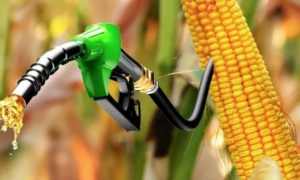
India Goes Big on Green Fuel – Zero Excise Duty on Petrol with Up to 30% Ethanol

India has removed excise duty on E22–E30 petrol blends to accelerate ethanol adoption beyond E20. The move supports higher blending, flex-fuel vehicles, and E85 rollout, aiming to cut crude imports, boost rural incomes, expand biofuels, and reduce carbon emissions significantly.
The Ministry of Finance issued a notification on Thursday, announcing that petrol blended with higher levels of ethanol — specifically variants containing 22%, 25%, 27%, and 30% ethanol — will now attract zero excise duty. It’s a direct financial incentive for oil marketing companies to push ahead with higher ethanol blends, and it signals that India’s biofuel journey is entering its next chapter.
What Exactly Has Changed?
Until now, India’s excise duty framework didn’t explicitly cover the higher ethanol blend categories — E22, E25, E27, and E30. Thursday’s notification fills that gap cleanly. The Bureau of Indian Standards had already notified technical specifications for these blends through a Gazette notification last week — covering fuel standards for petrol blended with up to 30% ethanol for use in positive ignition engine-powered vehicles.
With the excise duty now set at nil for these blends, the tax burden that would normally make higher-blend petrol more expensive to produce has been removed entirely. The exemption has been granted under Section 5A of the Central Excise Act, 1944. In practical terms: companies can now produce and sell E22-to-E30 petrol without attracting central excise duty on the blended fuel, though applicable taxes on the individual components — the ethanol and the duty-paid petrol — will still apply separately.
Why This Move Matters
India is the world’s third-largest oil consumer and imports around 85% of its crude oil needs. Every percentage point of ethanol that replaces petrol at the pump means less foreign exchange spent on imported crude — and more money flowing to domestic sugarcane farmers, distilleries, and the rural economy. Petroleum Minister Hardeep Singh Puri has confirmed that India achieved 20% ethanol blending in petrol in 2025 — a full five years ahead of the original 2030 target. Ethanol production surged from just 38 crore litres in 2014 to 661.1 crore litres by June 2025.
Over the last eleven years, ethanol blending in petrol by public sector oil marketing companies has saved more than Rs 1,44,087 crore in foreign exchange, substituted approximately 245 lakh metric tonnes of crude oil, and reduced CO2 emissions by around 736 lakh metric tonnes — the equivalent of planting 30 crore trees. Having hit 20%, the government is clearly not stopping there. The notification of E22-to-E30 standards — followed immediately by the excise exemption — shows that the next target is already being prepared.
And Then There’s E85
The same week this excise notification landed, India also formally launched E85 fuel for compatible flex-fuel vehicles — a blend that contains 85% ethanol and just 15% petrol.
Union Minister Puri launched E85 at an Indian Oil Corporation fuel station in New Delhi, calling it the next stage in India’s biofuel programme. A Toyota Innova flex-fuel vehicle capable of running on E85 was showcased at the event.
The government plans to expand the E85 dispensing network to around 500 stations by the end of 2026, and approximately 5,000 stations by the end of 2027, beginning with Delhi-NCR and the Mumbai-Pune-Nagpur corridor.
Puri said the government is in active discussions with the automobile industry body SIAM and other organisations to prepare the ecosystem for wider flex-fuel adoption, while making clear that E85 is currently available only for E85-compatible vehicles.
What About Regular Vehicles — Will E30 Work?
This is a legitimate question that millions of car owners will ask. Vehicles designed for lower ethanol blends may face compatibility issues with E30 fuel. Automobile manufacturers may need to modify engines and fuel systems to ensure smooth functioning with higher ethanol content. The government is examining the feasibility of flex-fuel vehicles that can run across a wide range of ethanol-petrol mixtures.
This means E30 won’t simply show up at every petrol pump next month. The rollout will be phased, and initially only vehicles tested and certified for higher ethanol blends will be able to use it. The broader transition will depend on automakers adapting their models accordingly — a process that the government is actively pushing through policy discussions with the industry.
The Road From Here
India’s ethanol blending story has been genuinely impressive. Going from 1.5% blending in 2014 to 20% by 2025 — years ahead of schedule — is a real policy achievement. The fiscal move this week — removing excise duty on blends up to E30 — is designed to keep that momentum going.
The government is also examining the feasibility of flex-fuel vehicles that can operate on different ethanol-petrol mixtures, with discussions ongoing regarding E85 and even E100 fuel standards for future adoption.
For now, the signal is clear. India is building the regulatory, tax, and infrastructure framework needed to go well beyond E20 — and the excise exemption on higher blends is one of the most concrete steps it has taken yet to make that happen.
To Read more about Ethanol Industry & Bio Energy News continue reading Agriinsite.com
Source : Bizz Buzz