Ethanol blending helped India keep petrol prices among world’s lowest, says Puri

India said its ethanol blending programme has reduced reliance on imported crude, protected consumers from global oil price volatility, and supported farmers. Maize now contributes nearly 35% of ethanol production, while E20 fuel improves long-term price stability despite not always being cheaper than petrol.
India’s ethanol blending programme has played a significant role in shielding consumers from volatile global crude oil prices, helping the country offer some of the world’s cheapest petrol, Petroleum and Natural Gas Minister Hardeep Singh Puri said on Friday. He said the use of domestically produced ethanol has reduced the country’s dependence on imported crude while supporting farmers and improving fuel price stability.
In a post on X, Puri said that while many countries have been affected by rising crude oil prices, India has benefited from purchasing ethanol from domestic farmers at fixed prices throughout the year.
His remarks came as crude oil prices rose sharply following the conflict in the Middle East, pushing up fuel prices in several countries.
Speaking to Times Now, the minister said greater use of ethanol has reduced India’s dependence on fluctuations in global Brent crude prices, which have ranged between $68 and $128 per barrel in recent months.
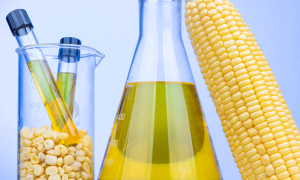
Puri also said India has gradually shifted ethanol production from water-intensive crops such as sugarcane and rice to maize, which requires less water. He added that maize now accounts for nearly 35% of the country’s ethanol production, helping improve farmers’ incomes while conserving water.
Meanwhile, an Economic Times report said state-run oil marketing companies incurred losses of nearly Rs 75,000 crore during the first quarter due to delayed fuel price revisions.
The Petroleum and Natural Gas Ministry said the ethanol blending programme has helped protect Indian consumers from global crude price volatility and enabled the country to record one of the lowest increases in retail fuel prices among major economies over the past four years.
Responding to questions over why E20 petrol is not cheaper than conventional petrol, the ministry said the comparison ignores the government’s policy of ensuring fair prices for farmers supplying ethanol.
“The question should not be, ‘Why isn’t E20 cheaper?’ The real question is, ‘How did India manage to protect consumers from the full impact of volatile global crude prices?’” the ministry said.
According to an official statement, the government currently procures maize-based ethanol at about Rs 71.86 per litre, excluding GST, transportation, storage and depot handling costs, to ensure remunerative prices for farmers.
The ministry said producing E20 fuel is more expensive than pure petrol when international crude prices are around $70 per barrel. However, if crude prices rise to $120-130 per barrel, ethanol becomes the more economical option.
It added that nearly one-fifth of every litre of petrol sold in India now consists of domestically produced ethanol, whose procurement price remains fixed and is unaffected by daily movements in Brent crude prices, geopolitical tensions or disruptions in global shipping.
The ministry said this means around 20% of every litre of petrol is insulated from international oil market volatility. It stressed that the ethanol blending programme is primarily aimed at reducing India’s dependence on imported crude oil rather than making petrol cheaper on any particular day.
According to the ministry, the strategy has enabled India to record one of the lowest increases in retail fuel prices among major economies and neighbouring countries despite significant disruptions in global energy markets.
To Read more about Ethanol Industry & Bio Energy News continue reading Agriinsite.com
Source : ChiniMandi