No call yet on hiking ethanol blending in petrol, no plan to also sell lower blends: Centre

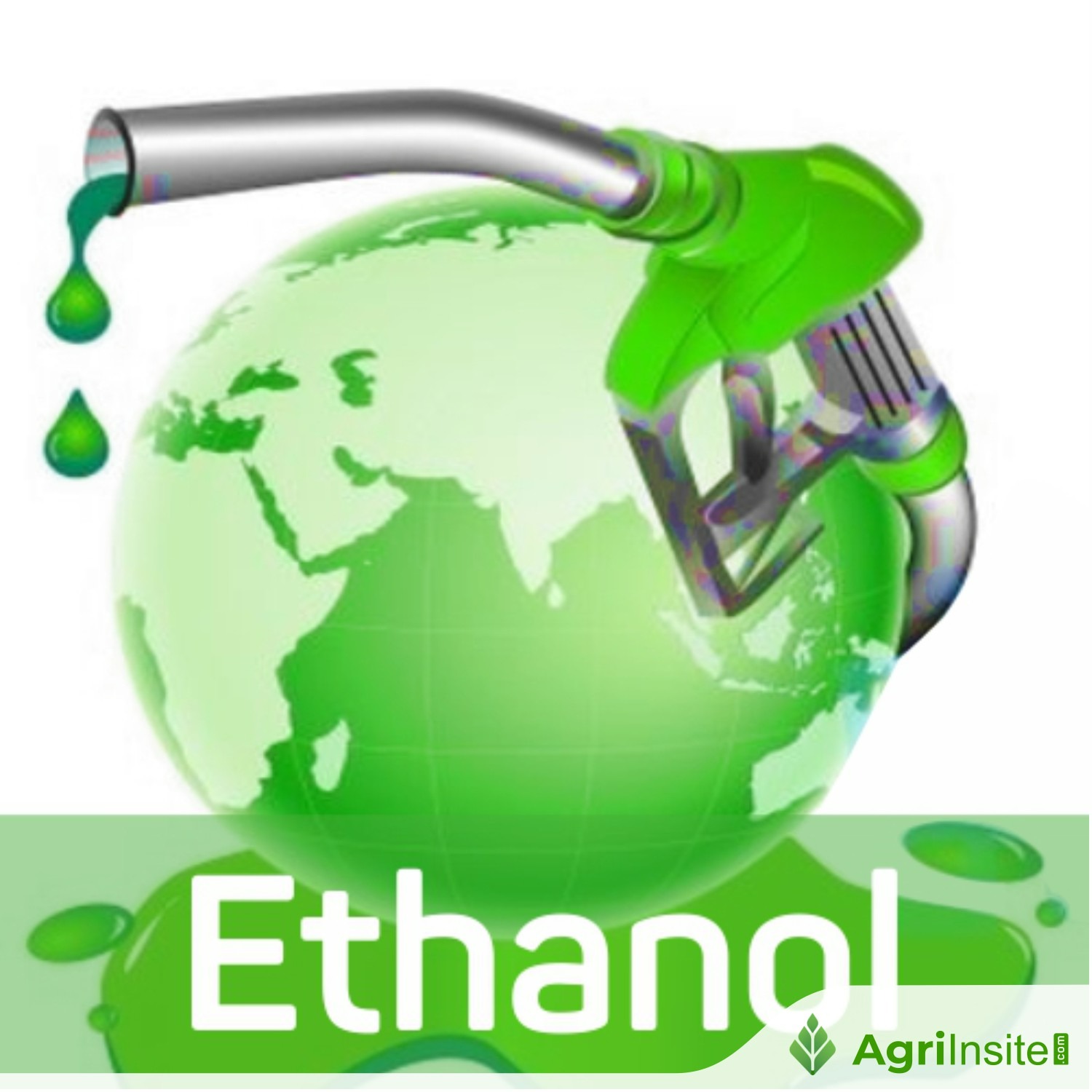
The Centre told Parliament it has no plans to raise ethanol blending beyond E20 or reintroduce lower blends. It said E20 causes only 3–5% mileage loss in older vehicles, has shown no widespread engine damage, and has saved ₹1.97 lakh crore in foreign exchange.
Amid the backlash on ethanol-blended petrol, the government on Monday informed Parliament that no decision has been taken on raising blending levels beyond the current 20%, and any decision to raise the blending levels will be taken only after detailed studies and stakeholder consultations. There is also no plan to make lower ethanol-petrol blends and pure petrol available at fuel stations.
“So far, no decision has been taken by the Government for increasing ethanol blending with petrol beyond 20%. Any future decision regarding higher ethanol blends will be taken only after detailed scientific and technical studies and consultations with all relevant stakeholders, including automobile manufacturers, Oil Marketing Companies and research institutions,” Minister of State for Petroleum and Natural Gas Suresh Gopi informed Rajya Sabha.
India achieved 20% ethanol blending in petrol last year and at present, the E20 fuel — 80 parts petrol and 20 parts ethanol — is the standard petrol variant across the country. There has been a public backlash over the E20 fuel, with claims ranging from notable reduction in mileage and engine component wear and tear in older vehicles whose engines were not designed for higher ethanol blends.
Gopi said that while the E20 fuel can reduce fuel economy by 3-5% in older vehicles whose engines are not designed for this blend, it is cleaner and superior in other performance parameters vis-a-vis pure petrol and lower ethanol-petrol blends.
“With regard to efficiency, studies indicate that fuel economy depends on several factors, including driving conditions, driving habits and vehicle maintenance. Mileage depends on driving habits, tyre pressure, servicing and AC load far more than fuel type.Any reduction in fuel economy in certain older E10-designed vehicles is generally limited to about 3-5%,while E20 offers a higher octane rating, superior anti-knock characteristics, cleaner combustion and smoother engine operation,” the minister said.
On its part, the government has been attempting to allay fears, saying that the drop in mileage in older vehicles would be marginal, and would be outweighed by the benefits like higher octane rating, superior anti-knock characteristics, faster combustion, better pickup, smoother acceleration and cleaner engine operation. The government has also consistently rejected claims that E20 fuel could damage engine components. Amid the backlash, questions were also raised on why motorists aren’t being offered the choice of pure petrol, E10, and E20 fuels, as is the practice in some countries.
“Extensive testing, vehicle homologation, manufacturer validation and more than three-and-a-half years of nationwide experience with E15+ fuel and over two-and-a-half years with E19-E20 fuel, covering over 20 crore two-wheelers and over 3 crore petrol cars, have not revealed any verified evidence of widespread engine failure attributable to ethanol blending,” Gopi said.
“Maintaining parallel nationwide supply chains for lower-blend petrol would increase logistics complexity and costs while diluting the environmental, energy security and farmer welfare benefits already achieved through the EBP Programme. Accordingly, the Government’s objective is to move forward with a scientifically validated and superior fuel, not revert to lower blends,” the minister added.
India achieved 20% ethanol blending in petrol five years ahead of schedule. The ethanol-petrol blending programme dates back over two decades, but after languishing for about a decade, the programme gathered pace over the past few years as the present government made concerted efforts to ensure sufficient ethanol availability. Average blending rose from about 1.5% in ethanol supply year 2013-14 to 10% in 2021-22, and further to 20% in the 2025-26.
“The premise that E20 is a new or suddenly introduced fuel is not correct. Ethanol has been used as a transport fuel globally for over a century, and India’s Ethanol Blended Petrol (EBP) Programme commenced with a pilot in 2001. Rather than a sudden shift, the transition to E20 has been phased, calibrated and evidence-based, with blending increasing progressively from 1.53% in 2013-14 to 20% in 2025-26 after scientific evaluation and stakeholder consultations at every stage,” Gopi said.
According to the minister, the ethanol-petrol blending programme has saved over Rs 1.97 lakh crore in foreign exchange, displaced about 3.16 crore tonnes of crude, prevented around 952 lakh tonnes of carbon dioxide emissions, while generating over Rs 1.66 lakh crore in income for farmers.
To Read more about Ethanol Industry & Bio Energy News continue reading Agriinsite.com
Source : The Indian Express